
Before you can achieve beautiful natural color on plant-based fibers, you need to deep clean. In this post, I’ll walk you through how to easily scour cotton and other plant based fabrics.
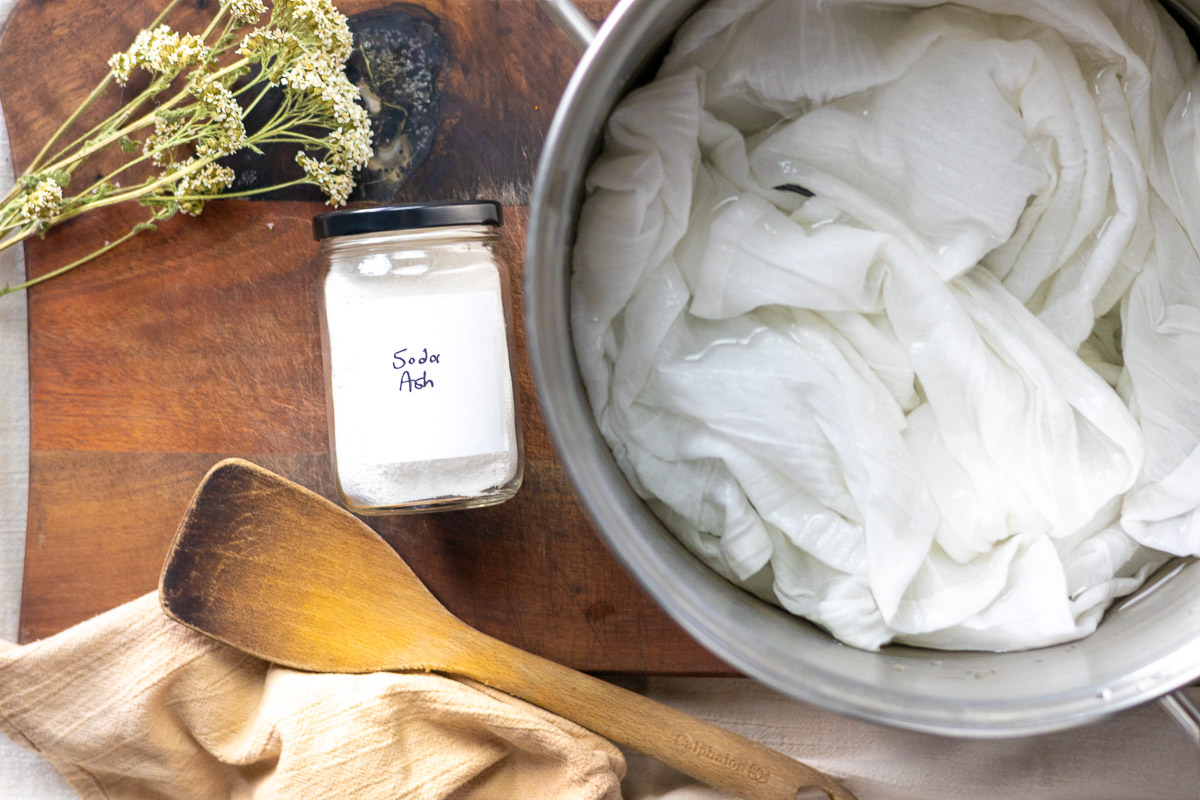
When you first start researching natural dyes, it’s exciting! You want to dive right in and reveal the beautiful colors nature has to offer. But before you begin, it’s important to remove anything on your fabric that might repel or block those colors from taking hold.
Scouring is the first step I took when I dyed with dandelions, and pecan hulls. When I pulled my fabric out from the dye pot I knew I set myself up for success with this essential first step.
Jump to:
What is Scouring and Why it Matters
Scouring is the process of deeply cleaning fabric. Industrial processing of fabrics often contain chemical residues along with dirt and grease. Cotton, linen, and other plant based fibers also contain natural oils which can hinder the dying process.
When we remove these residues, natural or not, it will help ensure we get the most even uptake of the mordant we use next, and then ultimately the natural dye.
Supplies You'll Need
I recommend using dedicated equipment for all your dyeing projects—especially for mordanting and dyeing steps down the line. (The food scale is the only exception if you want to keep it for kitchen use.)
- Plant-based fiber – Any undyed cellulose fabric you want to scour and dye (like cotton, linen, or hemp). For this post, I’m using 100% cotton flour sack towels, which I plan to cut into smaller pieces for swatching and testing natural dye colors.
- Large Stainless Steel Stock Pot
- Wooden Stir Stick
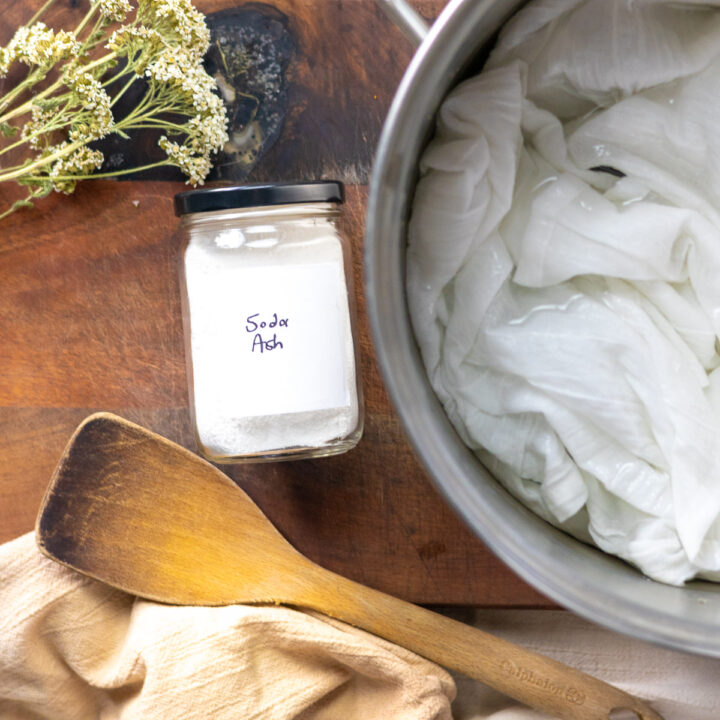
- Soda Ash - also called washing soda or sodium carbonate.
- Food Scale - (optional but recommended especially for future step in separate posts)
- Small spoon - used for measuring powders
- Scratch paper & pen - for taking notes and recording WOF (weight of fabric).
Step-by-Step: How to Scour Cotton and Other Plant Fibers For Natural Dye
Follow these essential steps to properly scour cotton, linen, or other plant-based fabrics. Use the printable card below to keep the process on hand for next time!
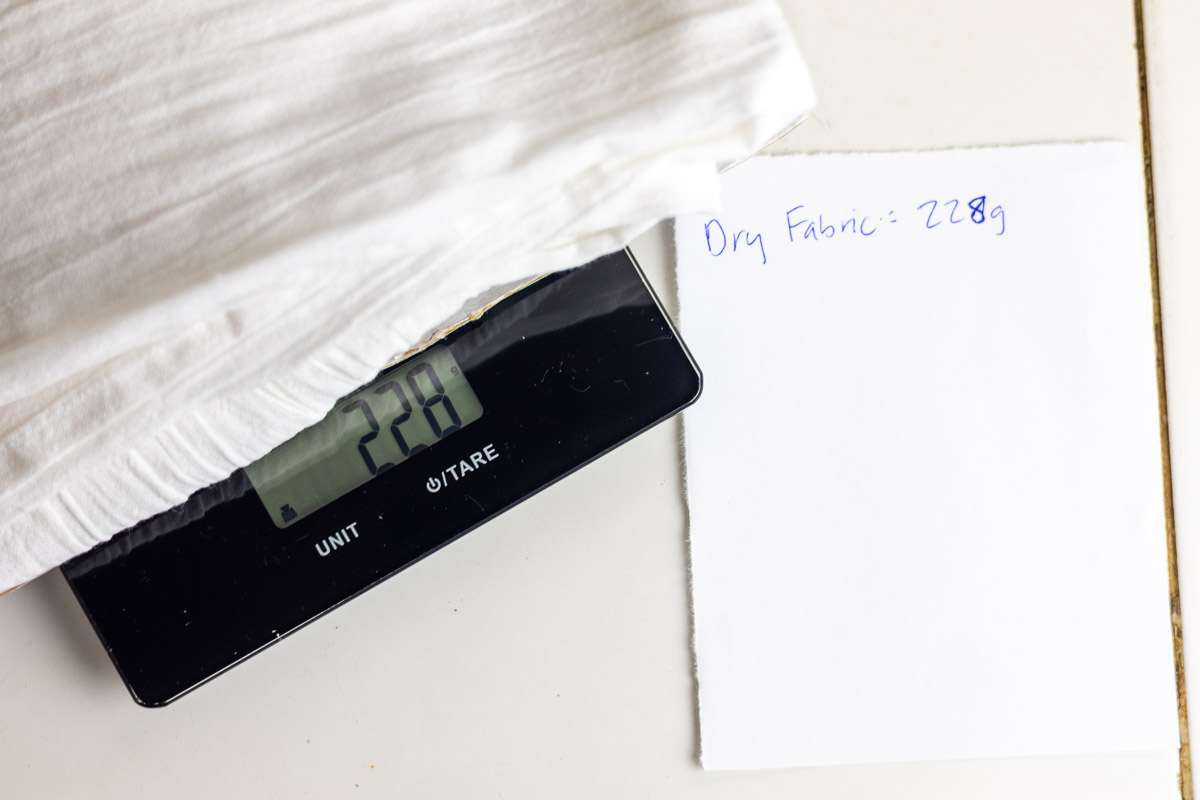
- Step 1: Weigh & Pre-Soak
Weigh your dry fabric to calculate your WOF (Weight of Fabric). I like to weigh in grams.
Pre-wet your fabric in water for 30 minutes.
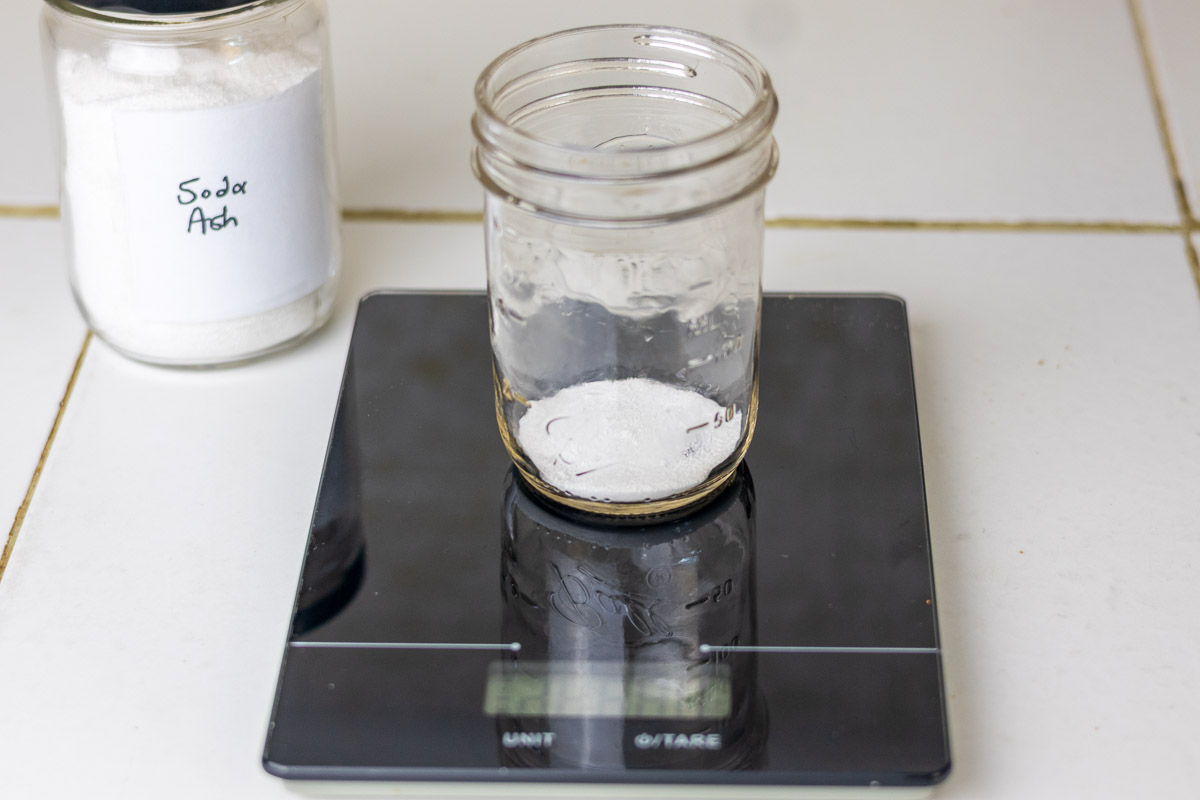
- Step 2: Mix Your Soda Ash Solution
Calculate soda ash at 2% of WOF:
WOF × 0.02 = weight of soda ash
Example: 228g × 0.02 = 4.5g soda ash
Dissolve the soda ash in hot water separately.
No scale? Use 1 teaspoon soda ash per gallon of water to get the job done.
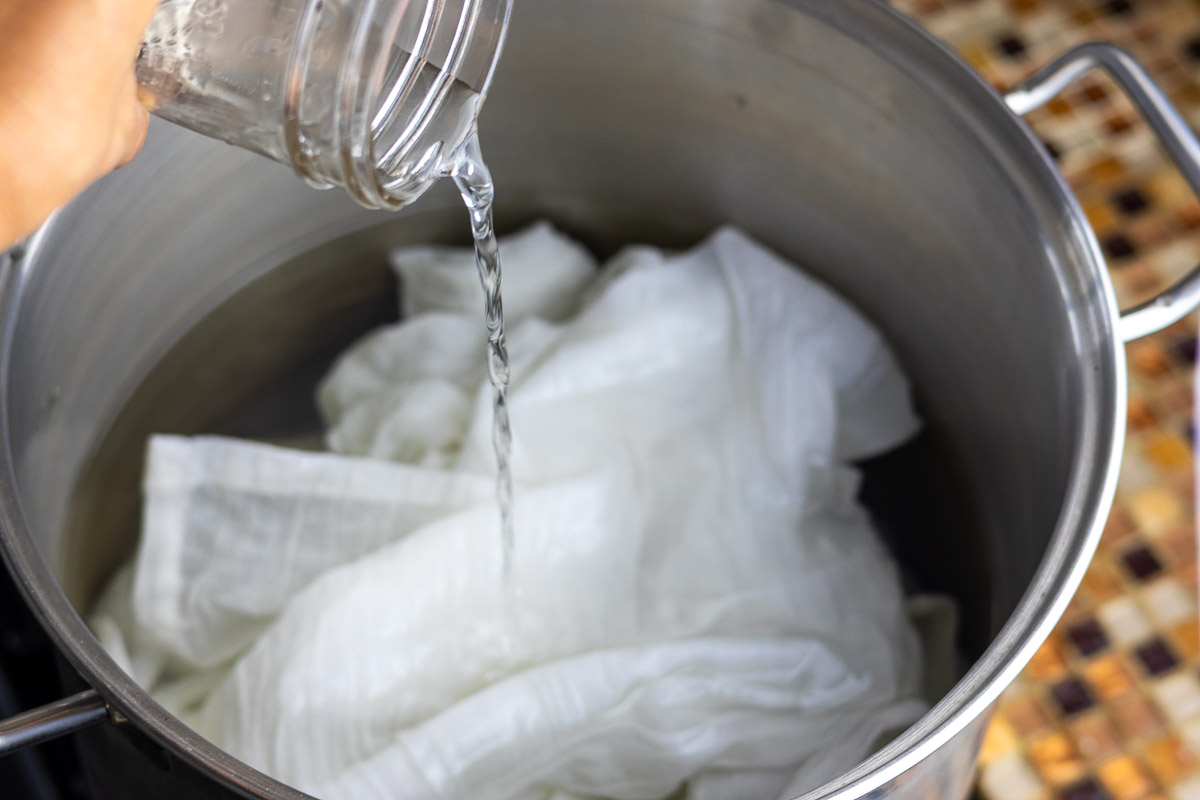
- Step 3: Simmer the Fabric
Add the soda ash solution to the pot with your fabric. Make sure there's enough water so the fabric can move freely.
Bring to a boil, then reduce to a simmer for 1–2 hours, stirring occasionally.
You may notice the water turning brown or yellow—this is normal!
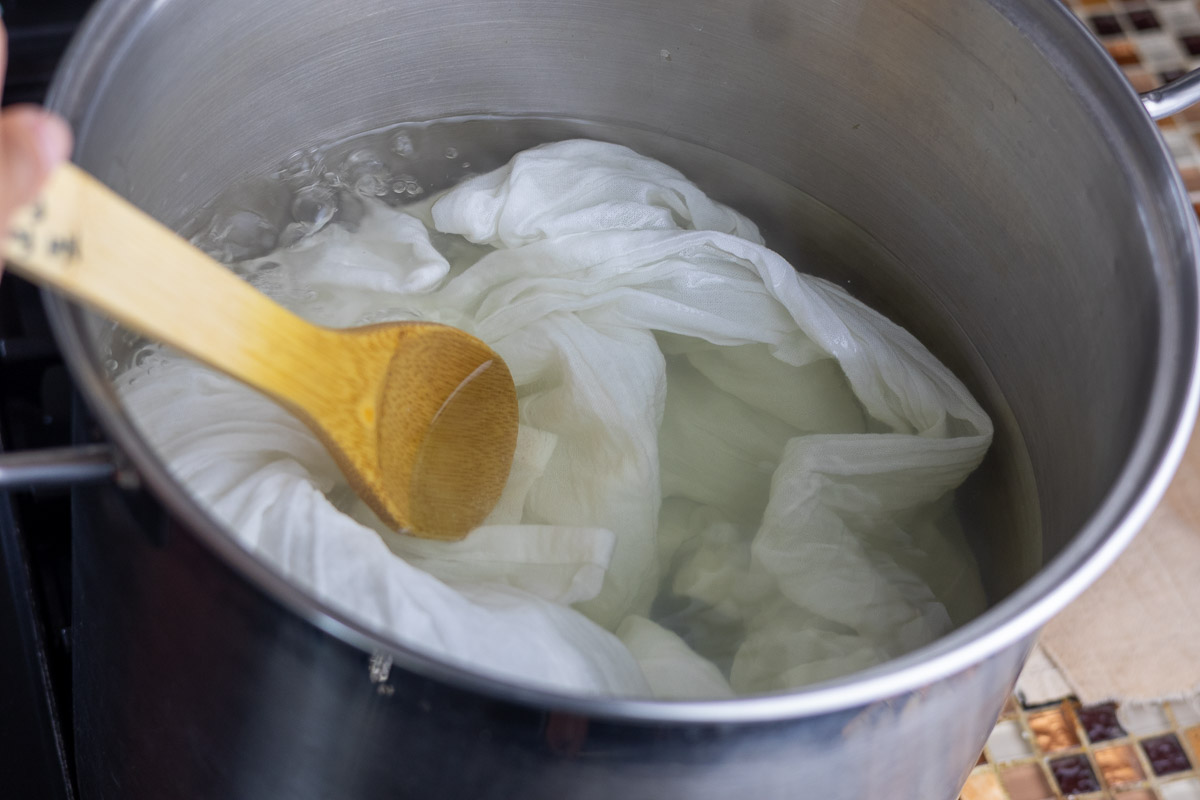
- Step 4: Cool, Rinse, & Repeat if Needed
Let the fabric cool, then rinse thoroughly. Repeat once more if fabric still feels dirty, or move on to mordanting.
You may also hang to dry and store to mordant at a later time.
Dyers Tips
- Pre-wetting your fabric helps the scour bath penetrate evenly. I know it seems unnecessary but remember we are setting ourselves up for success!
- Add enough water to the pot that allows the fabric to easily move around. From my experience, there is no hard and fast rule for how much water to add other than this.
- If you are storing your dried scoured fabric and mordanting at a later date, remember to throughly dry, store (I use zip-lock bags) and label with today's date, fabric type, and WOF.
FAQ
No. Soda ash does not produce bubbles like soap or detergent, so don't worry it's doing its job!
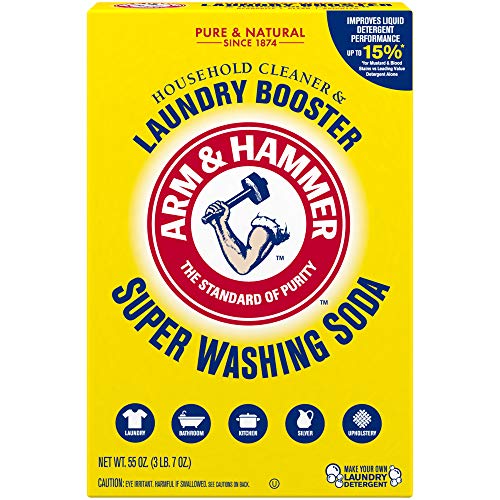
Yes! Washing soda is soda ash — both are different names for sodium carbonate. Just make sure the packaging says 100% sodium carbonate with no added ingredients or fragrances.
Nope! You'll be seriously disappointed if you try (it would ruin your fabric).
There is a completely different process for protein fibers. Right now, I only work with plant fibers, but if that ever changes I will be sure to make a post.
Not everyone agrees, but I think you should. Thrifted textiles or old shirts that have been washed many times can still hold onto fabric softeners, detergents, or body oils!
Some people do! Soda ash works great on its own, but it’s common to add a small amount of grease cutting soap for suds.
Plain Dawn is often recommended because it’s super accessible and works great. If you use Dawn, just add a tiny bit—about a ¼ teaspoon or less per gallon of water—so you don’t create too many suds.
Also, be sure to follow any instructions if you’re using specially made cellulose scour detergents along with soda ash.
Related
Check out some of my dying projects:
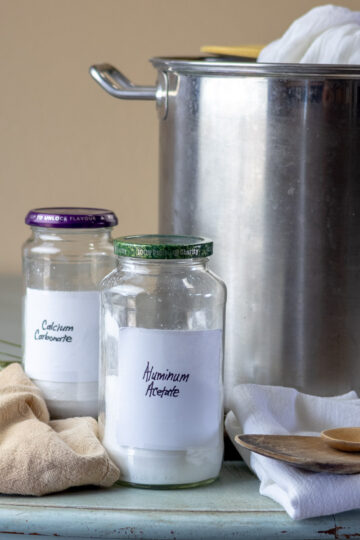
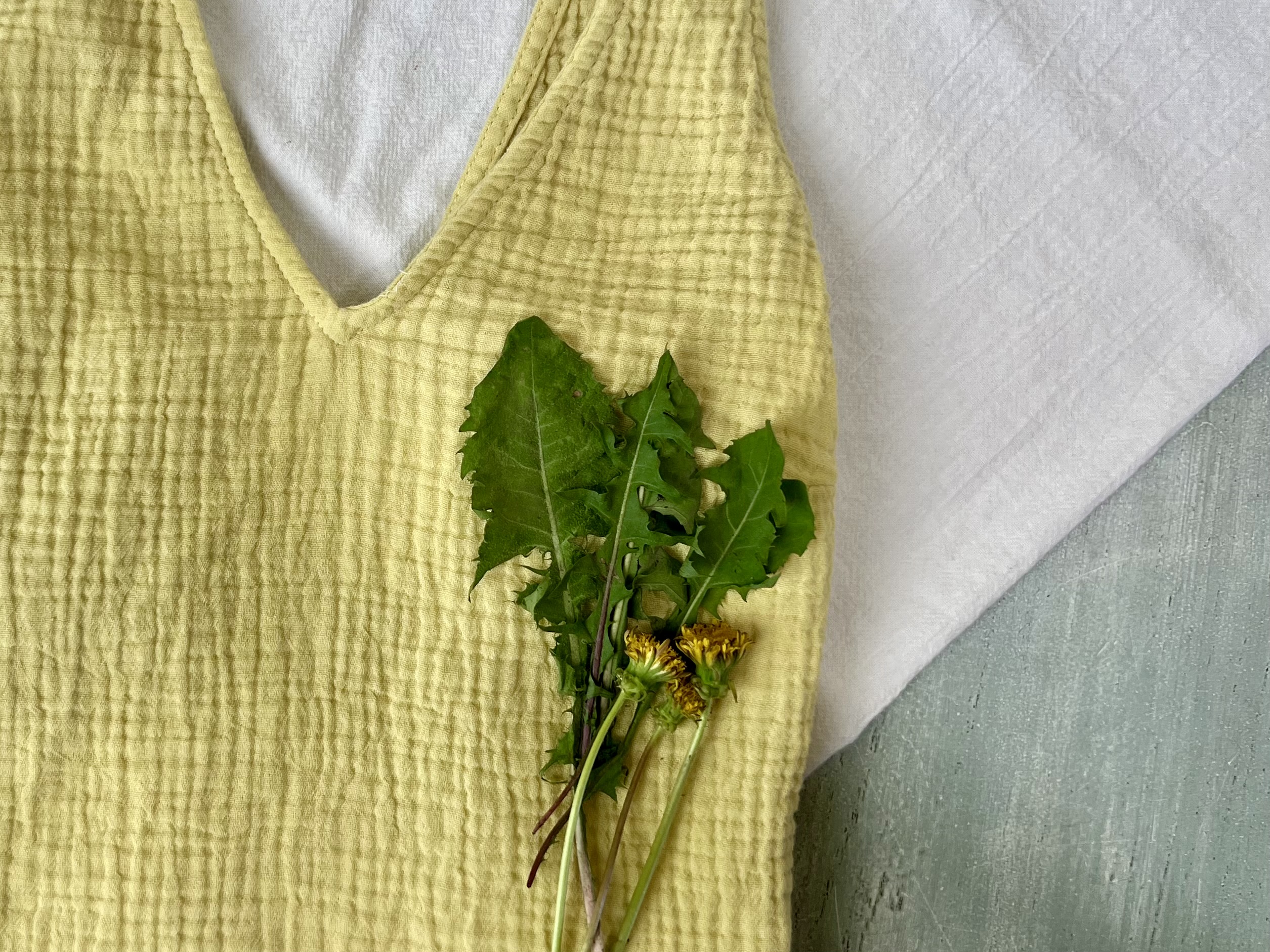
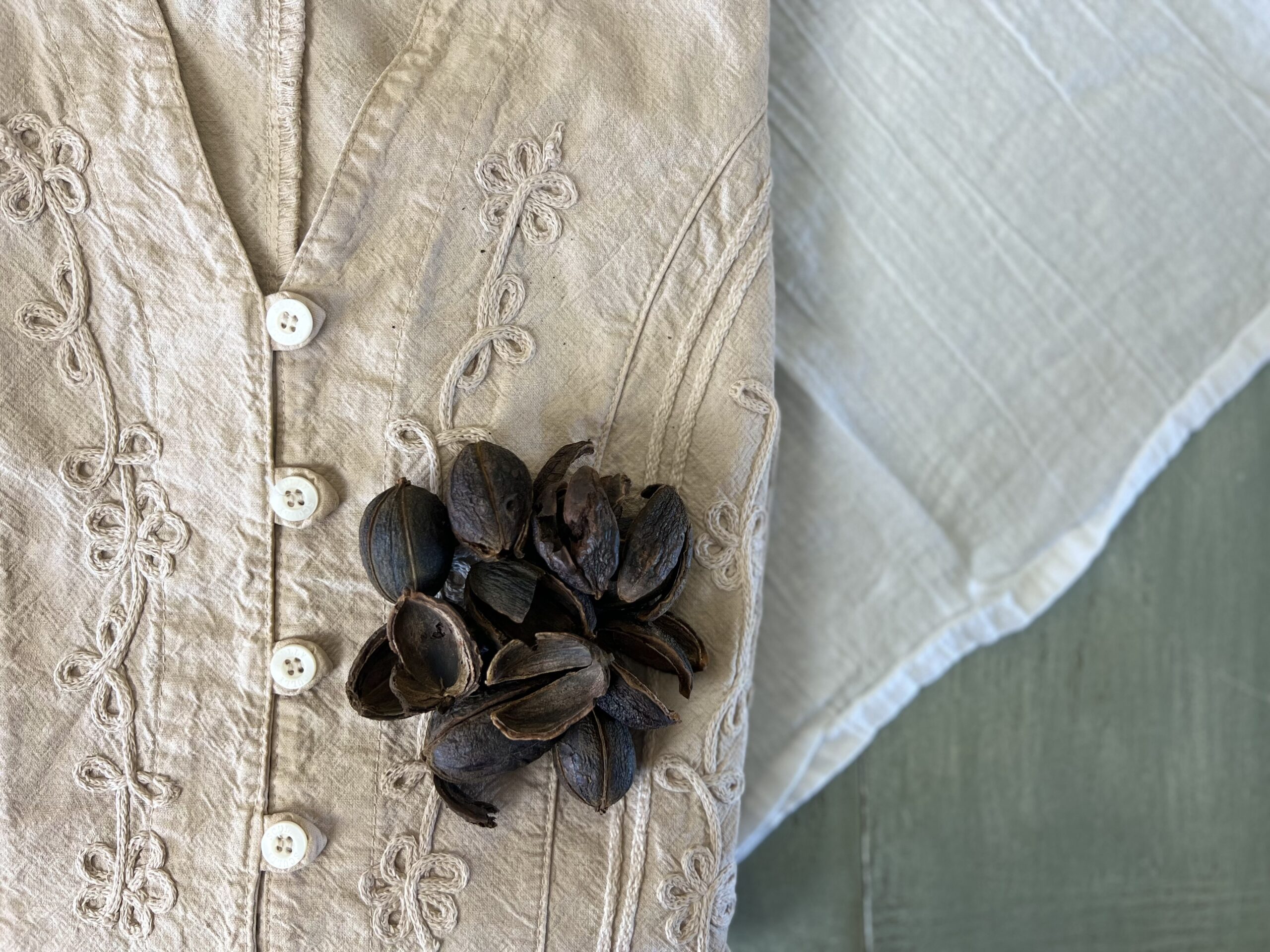
Scouring Cotton & Linen for Natural Dye
Before you can achieve beautiful natural color on plant-based fibers, you need to deep clean. In this post, I’ll walk you through how to easily scour cotton and other plant based fabrics.
Materials
- Plant-based fiber
- Soda Ash
Tools
- Large Stainless Steel Stock Pot
- Wooden Stir Stick
- Food Scale (optional)
- Small spoon
- Scratch paper & pen
Instructions
- Weigh & Pre-Soak. Weigh your dry fabric to calculate your WOF (Weight of Fabric). I like to weigh in grams. Pre-soak your fabric in water for 30 minutes.
- Mix Your Soda Ash Solution. Calculate soda ash at 2% of WOF:
WOF × 0.02 = weight of soda ash
Example: 228g × 0.02 = 4.5g soda ash
Dissolve the soda ash in hot water separately.
No scale? Use 1 teaspoon soda ash per gallon of water. - Simmer the Fabric. Add the soda ash solution to the pot with your fabric. Make sure there's enough water so the fabric can move freely.Bring to a boil, then reduce to a simmer for 1–2 hours, stirring occasionally.You may notice the water turning brown or yellow—this is normal!
- Cool, Rinse, & Repeat if Needed. Let the fabric cool, then rinse thoroughly. Repeat once more if fabric still feels waxy or greasy, or move on to mordanting. You may also hang to dry and store to mordant at a later time.
Notes
- Pre-wetting your fabric helps the scour bath penetrate evenly. I know it seems uncessary but remember we are setting ourselves up for success!
- Add enough water to the pot that allows the fabric to easily move around. From my experience, there is no hard and fast rule for how much water to add other than this.
- If you are storing your drying scoured fabric and mordanting at a later date, remember to throughly dry, store (I use zip-lock bags) and label with today's date, fabric type, and WOF. These will all be time savers later.
Recommended Products
As an Amazon Associate and member of other affiliate programs, I earn from qualifying purchases.

Comments
No Comments