
Are you wanting to naturally dye on cotton or linen? Don’t skip the mordant! Alum acetate helps reveal vibrant, lasting color. Learn how to mordant cotton and linen with aluminum acetate with this step-by-step guide.
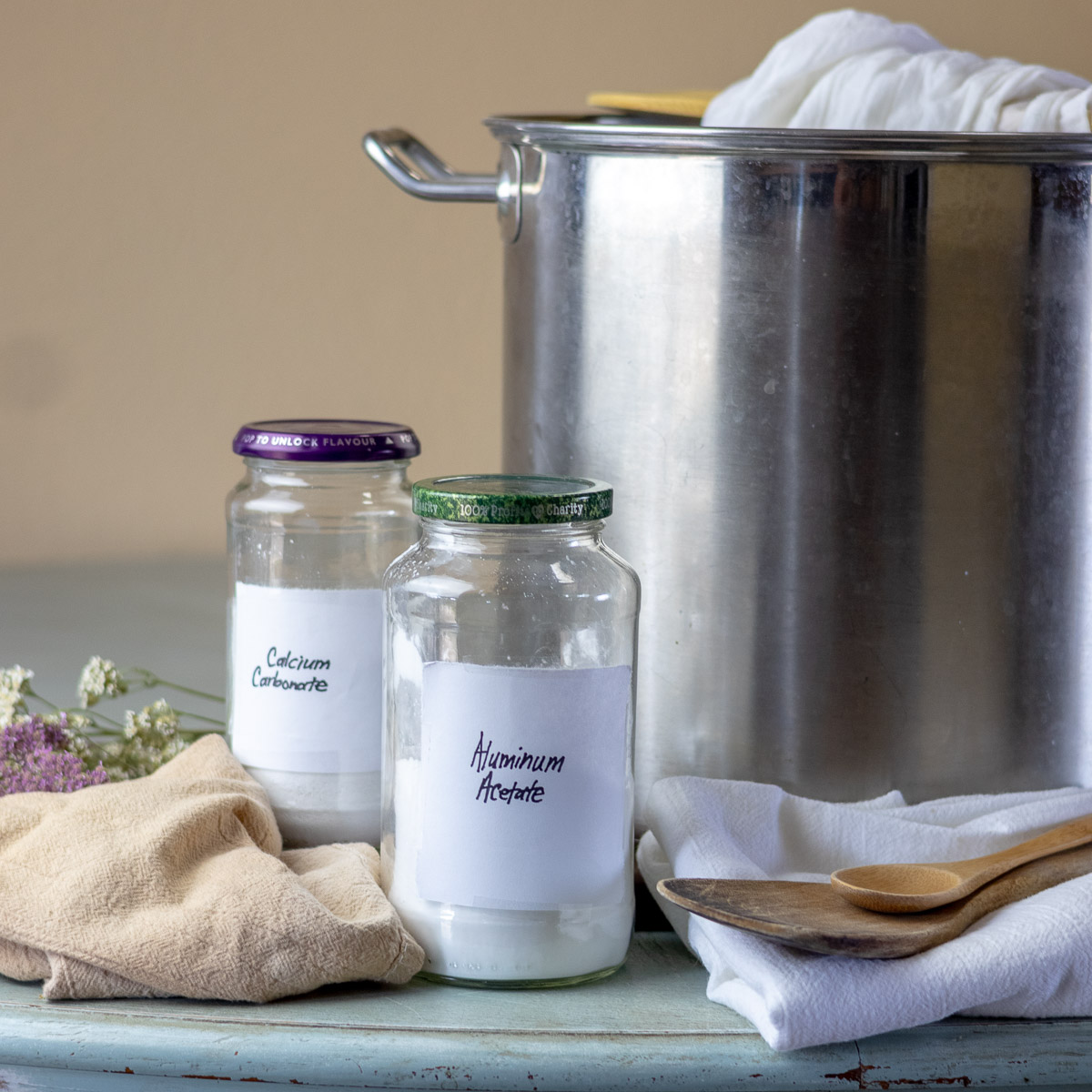
No matter what type of natural dye you’re using on plant-based fibers, a mordant will always help your color stick better and last longer (with a few exceptions). There are many ways to mordant cotton, linen, hemp, etc - this method is just one of them.
Once your fabric is properly scoured, an alum acetate mordant will complete the prep and set you up for success. With this step done, you’ll be ready to achieve vibrant, long-lasting natural color on your next project!
Jump to:
Why use Aluminum Acetate to Mordant Cotton & Linen
As mentioned above, there are many ways to mordant cellulose fiber but the process of alum acetate followed by a wheat bran or chalk bath is reliable two-step process to produce vibrant, clear, and wash fast colors.
Other mordants such as alum combined with tannin or iron, will add it's own subtle color to fabric. There is also a popular metal free option - soy. Soy milk acts a binder rather than a true mordant and gives beautiful results, but you may sacrifice colorfastness.
All methods have its place and it really is up to the dyer on what works for their lifestyle and what they hope to achieve.
Alum Acetate is:
- Safe to handle and dispose (with basic care)
- Preserves true color of botanical dyes
- Pairs well with modifiers
Supplies You'll Need
It is always recommended to use equipment dedicated to your dying projects.
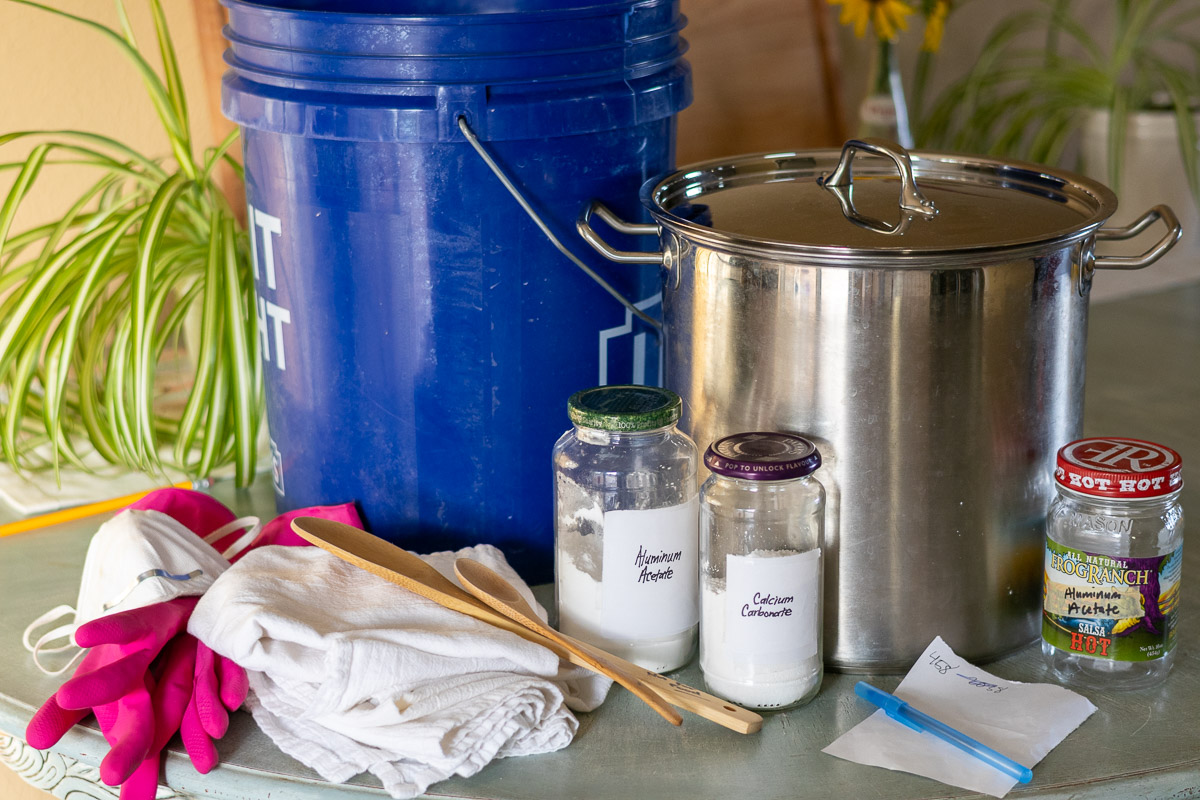
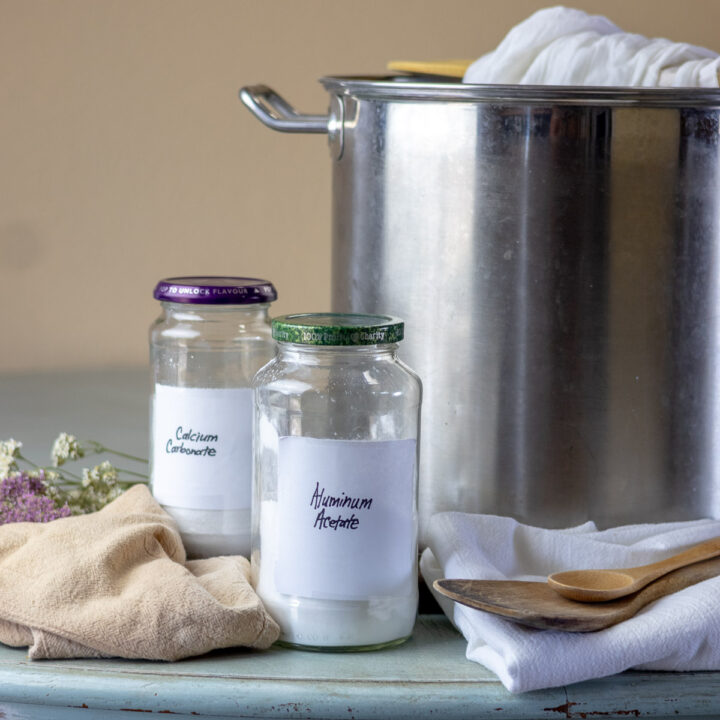
- Alum Acetate - You can purchase from Botanical Colors, or some fiber artists that sell on Etsy.
- Calcium Carbonate OR Wheat Bran - This is used to 'fix' the alum acetate to fabric. I use Calcium Carbonate here, but will give directions for wheat bran.
- Container to dissolve alum acetate - I reuse an old salsa jar.
- Stainless steel pot - This is my main dye pot, and I also use it for mordanting. Since this step doesn't require simmering, you can use another 5-gallon bucket if you prefer.
- Bucket - I use a dedicated Lowe's 5-gallon bucket for my dye projects.
- Wooden Stir Stick and small spoon
- Dust mask - Alum acetate is a fine powder and can irritate nose and throat.
- Gloves - Use these when handling the alum acetate and especially when removing fabric from mordant pot.
- Scratch paper & pen - Used for writing down WOF (weight of fabric) or other notes.
Step-by-Step How to Mordant Cotton & Linen with Aluminum Acetate
When mordanting with alum acetate, always work in a well ventilated area and keep children and any pets out.
No scale for measuring out ingredients? Here is a approximate estimation guide:
Lightweight t-shirt (size M-L) - 180g
Men's long-sleeve button down - 250g
Cotton tote bag (M-L) - 200g
Pillowcase - 150g
Cotton napkin - 50g
For every 100g of fiber:
Aluminum acetate - 2 rounded tsp
Calcium carbonate - 1 rounded tsp
Wheat bran - 4 rounded tsp
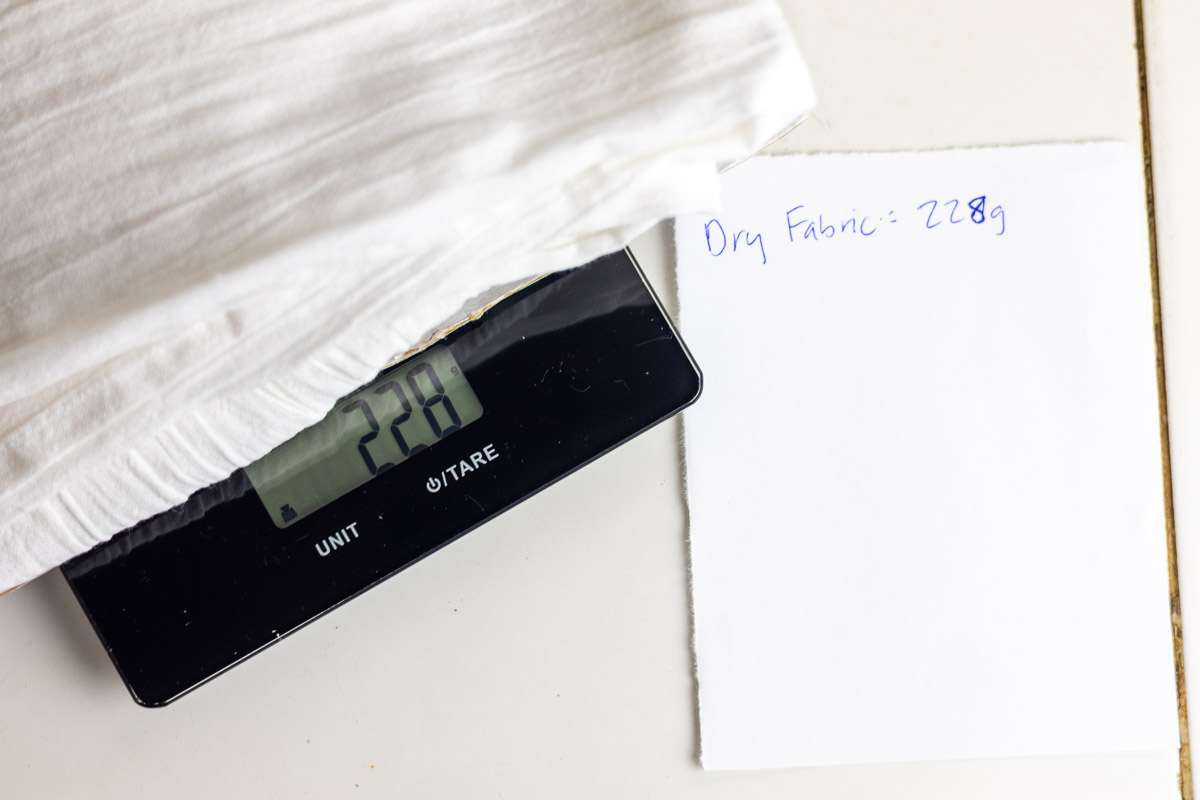
- Step 1: Weigh & Pre-wet fabric.
Weigh fabric and write down WOF (weight of fabric).
Pre-wet scoured fabric for 30 minutes OR if you've scoured right before mordanting, add damp fabric directly to mordant pot.
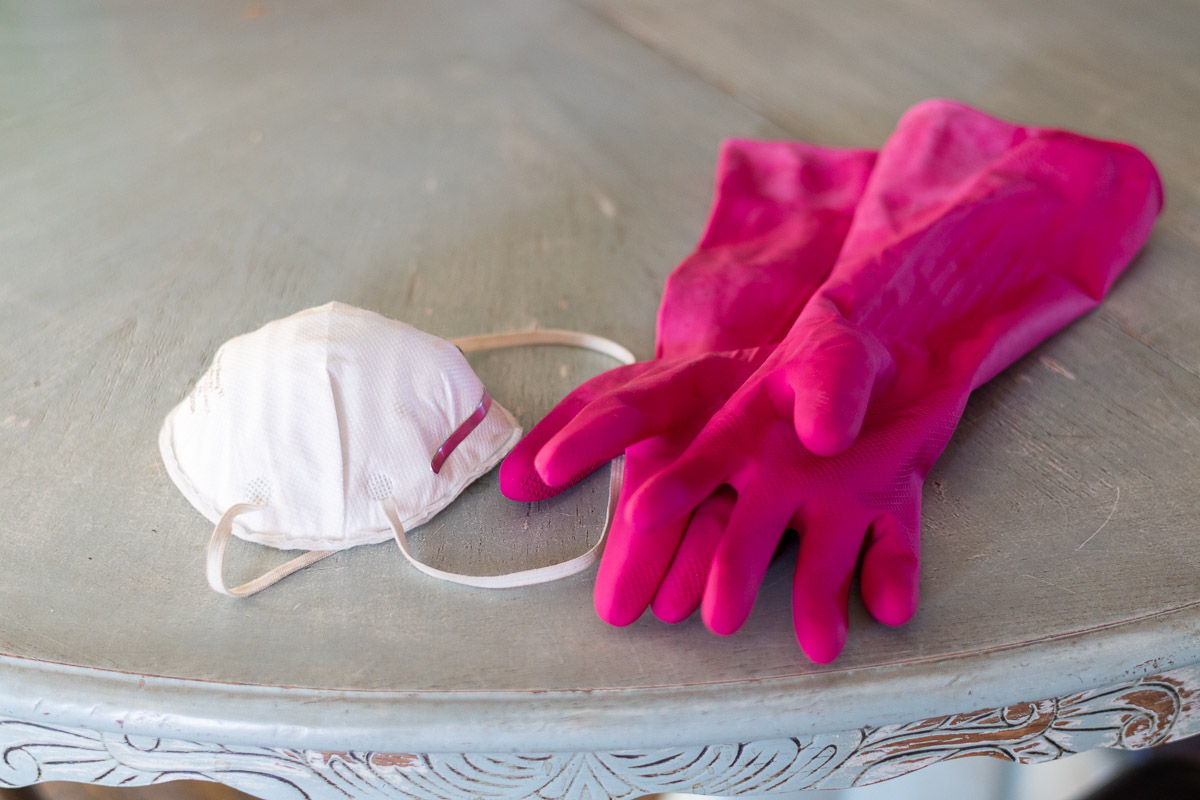
- Step 2: Put your safety gear on.
Wear your gloves and dust mask when handling the aluminum acetate.
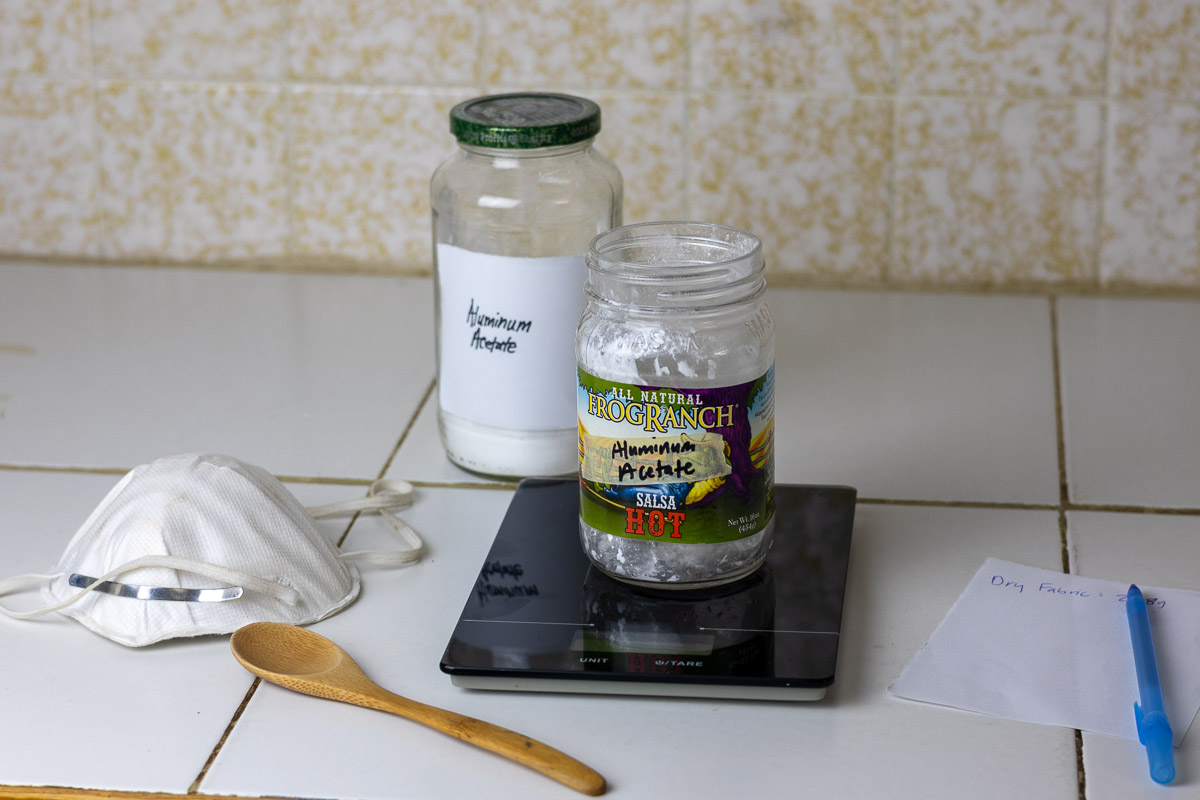
- Step 3: Dissolve alum acetate.
Measure out alum acetate in separate container, add boiling water to dissolve.
Calculate alum acetate at 5-10% of WOF:
WOF × 0.05 = weight of alum acetate
Example: 228g × 0.05 = 11.4g alum acetate
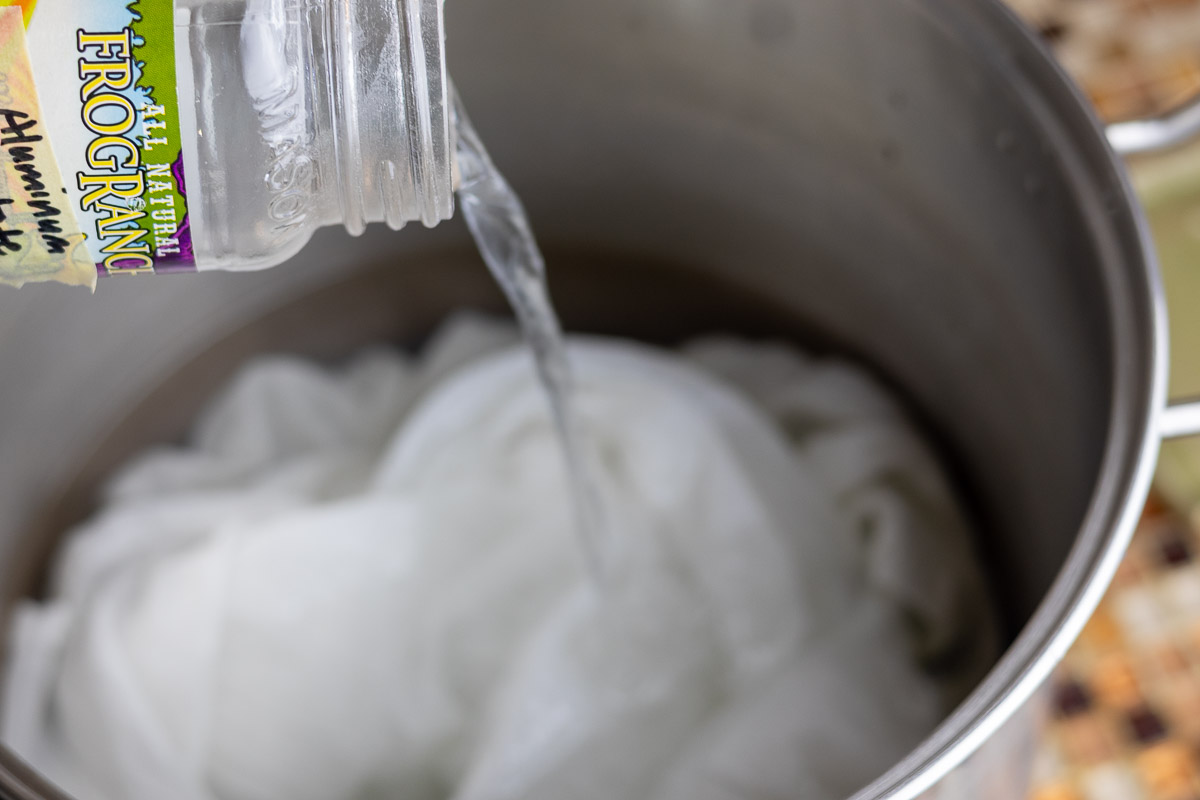
- Step 4: Prepare mordant bath.
Fill pot with enough water for fabric to move freely, then add the dissolved alum acetate. Stir well.
Mordant.
Leave for at least 12-24hrs- up to a week. Stir occasionally.
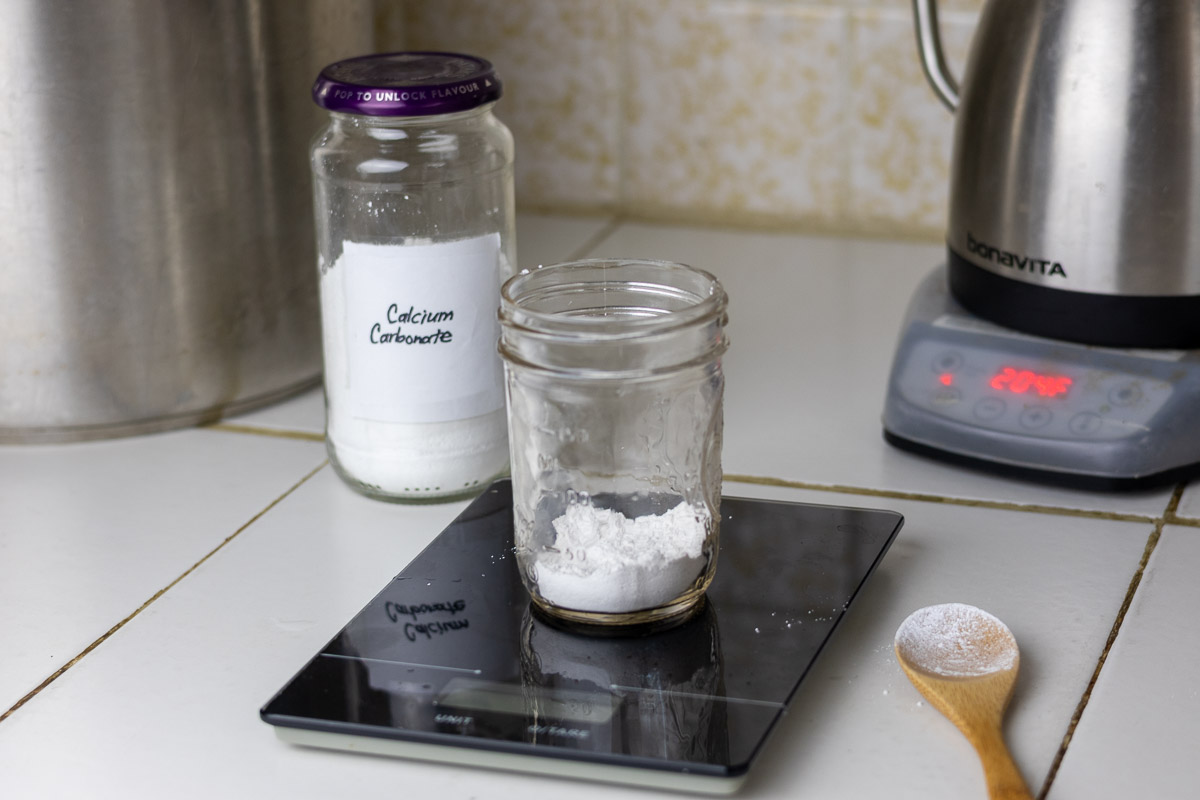
- Step 5: Prepare chalk (calcium carbonate) bath.
Measure out and dissolve with hot water. Add to bucket of clean water enough for fabric to move freely.
Calculate calcium carbonate at 5% of WOF
*If using wheat bran:
calculate at 5% of WOF and use a cheesecloth or something similar to enclose. Steep wheat bran in very hot or boiling water for about 5 or so minutes and add that to a warm bucket of water along with your fabric.
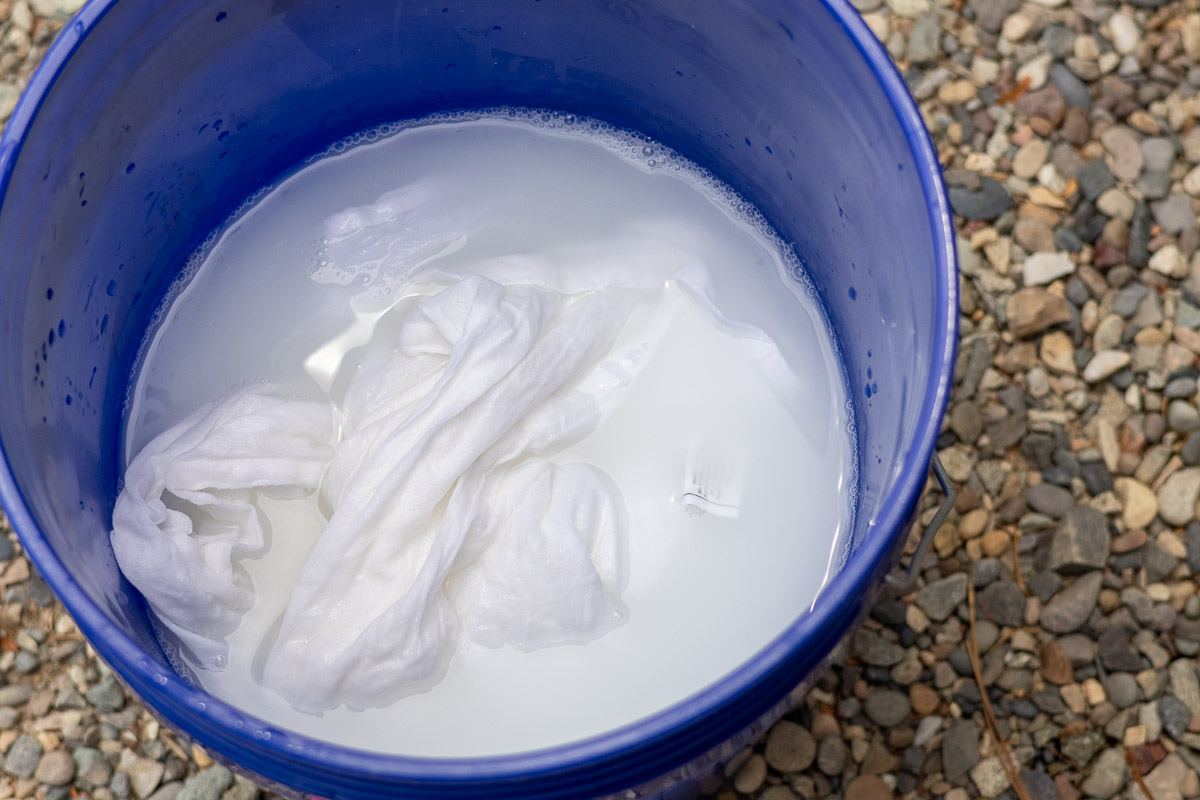
- Step 6: Transfer fabric to bucket.
Put on gloves and remove fabric. No need to rinse, just squeeze out excess liquid and place in bucket with chalk. Leave in bucket for at least 30 minutes
- Step 7: Remove and rinse
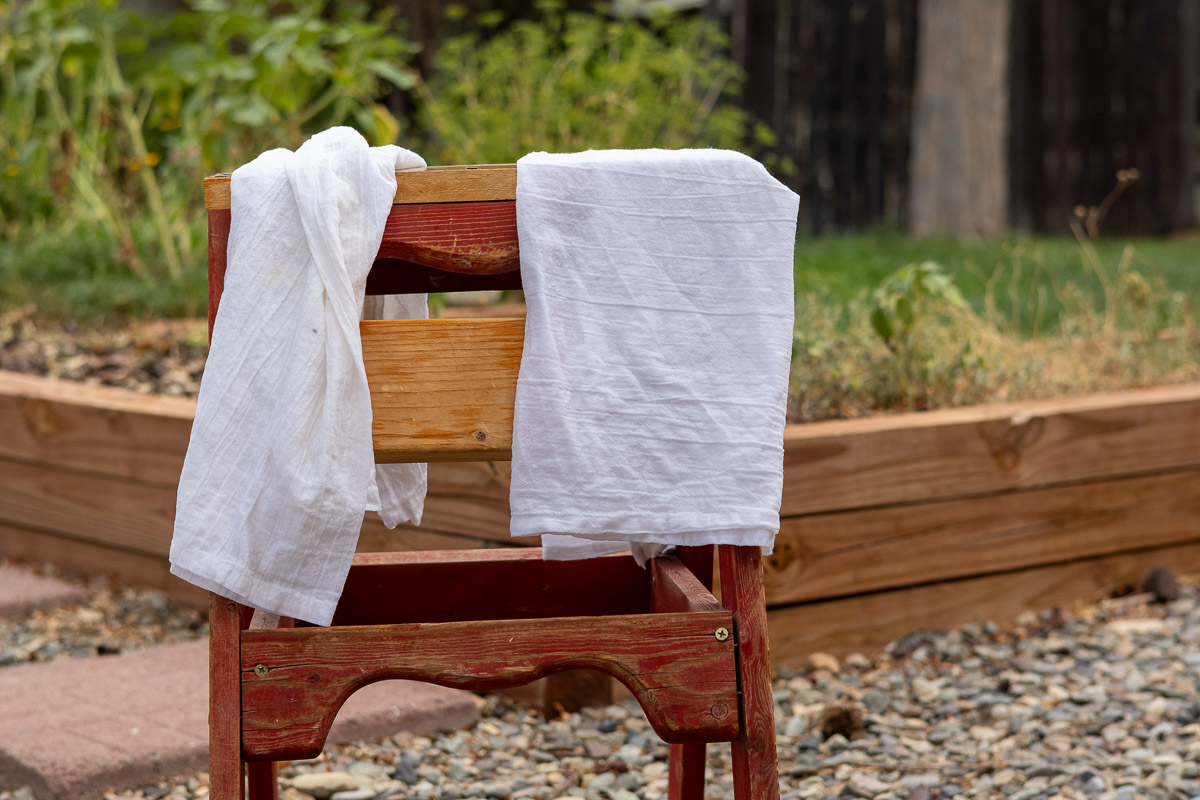
Give fabric a good rinse and then go straight to dye pot or hang to dry and store.
Safe Disposal of Alum Acetate and Chalk Bath
Alum acetate can be safely disposed of down the drain to a municipal water treatment system as long as it is diluted. However, because it is toxic to aquatic life, do not pour in any drain that leads into a waterway (like a river or pond), or septic system.
We are diluting it well when we make the mordant bath, but I still usually leave the faucet running while slowly pouring the mordant solution down the drain. Same method can be used to dispose of calcium carbonate solution.
If there is any concern, contact your local hazardous material site and follow any regulations.
Dyers Tips
- When you are finished with the process, you do not need to go to the dye pot immediately. Thoroughly dry, label, and store indefinitely in a bag away from dust. In fact, this is a great way to knock out these steps so you have plenty of fabric ready to dye in the future!
- A digital scale is handy and much easier to use than you think. The estimated weights I gave you above aren't perfect but will get you off to a good start.
- Do not overcrowd your mordant bath. Leave plenty of water for your fabric to move around.
- Do not skip the step before this, scouring!
- You can reuse the mordant bath as long as it is not getting cloudy. Just recharge it with 50% of the original amount of alum acetate.
Top Tip
Take your time, there's no need to rush. While the fun part of using your natural dye is just ahead, this step will give you the best results.
FAQ
While all are aluminum based salts, some are better suited for animal fibers, or cotton fibers.
Related
Looking for other natural dye posts like this?
How to Mordant Cellulose Fiber with Aluminum Acetate
Are you wanting to naturally dye on cotton or linen? Don’t skip the mordant! Alum acetate helps reveal vibrant, lasting color. Learn how to mordant cotton and linen with aluminum acetate with this step-by-step guide.
Materials
- Alum Acetate
- Calcium Carbonate OR Wheat Bran
- Container to dissolve alum acetate
Tools
- Stainless steel pot
- 5-Gallon bucket
- Wooden Stir Stick and small spoon
- Dust mask
- Gloves
- Scratch paper & pen
Instructions
- Weigh & Pre-wet fabric. Weigh fabric and write down WOF (weight of fabric). Pre-wet scoured fabric for 30 minutes OR if you've scoured right before mordanting, add damp fabric directly to mordant pot.
- Put your safety gear on. Wear your gloves and dust mask when handling the aluminum acetate.
- Dissolve alum acetate. Measure out alum acetate in separate container, add boiling water to dissolve.
Calculate alum acetate at 5-10% of WOF:
WOF × 0.05 = weight of alum acetate
Example: 228g × 0.05 = 11.4g alum acetate - Prepare mordant bath. Fill pot with enough water for fabric to move freely, then add the dissolved alum acetate. Stir well.
Mordant. Leave for at least 12-24hrs- up to a week. Stir occasionally. - Prepare chalk (calcium carbonate) bath. Measure out and dissolve with hot water. Add to bucket of clean water enough for fabric to move freely.
Calculate calcium carbonate at 5% of WOF
*If using wheat bran: calculate at 5% of WOF and use a cheesecloth or something similar to enclose. Steep wheat bran in very hot or boiling water for about 5 or so minutes and add that to a warm bucket of water along with your fabric. - Transfer fabric to bucket. Put on gloves and remove fabric. No need to rinse, just squeeze out excess liquid and place in bucket with chalk. Leave in bucket for at least 30 minutes
- Remove and rinse. Give fabric a good rinse and then go straight to dye pot or hang to dry and store.
Notes
- When you are finished with the process, you do not need to go to the dye pot immediately. Thoroughly dry, label, and store indefinitely in a bag away from dust. In fact, this is a great way to knock out these steps so you have plenty of fabric ready to dye in the future!
- A digital scale is handy and much easier to use than you think. The estimated weights I gave you above aren't perfect but will get you off to a good start.
- Do not overcrowd your mordant bath. Leave plenty of water for your fabric to move around.
- Do not skip the step before this, scouring!
- You can reuse the mordant bath as long as it is not getting cloudy. Just recharge it with 50% of the original amount of alum acetate.
- Diluted alum acetate and chalk baths can be poured down the drain to a municipal system (not septic), with extra running water. Do not dispose into waterways. Check local regulations if unsure.
Recommended Products
As an Amazon Associate and member of other affiliate programs, I earn from qualifying purchases.


Comments
No Comments