
Homemade calendula oil is a simple, nourishing addition to your home apothecary. In this post, I’ll show you how to harvest, dry, and make calendula-infused oil fast — so once your flowers are dried, you can enjoy its soothing, restorative benefits in just one day!
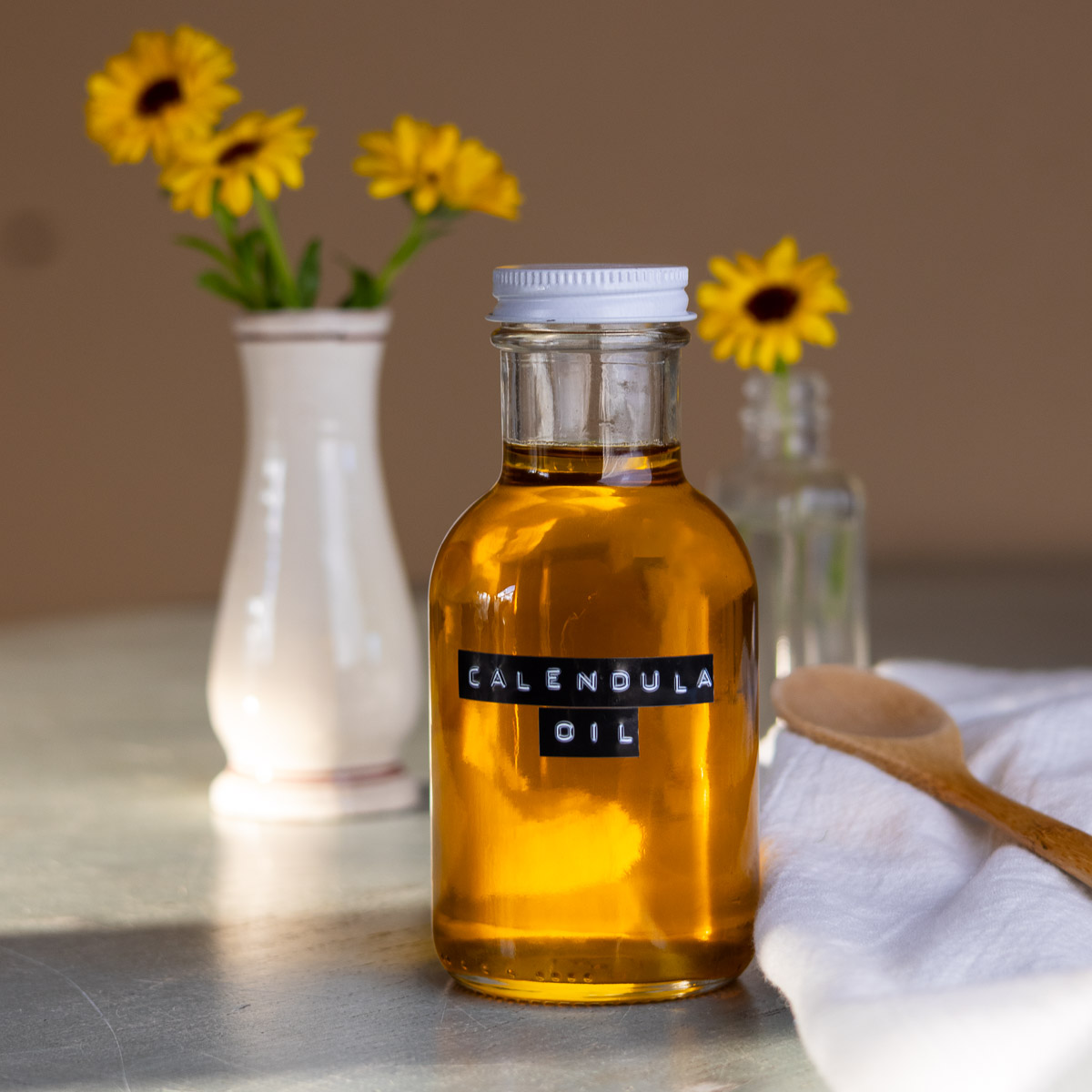
Calendula (Calendula officinalis) — sometimes called pot marigold — has long been known as a versatile and skin-loving plant.
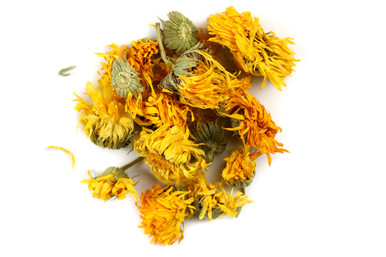
Most of its beneficial resin is found on the green base of the flower, while the bright yellow-orange petals (technically ray florets) contain carotenoids that add color and gentle antioxidant properties. Both parts are useful, but the resinous green portion holds the majority of calendula’s skin-soothing compounds according to a study.
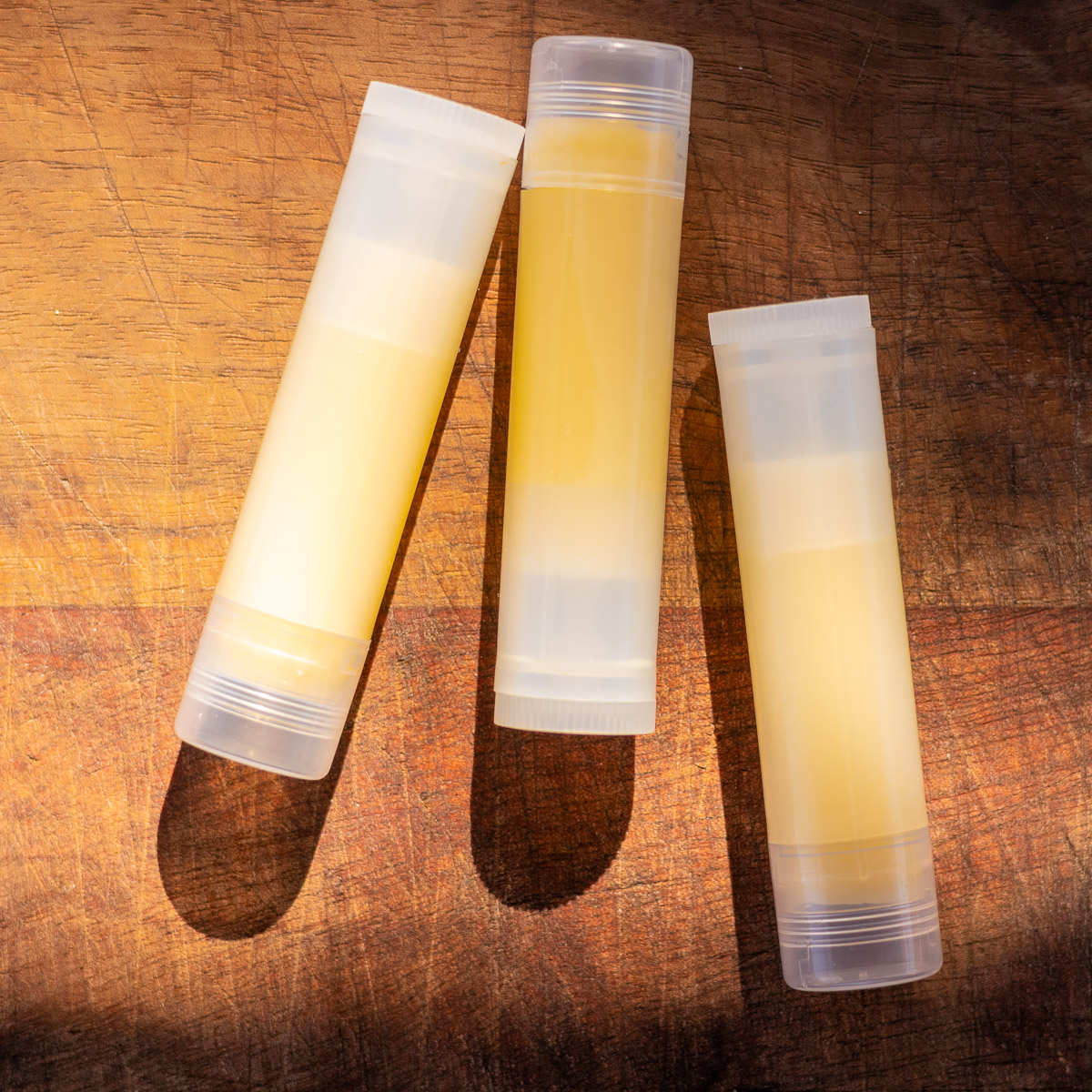
When infused in a carrier oil, calendula can be turned into salves, lip products (like my tallow lip balm recipe), facial oils, or simple all-over moisturizers — just to name a few.
Calendula is also easy to grow at home and widely available if you prefer to purchase dried flowers instead.
Jump to:
Best Flower Variety, Harvesting & Drying Calendula
Best Variety for Infusing
If you’re growing calendula mainly for herbal preparations, choose the variety, ‘Resina’ — it’s especially high in resin. Most ornamental varieties still have resin, just not as much. Even if you’re growing an ornamental type, you can still get good results; I’ve been using mine and am happy with the resin content.
Harvest Often
New calendula blooms open almost daily, so check your plants regularly throughout the growing season.
How and When to Harvest
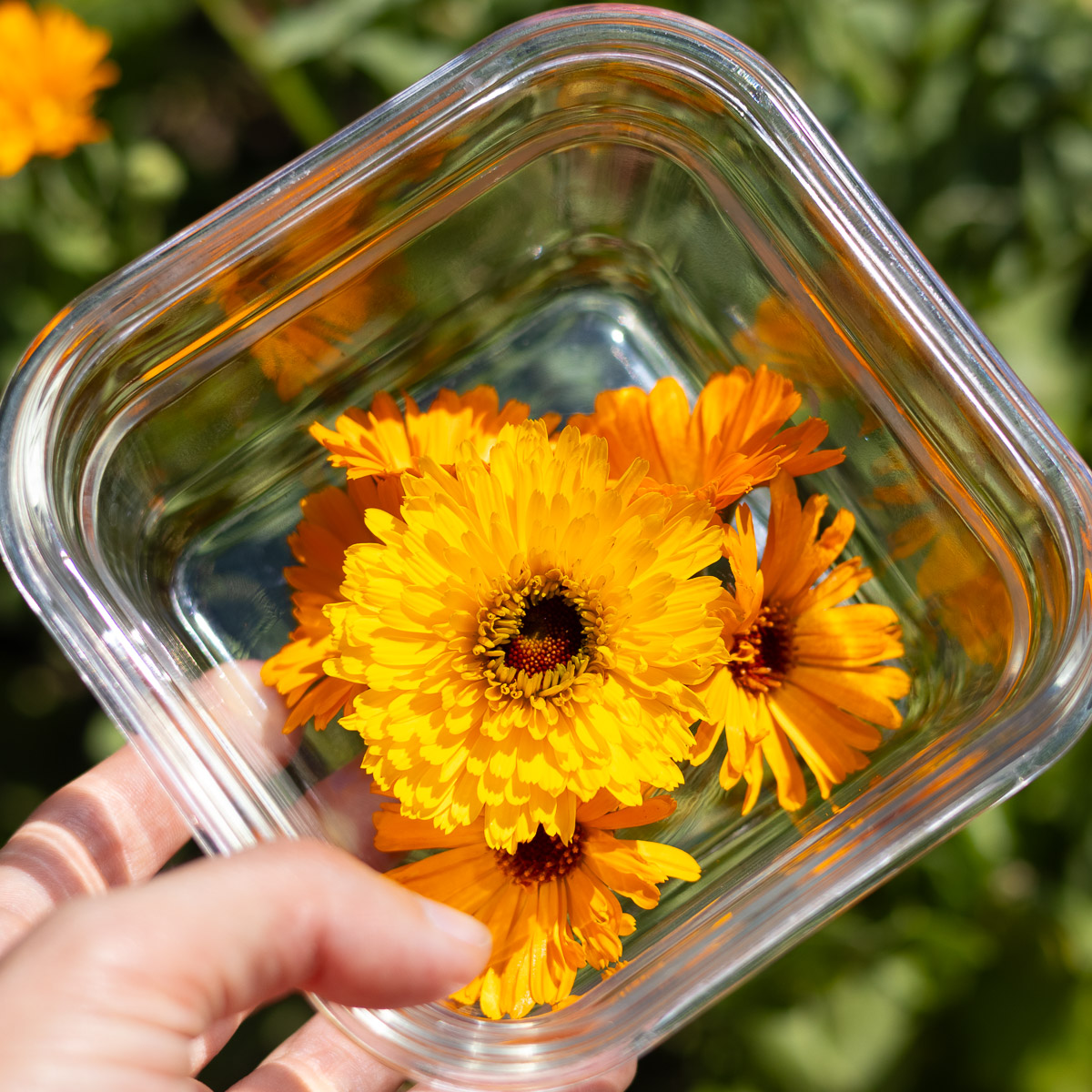
- Pick fully open flowers, after the morning dew has evaporated.
- Gently pinch or snip flower heads, just after the bract (green base).
- Using your hands is quicker, but you will collect resin on your fingers- just rub off with a little olive oil and wash off later!
Drying the Flowers
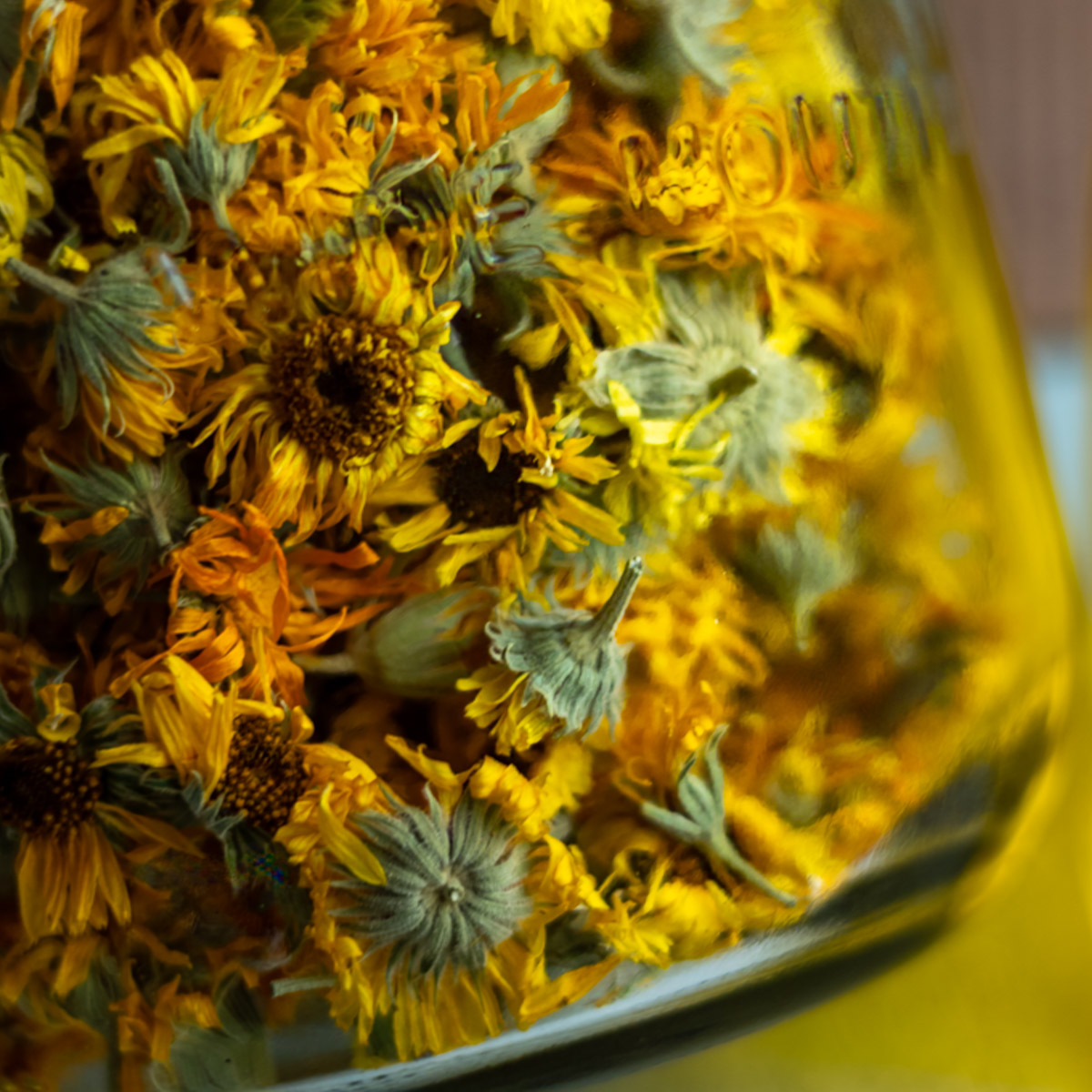
- Lay the blooms in a single layer on a drying mat, screen, or mesh rack.
- Keep it in an airy spot, out of direct sunlight.
- You can also use a dehydrator set to low.
- When fully dry, store and label.
Batch Drying
Since you will mostly likely need to harvest almost daily, gather flowers for 2–3 days until your drying mat is full. Then move them to an open cardboard box or something similar until fully dry, then store and repeat.
What You'll Need
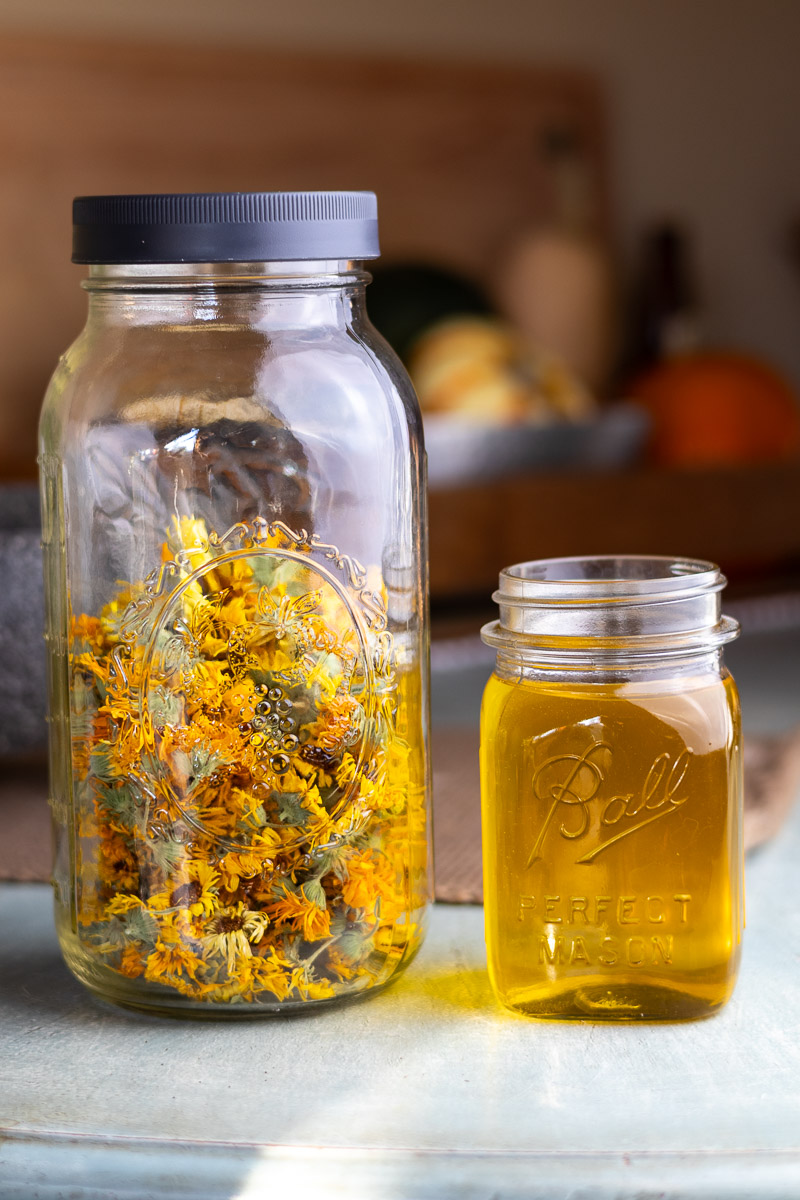
- Calendula flower heads (dried) - purchased or homegrown.
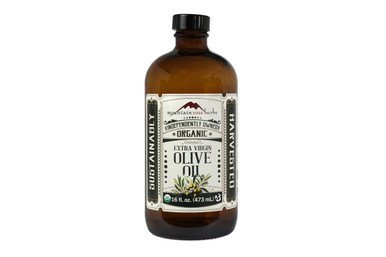
- Carrier oil - So many good options here, and it depends on what you plant to do with your infused oil. Olive oil is a common option since it has a long shelf life, but jojoba, avocado, sunflower oil are all good options. Cold pressed is best.
*Do not use rose hip oil or argan oil in this heat infusion method- they oxidize easily. - Double boiler or crockpot - I like to use canning rings on the bottom of a saucepan for an improvised double boiler.
- Fine mesh strainer and/or cheesecloth
- Funnel - Makes transferring your oil easy. Or a reusable funnel like this.
- Clean and dry glass jar with lid - For infusing.
- Glass jar/bottle for storage - Store your strained oil in a clean, dry container with a tight-fitting lid.
How to Make Calendula Oil (Fast-Infusion Method)
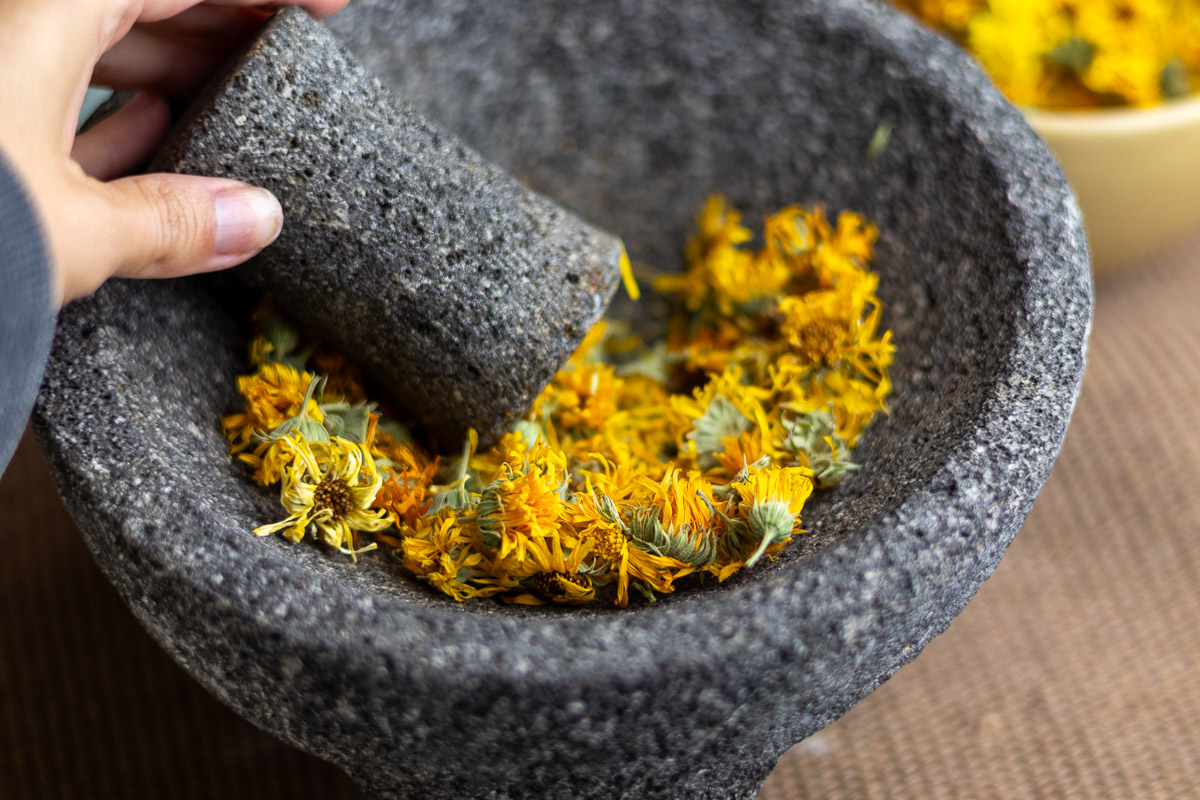
Step 1: Break up the calendula.
Use your hands or a mortar and pestle to gently crumble the dried flowers.
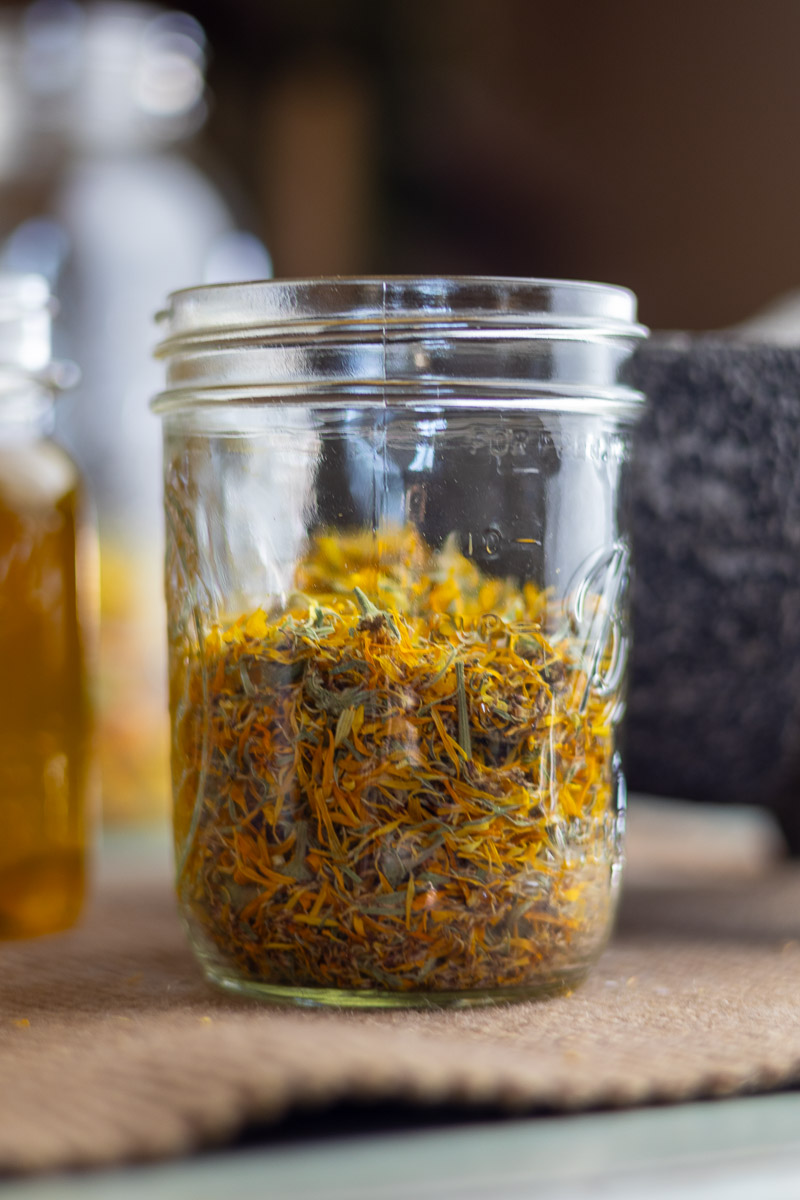
Step 2: Add calendula to your jar.
Fill your heat-safe jar or container about halfway with the crushed flowers — or use roughly 1 oz (30 g) of dried calendula to 12 oz (350 ml) of oil.
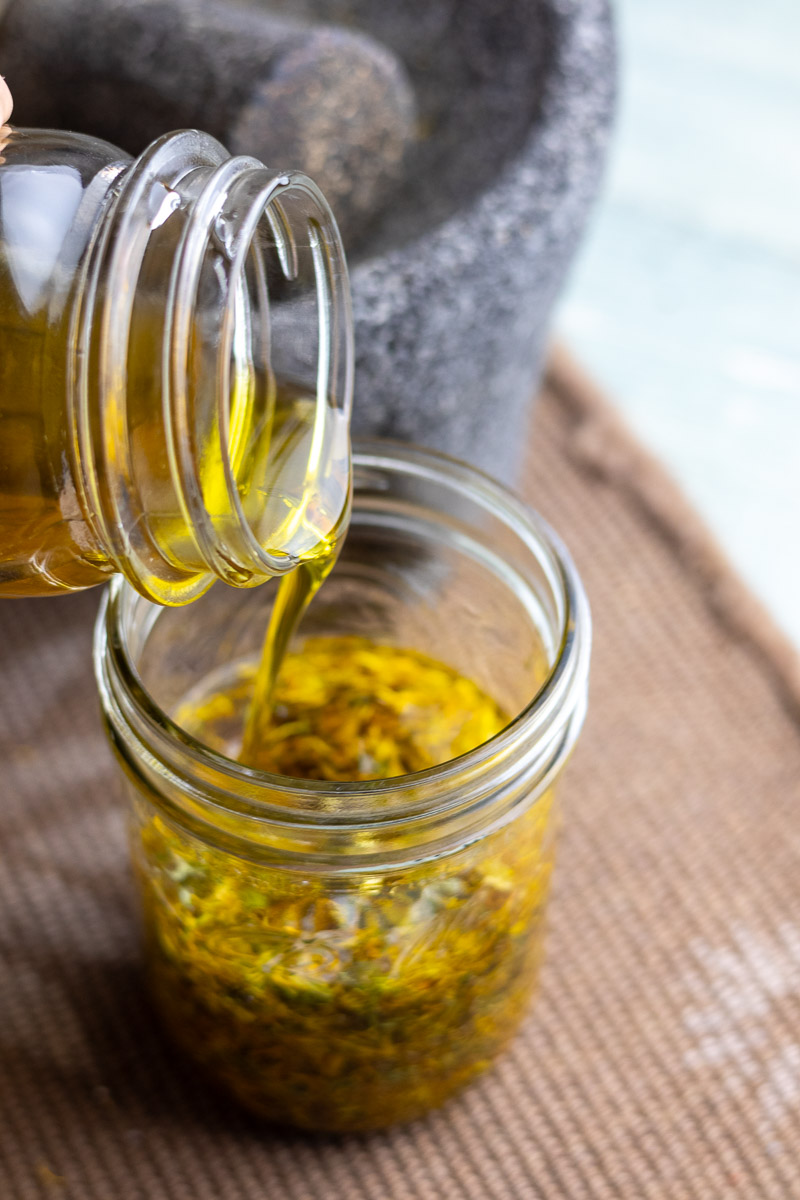
Step 3: Pour in the oil.
Cover the flowers with oil until there’s about 1 inch (2–3 cm) above the plant material. The calendula may float, so just eyeball the amount — you want everything fully covered.
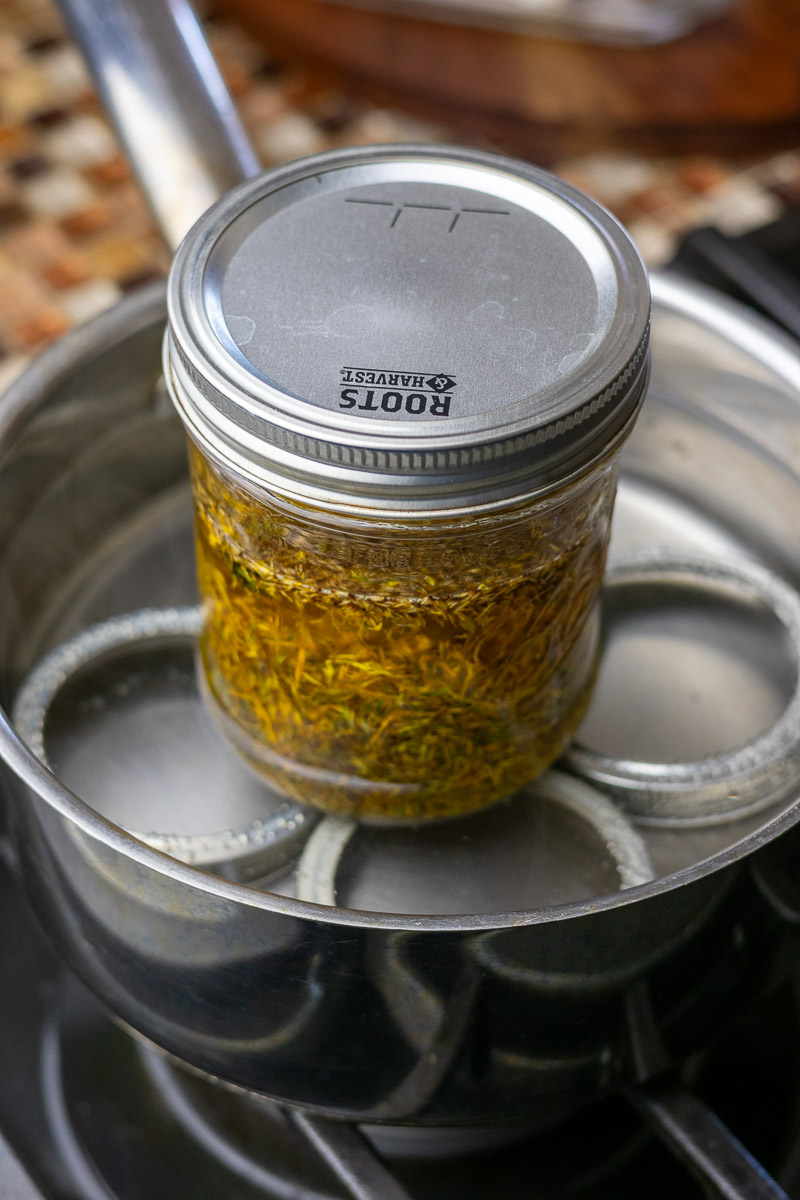
Step 4: Gently warm the mixture.
Place your covered jar in a double boiler, or slow cooker and keep the temperature below 140°F (60°C). Keeping heat on low should take care of this. Let it infuse for about 8 hours, stirring occasionally with a clean, dry utensil.
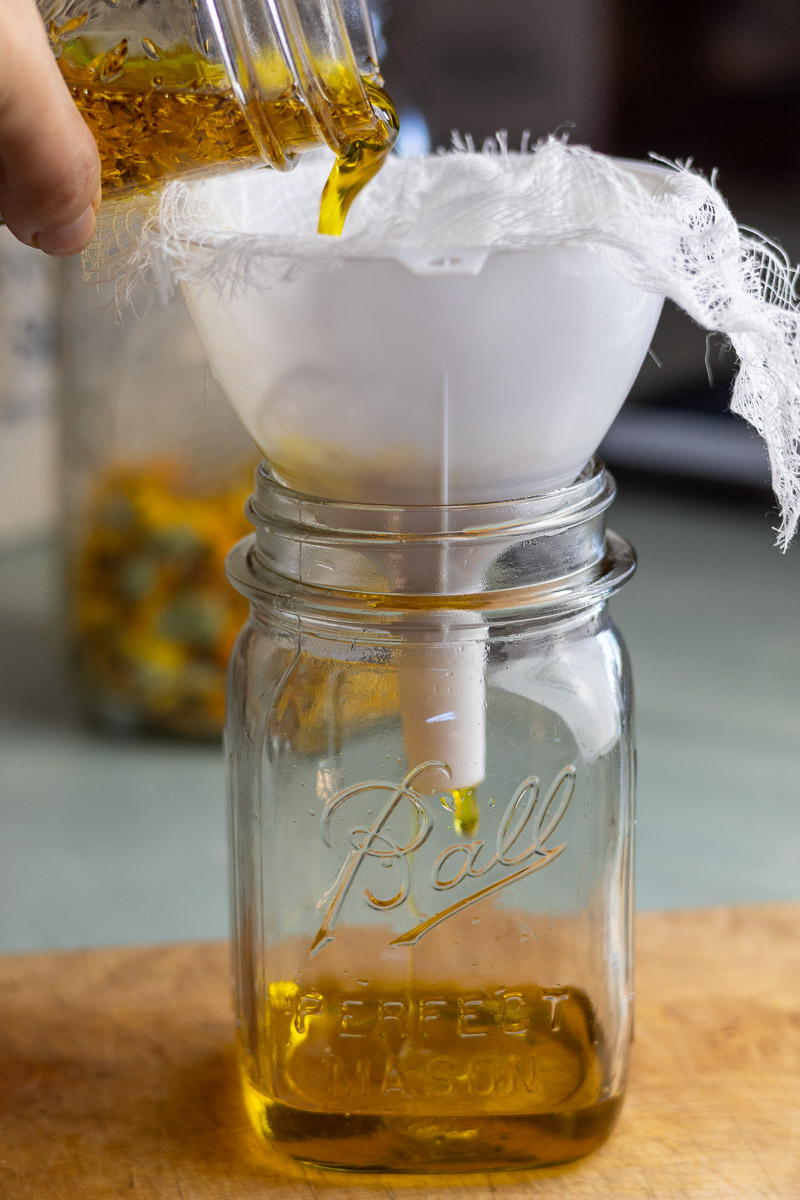
Step 5: Strain the oil.
Allow it to cool slightly, then pour through cheesecloth or a fine mesh strainer into a clean, dry jar.
For a clearer oil (optional), let it sit for a day or two — any fine sediment will settle at the bottom.
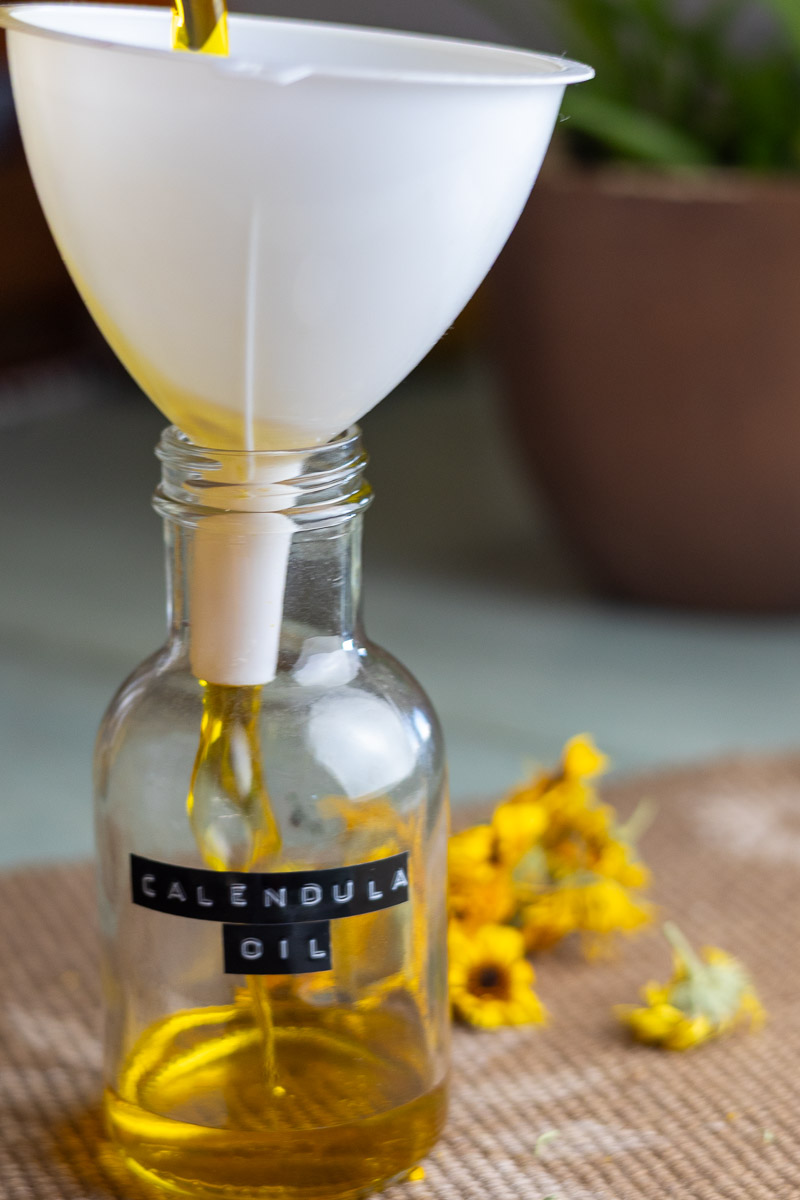
Step 6: Label and store.
Carefully pour the clear oil into another jar, leaving the residue behind.
Label with the contents and date, and store your calendula oil in a cool, dark place.
About the Folk Method & Slow Infusion
As mentioned above, you can either measure out your calendula and oil or simply eyeball the amounts. This is known as the folk method — an intuitive approach that many herbalists still use today.
It’s usually paired with a slow infusion (not always), where the herbs steep in oil over time rather than heat. To do this, fill your jar halfway with dried calendula, cover with oil, and either:
- Let it sit in a warm, dark place for 4–6 weeks, stirring or shaking occasionally, or
- Place the jar in a dark paper bag and set it in a sunny window for 1–2 weeks (a solar infusion).
Learn More About Herbal Oil Making
If you’d like to learn more about herbal oil infusions & make them like a pro, the Herbal Academy’s Herbal Oils 101 Mini Course is a great place to start. It guides you through choosing the right carrier oils, working with different herbs, and mastering alternate infusion techniques.
Tips
- I focus on a warm bath stove top method in this post, but if you have an oven that goes down to 140 degrees or a dehydrator that will fit a jar, you could use these too.
- Customize your oil by adding a little dried chamomile, lavender, or plantain leaf to add more soothing properties.
FAQ
It’s best to use dried calendula flowers. Fresh flowers contain moisture, which can cause your infused oil to spoil quickly. Some herbs are traditionally infused fresh, but this method requires more care and results in a shorter shelf life.
There isn’t one “best” oil — it depends on your preference and how you plan to use it. Olive oil is the most common and shelf-stable, while jojoba, sunflower, or sweet almond oil are lighter, excellent for skin, and also great options.
Shelf life depends on the carrier oil used, but in most cases, at least 1 year.
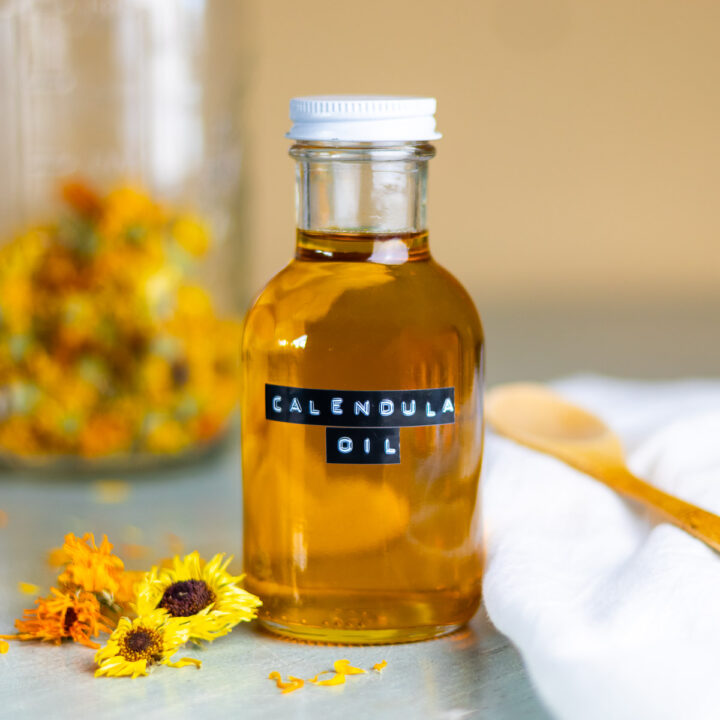
How to Make Calendula Infused Oil (Fast Method!)
Homemade calendula oil is a simple, nourishing addition to your home apothecary. Learn how to harvest, dry, and make calendula-infused oil fast — so once your flowers are dried, you can enjoy its soothing, restorative benefits in just one day!
Ingredients
- Dried calendula flowers
- Carrier oil of choice
- jar with lid, jar for finished oil, funnel, cheesecloth, double-boiler
Instructions
Harvest & Dry (if using fresh flowers): Pick fully open calendula flowers. Lay them out in a single layer to dry until fully moisture-free.
- Prepare the flowers: Gently crumble fully dried calendula flowers.
- Add to jar: Fill a heat-safe jar about halfway with the flowers.
- Pour in oil: Cover flowers with oil until about 1 inch (2–3 cm) above the plant material.
- Warm the mixture: Place jar in a double boiler or slow cooker. Keep heat below 140°F (60°C) and let infuse for 8 hours, stirring occasionally.
- Strain: Allow to cool slightly, then pour through cheesecloth or a fine mesh strainer into a clean jar.
- Optional clarification: Let sit 1–2 days so sediment settles, then pour clear oil into another jar.
- Label & store: Store in a cool, dark place with a tight-fitting lid.
Notes
- I focus on a warm bath stove top method in this post, but if you have an oven that goes down to 140 degrees or a dehydrator that will fit a jar, you could use these too.
- Customize your oil by adding a little dried chamomile, lavender, or plantain leaf to add more soothing benefits.
- Shelf life depends on the carrier oil used, but in most cases, at least 1 year.
Recommended Products
As an Amazon Associate and member of other affiliate programs, I earn from qualifying purchases.

Comments
No Comments