
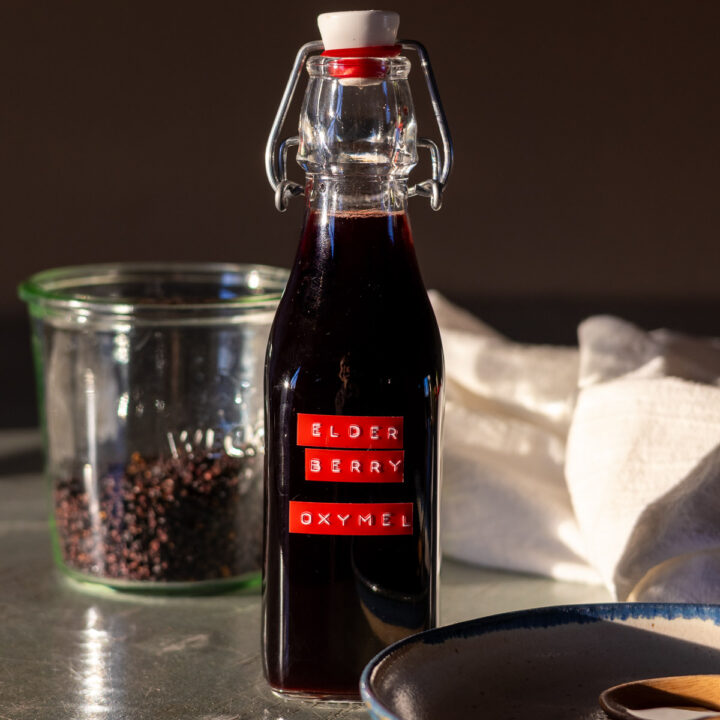
This elderberry oxymel recipe blends tart elderberries with honey and red wine vinegar to create a richly colored, fruity, and flavorful elixir. Perfect stirred into a cup of tea or enjoyed by the spoonful.
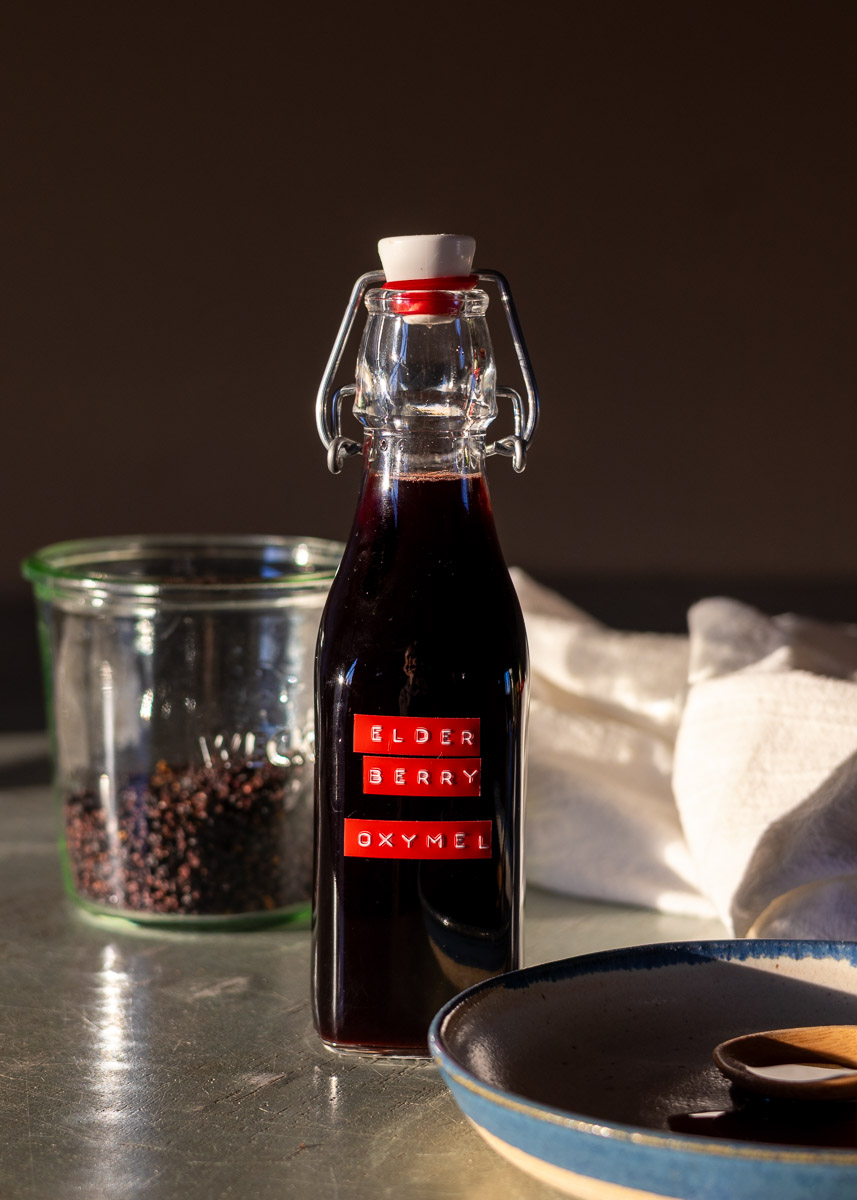
During the colder months, black elderberries (Sambucus nigra) have traditionally been used for immune support, and an oxymel preparation is a lovely way to enjoy them. Elderberries are also delicious, especially when combined with raw honey!
I like keeping an oxymel like this on hand for everyday wellness, but also for culinary adventures — sometimes stirred into herbal tea, sometimes in cocktails, vinaigrettes, or marinades or my favorite- reduced into a balsamic-style glaze for peach Caprese. It’s super versatile in the kitchen, much like other drinking vinegars such as fruit shrubs, or switchels.
This small-batch recipe is easy to make, easy to store, and a lovely addition to a home apothecary.
Jump to:
What is an Oxymel?
An oxymel is a type of drinking vinegar made by combining honey and vinegar. The name comes from ancient Greece and literally means “acid and honey” (óxino méli, όξινο μέλι).
Traditionally, oxymels have been used to preserve the qualities of herbs and fruits by gently drawing them out (vinegar is an excellent solvent). Modern versions often use equal parts honey and vinegar, making them easy to prepare and enjoy.
Learn More about Herbalism
If you’re curious about preparations like elderberry oxymels, much of my learning comes from my herbal studies with the Herbal Academy. Their Introductory Herbal Course covers vinegar and honey infusions alongside other core herbal preparations.
Ingredients for Elderberry Oxymel
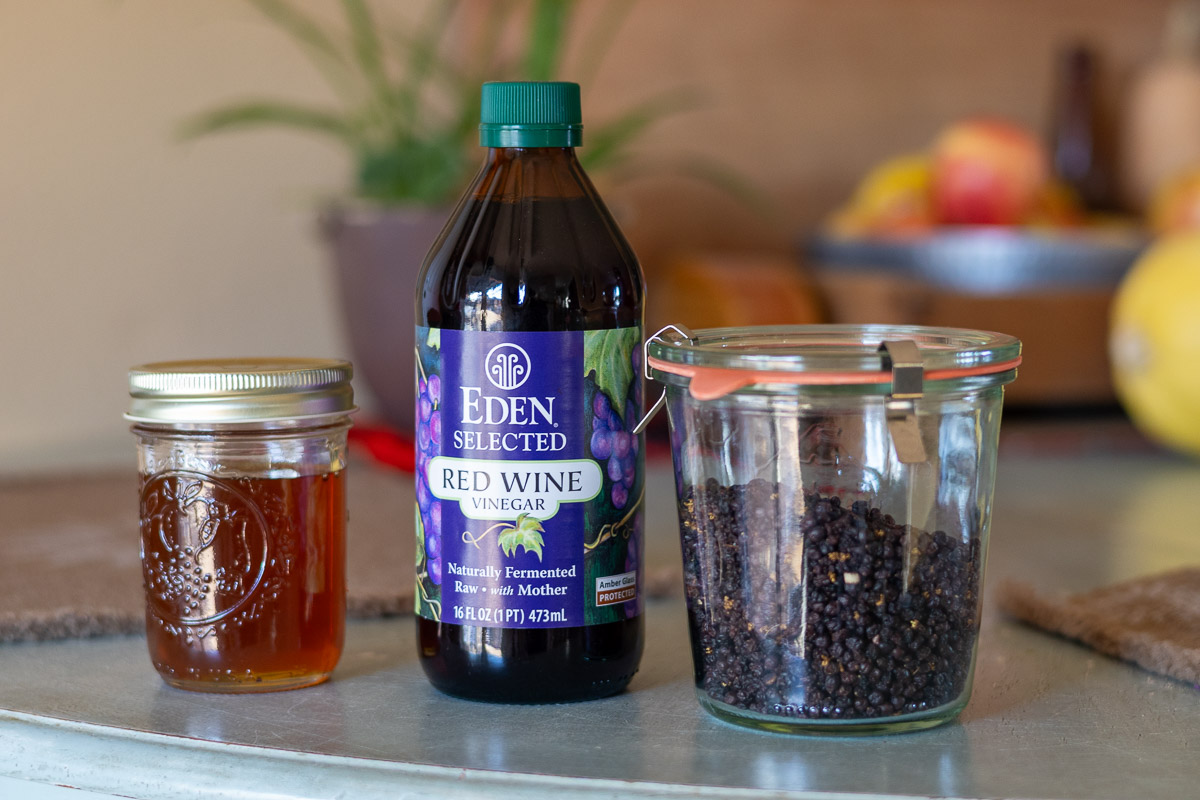
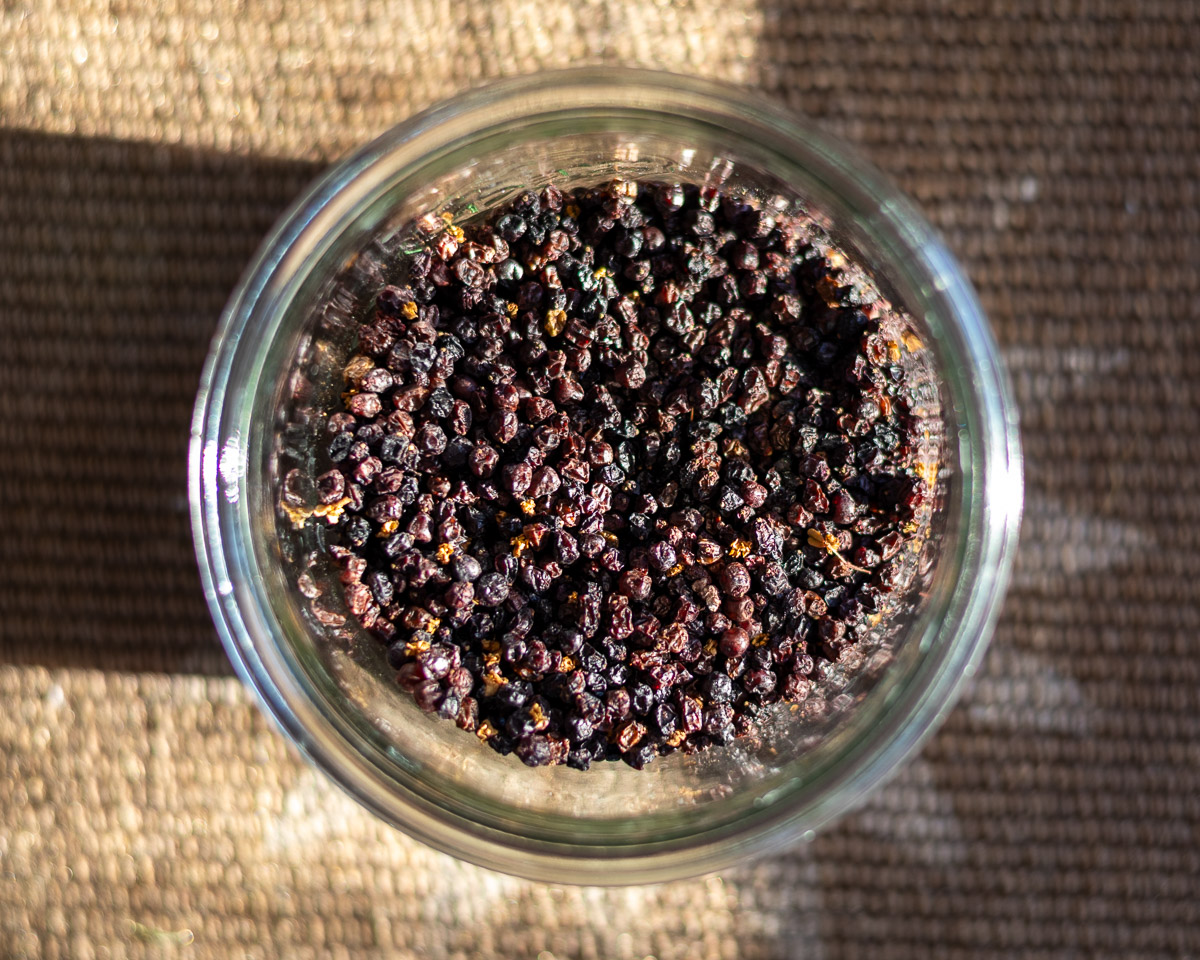
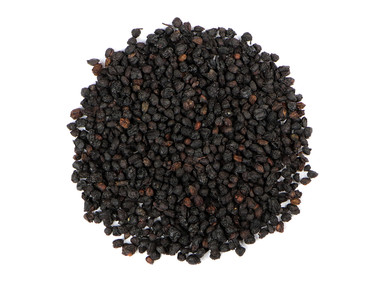
- Elderberries (dried) - Forage your own, or buy from a trusted source like Mountain Rose Herbs.
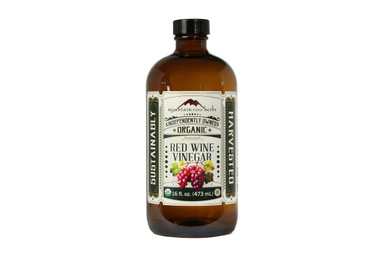
- Red wine vinegar - I love the robust flavor of red wine vinegar in place of apple cider vinegar for this one. Use homemade red wine vinegar or I like this red wine vinegar by Eden (it has the mother). Of course, apple cider vinegar works just fine too.
- Honey - Preferably raw honey for the most nutrient goodness, but any 100% honey you have on hand will do.
Optional Supportive Herbs
Oxymels are flexible. If you’d like to add more warming flavor and supportive herbs, try swapping out a small portion of the dried elderberries and replacing that volume with other herbs.
A tablespoon or two is plenty. Avoid powdered herbs, as they can quickly overtake the oxymel. Some nice options include:
- Ginger root (fresh or dried)
- Rose hips (dried) - Bright and vitamin C–rich.
- Cinnamon chips - Adds warmth and depth.
- Clove (just one is enough)- Strong, aromatic, and grounding.
- Echinacea root - Root of the purple coneflower, often used for immune support.
- Astragalus root - Traditionally used for long-term immune resilience.
How to Make an Elderberry Oxymel
This oxymel is super easy! Just mix everything up, shake occasionally, and wait. You can scale the recipe up if you like, but this small-batch version fits perfectly in a pint-sized mason jar.
I also highly suggest using a non-corrosive lid (do not use a standard metal mason jar lid). The vinegar in this mixture will corrode it, and you will likely taste that in your finished oxymel. I have these lids by Ball, and these lids by Mason Tops are a good option as well.
Step 1: Mix Ingredients & Let Sit
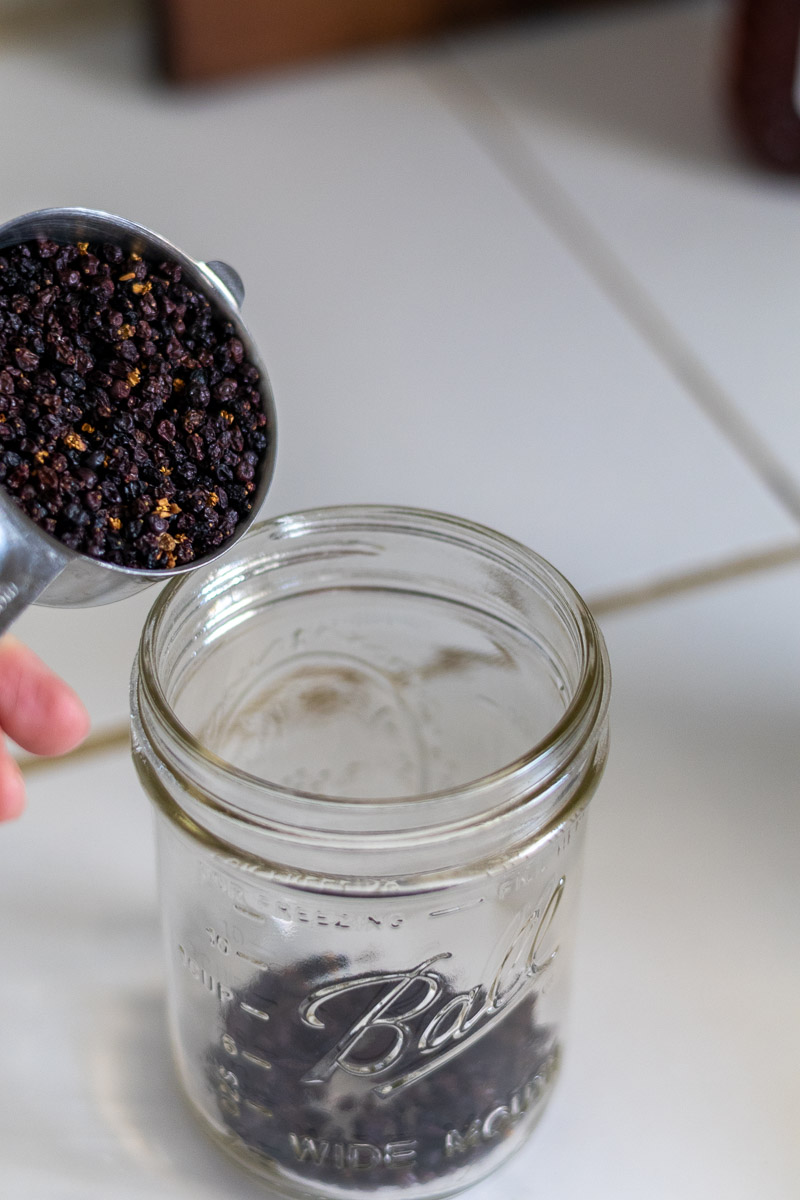
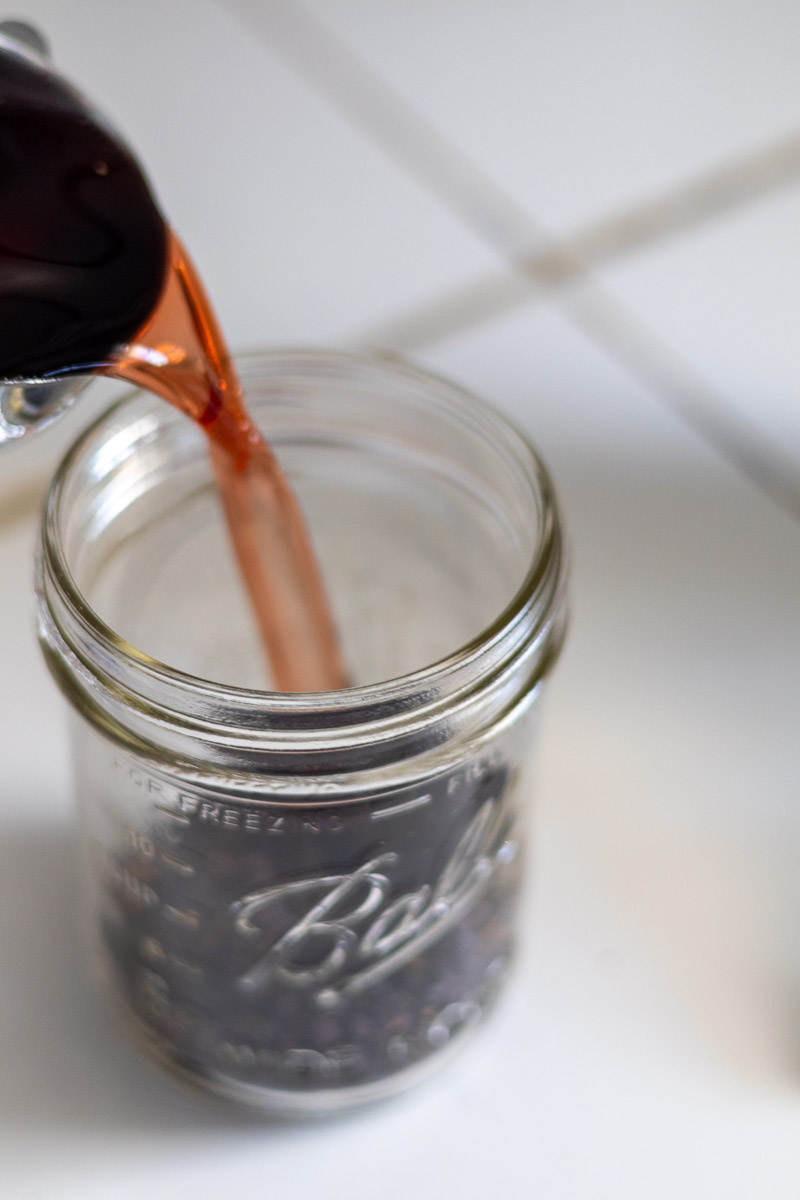
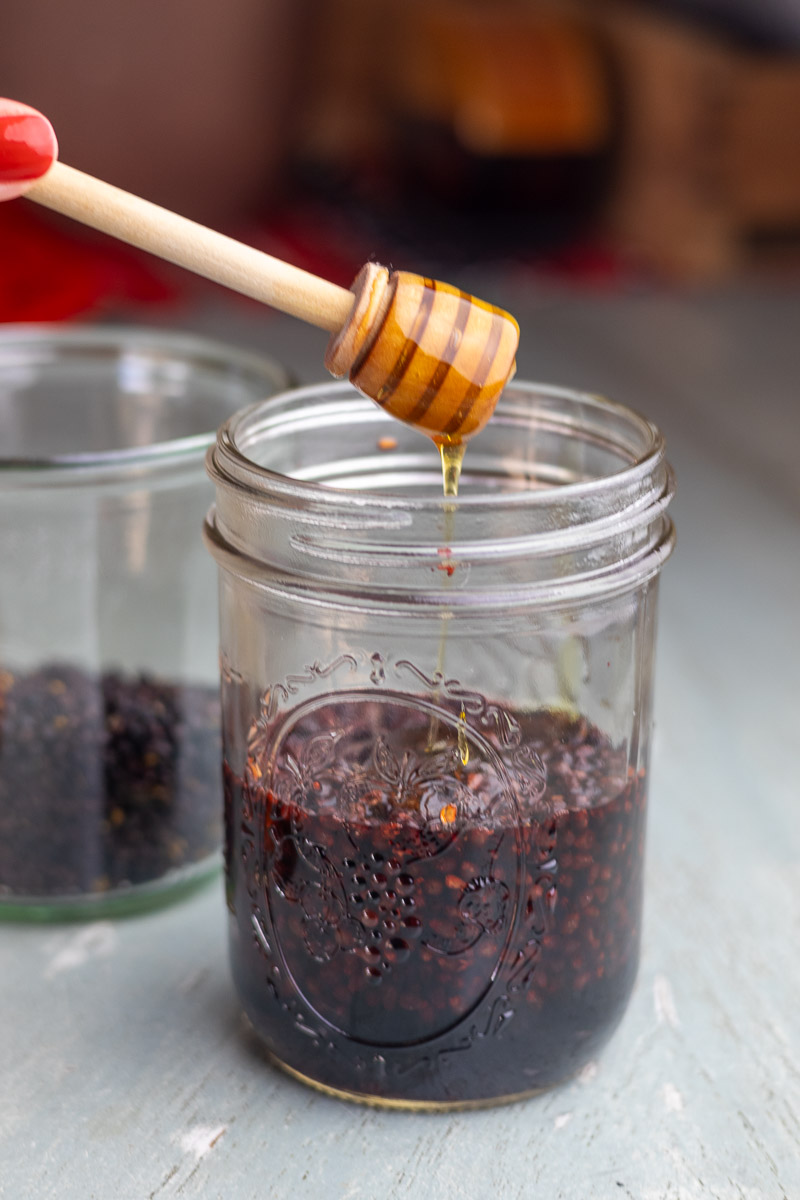
Measure ½ cup of dried elderberries into your jar, then add ¾ cup vinegar and ¾ cup honey.
Put on a tight-fitting lid, stir or shake to incorporate, and let it sit, shaking gently every 2–3 days for 2–4 weeks.
Step 2: Strain and Enjoy
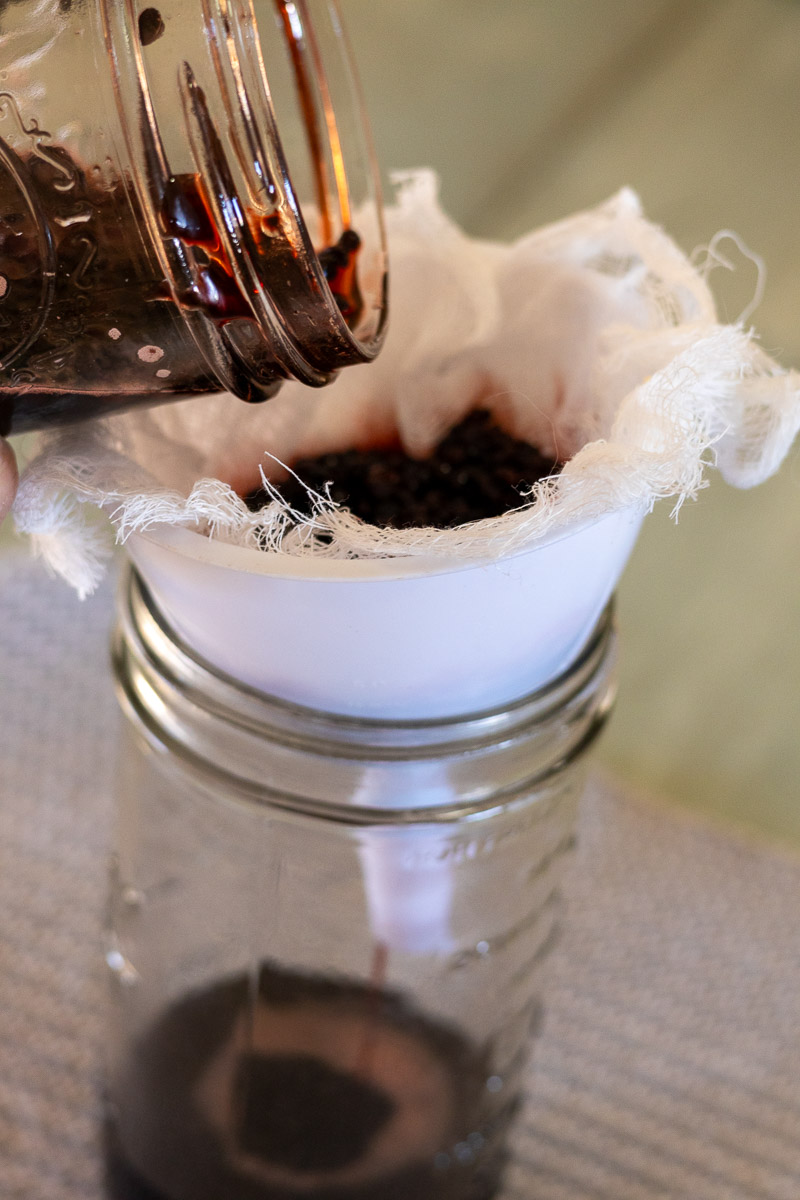
Strain the mixture through a fine-mesh strainer lined with cheesecloth (or use a reusable strainer).
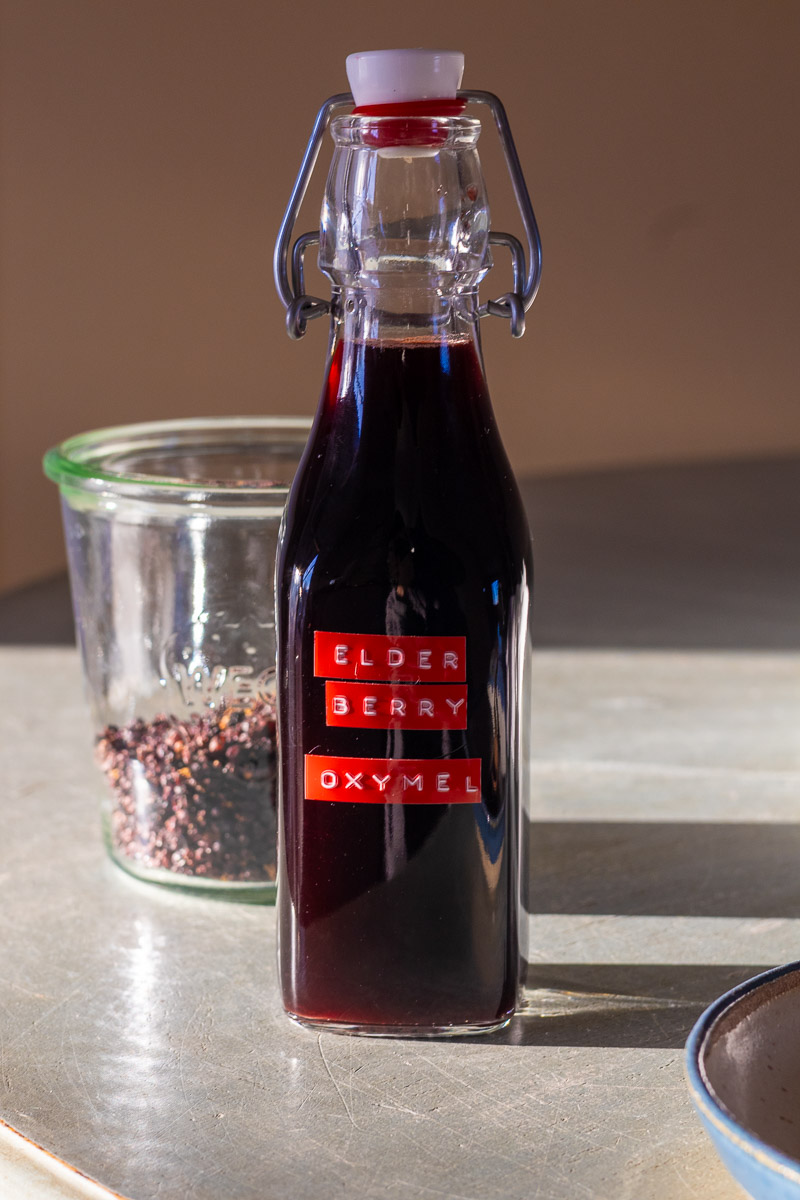
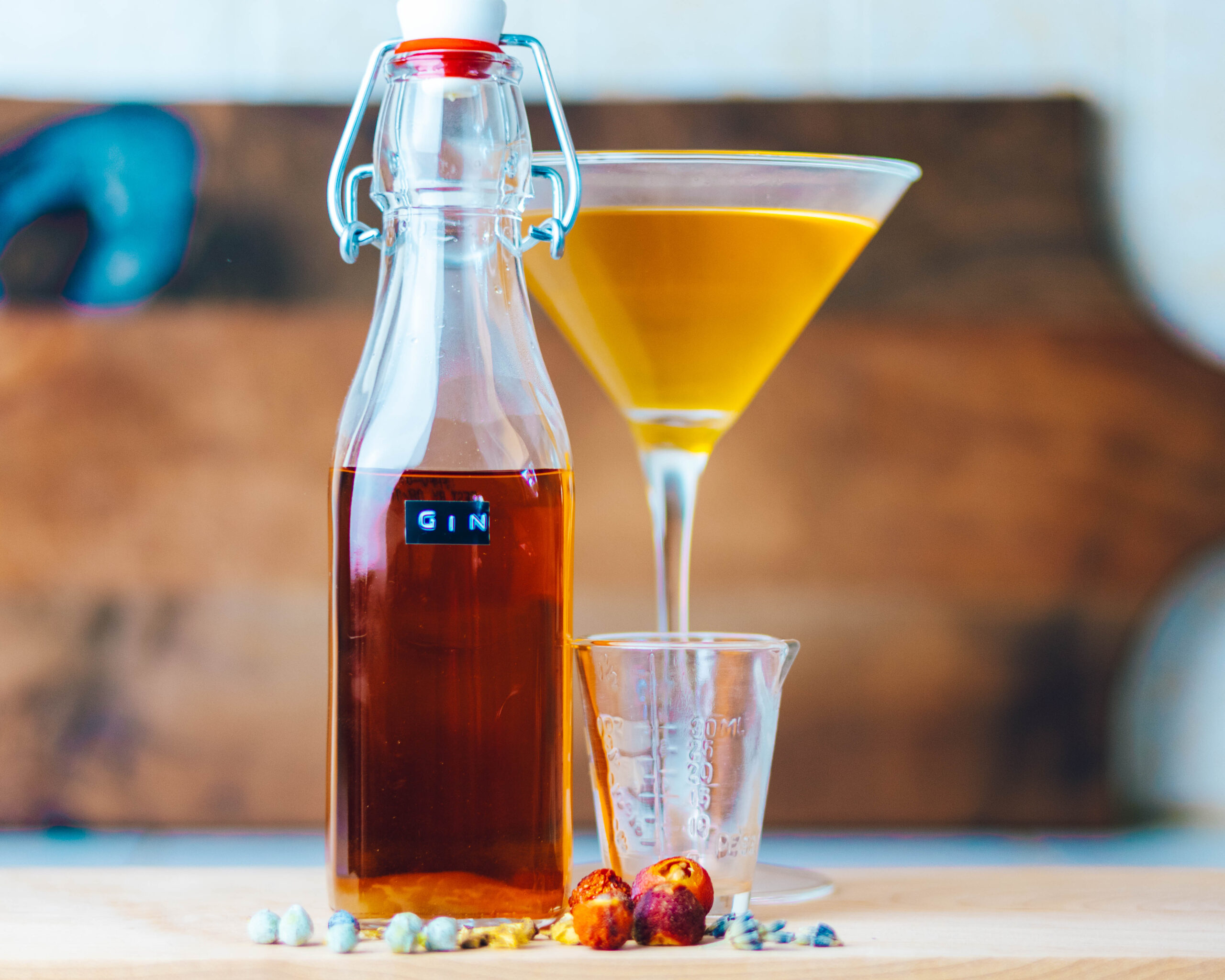
Optionally, transfer your oxymel to another clean jar — I love these swing-top jars — and don’t forget to label!
How to use Elderberry Oxymel
- Dilute with water and use as a simple gargle (definitely dilute, because the vinegar can be harsh on teeth).
- Enjoy daily by the spoonful, or stir into a cup of tea as part of a wellness routine.
- Mix into cocktails or mocktails.
- Try it over ice cream or other desserts for a sweet-tart finish.
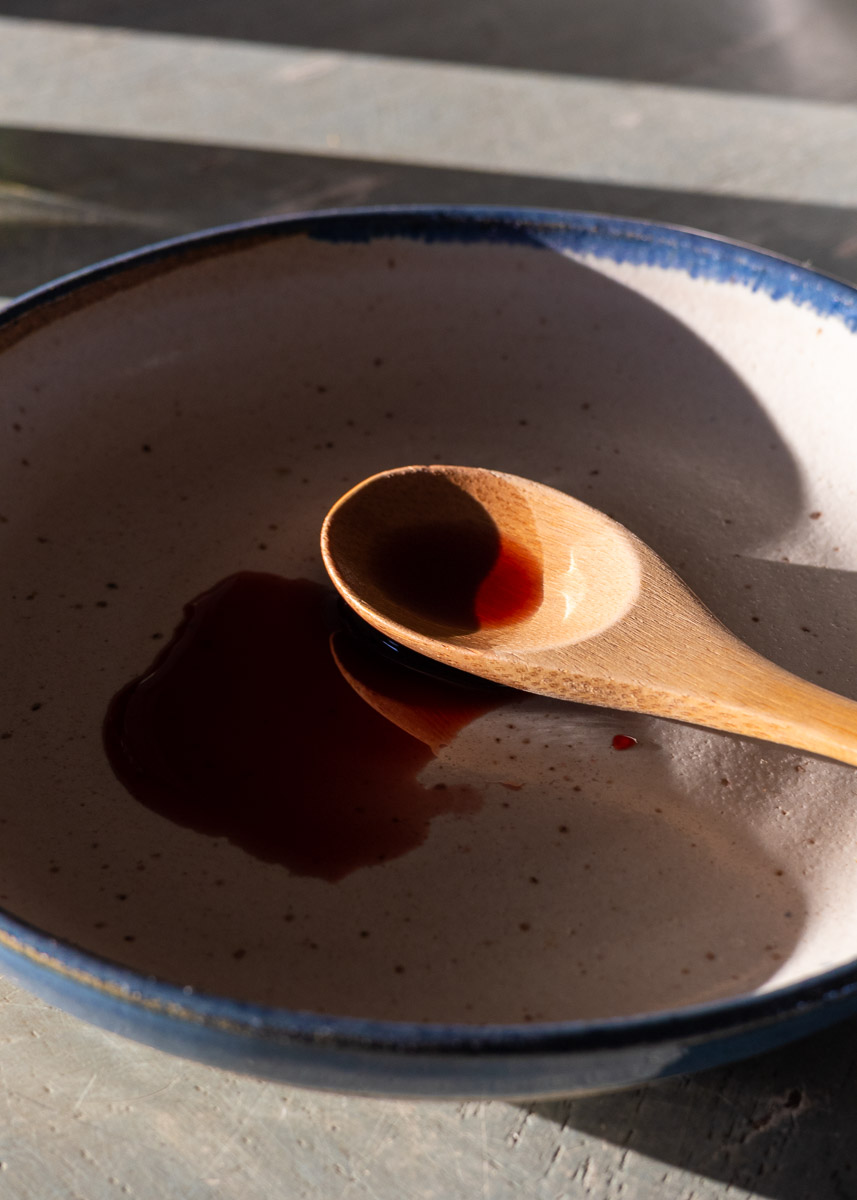
- Drizzle it like you would balsamic reduction for something different.
Storage
Store your oxymel in a clean, airtight jar. I use swing-top jars for easy pouring but mason jars also work great. Keep it in a cool, dark place, or in the refrigerator. Properly stored, it can last for several months.
Tip: Always label your jar with the date you made it so you know how long it’s been.
FAQ
Yes, just use slightly more than the ½ cup that is called for.
They are very similar. Oxymels combine vinegar and honey (often with herbs or fruit), while syrups are typically made with sugar and water and are also used in herbalism to preserve fruits and herbs.
An elderberry oxymel combines soothing honey, tangy vinegar, and elderberries, long used in herbal preparations as part of traditional immune-supporting routines.
Related

Elderberry Oxymel Recipe
This elderberry oxymel recipe blends tart elderberries with honey and red wine vinegar to create a richly colored, fruity, and flavorful elixir. Perfect stirred into a cup of tea or enjoyed by the spoonful.
Ingredients
- ½ cup dried elderberries
- ¾ cup red wine vinegar (or apple cider vinegar)
- ¾ cup honey
- Optional: supportive herbs (ginger, rose hips, cinnamon, clove, echinacea, astragalus)
Instructions
- Combine ingredients. Add the dried elderberries, vinegar, and honey to a pint-sized jar. Stir or shake to combine.
- Let it sit. Seal the jar with a non-corrosive lid. Shake gently every 2–3 days for 2–4 weeks.
- Strain. After infusion, strain through a fine-mesh strainer lined with cheesecloth. Transfer to a clean jar or swing-top bottle.
- Store. Keep in a cool, dark place or in the refrigerator. Properly stored, it lasts for several months. Label with the date.
Notes
- Fresh elderberries: If using fresh, use slightly more than ½ cup.
- Optional herbs: Add 1–2 tablespoon total of ginger, rose hips, cinnamon, clove, echinacea, or astragalus for extra flavor and immune support. Avoid powdered herbs.
- Lid: Use a non-corrosive lid (swing-top or plastic-lined). Standard metal lids can corrode from vinegar.
- Storage: Keep in a cool, dark place or refrigerator. Always label with the date made.
- Serving tips: Dilute for gargle, stir into tea, drizzle over desserts, mix in drinks, or use as a balsamic substitute.
Recommended Products
As an Amazon Associate and member of other affiliate programs, I earn from qualifying purchases.



Comments
No Comments