
Prickly pear cactus pads, or nopales, can be a bit intimidating to prepare. Sure, you can find them canned, but if you want to learn how to clean prickly pear cactus pads (nopales) for eating, read on for a step-by-step method that handles both the spines and glochids.

This post refers specifically to the Opuntia genus of cacti, also known as prickly pear cactus, or nopales. These cacti have the distinctive flat pads.
You’ll most often find nopales scrambled with eggs in huevos con nopales, grilled as nopales asada, simmered in cactus and bean stew, or served cold in a fresh nopales salad with tomato and lime.
Prickly pear cactus also produces a vibrant fruit called tunas later in the season. They are often used for fruit salads to juices and jellies.
Depending on where you’re foraging, you might spot Mormon tea (American Ephedra) growing near prickly pear cactus — both love dry, rocky ground and sunny slopes.
Nopales might seem like an unusual food to some, but they’ve been an important and culturally significant food source for people in Mexico, the southern United States, and other parts of the Americas for millennia. Their mucilaginous flesh is super hydrating and nourishing, which makes them perfect for hot climates. And honestly, they’re pretty delicious if you know how to prepare them. Isn’t that true for all fresh vegetables?
Preparing fresh nopales is definitely a tedious process, but I encourage you to give it a try.
Jump to:
Mini Nopales Glossary
Here’s a handy reference for some botanical terms you might come across when cleaning and preparing nopales:
- Cactus Paddle / Nopal: The flat, fleshy segment (pad) of the prickly pear cactus that we eat when cooking nopales. Botanically, it’s a modified stem. Pads, paddle, and nopales are used interchangeability in this post.
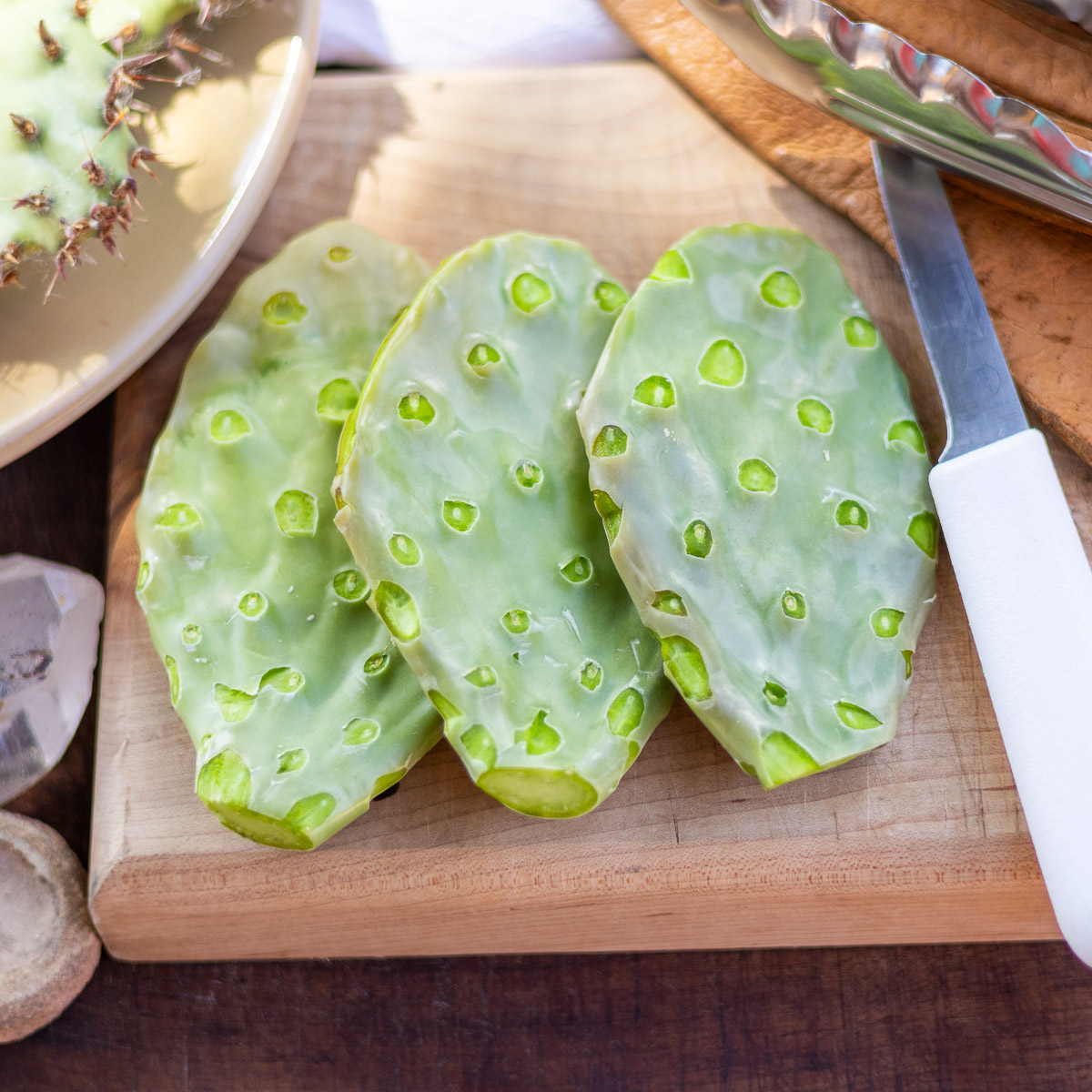
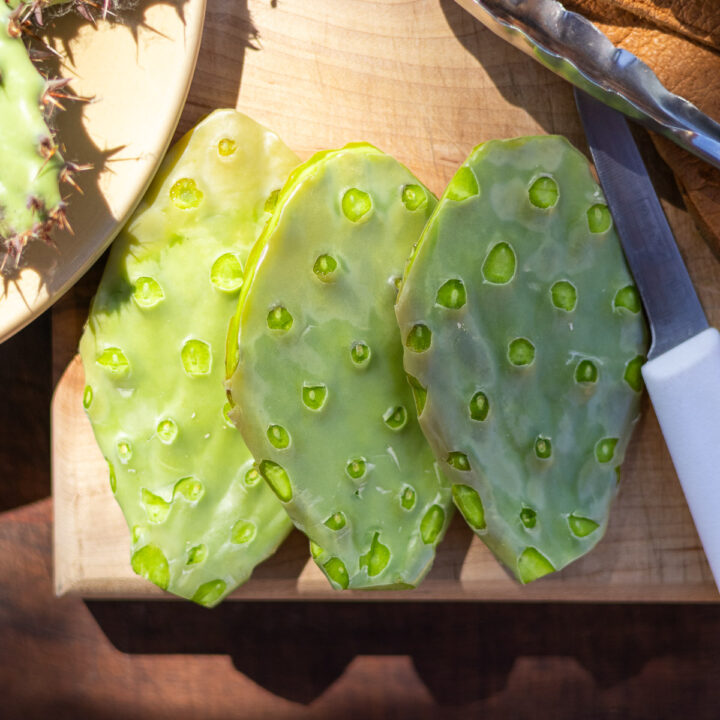
- Areolas: Raised bump “growth spots” covering the cactus pad where spines and glochids are found.
- Spine: The large, sharp, needle-like spikes that grow from the areolas.
- Glochid: Tiny and numerous hair-like spines found clustered around the areolas. They can be very irritating to the skin.
- Mucilage: The slimy, gel-like substance inside nopales.
Tools You’ll Need
- Thick leather gloves - Protection from prickly pear cactus spines and glochids when harvesting. Canvas or rubber gloves will not work - the spines will easily poke through. I thrifted mine but I linked to some with good reviews.
- Hard storage container - Metal or glass is preferable here, plastic can get imbedded with the spines. Another option is a discardable cardboard box.
- Tongs - These will be your hands when harvesting.
- Sharp Pocket Knife - Many times you can simply twist off the pad from the joint, but bringing a knife is handy incase it doesn’t detach easily.
- Gas stove or long lighter - This singes and disarms the spines and most of the glochids.
- Paring Knife - This is used to cut out the areoles in the cleaning process. You can also use a vegetable peeler or something similar.
- Stiff Sponge (optional) - I like to use a scrub pad after I singe the spines and glochids. Not completely necessary but i find it is a helpful step before cutting out the areoles. I use my Lodge cast iron scrub pad, but any stiff scrub will work.
- Food prep gloves (optional) - There always tends to be some pesky glochids remaining after singeing. The prep gloves will help prevent those glochids from lodging into your skin while you are washing pads and cutting out areoles. Optional if you are careful, but i strongly recommend.
Foraging Prickly Pear Pads
Late spring or early summer is the best time to forage for prickly pear cactus. Harvesting the new growth from this time period will be the most tender and have the least amount of large spines.
You can forage older growth with the same process, but they are tougher, often less palatable and have larger spines to deal with.
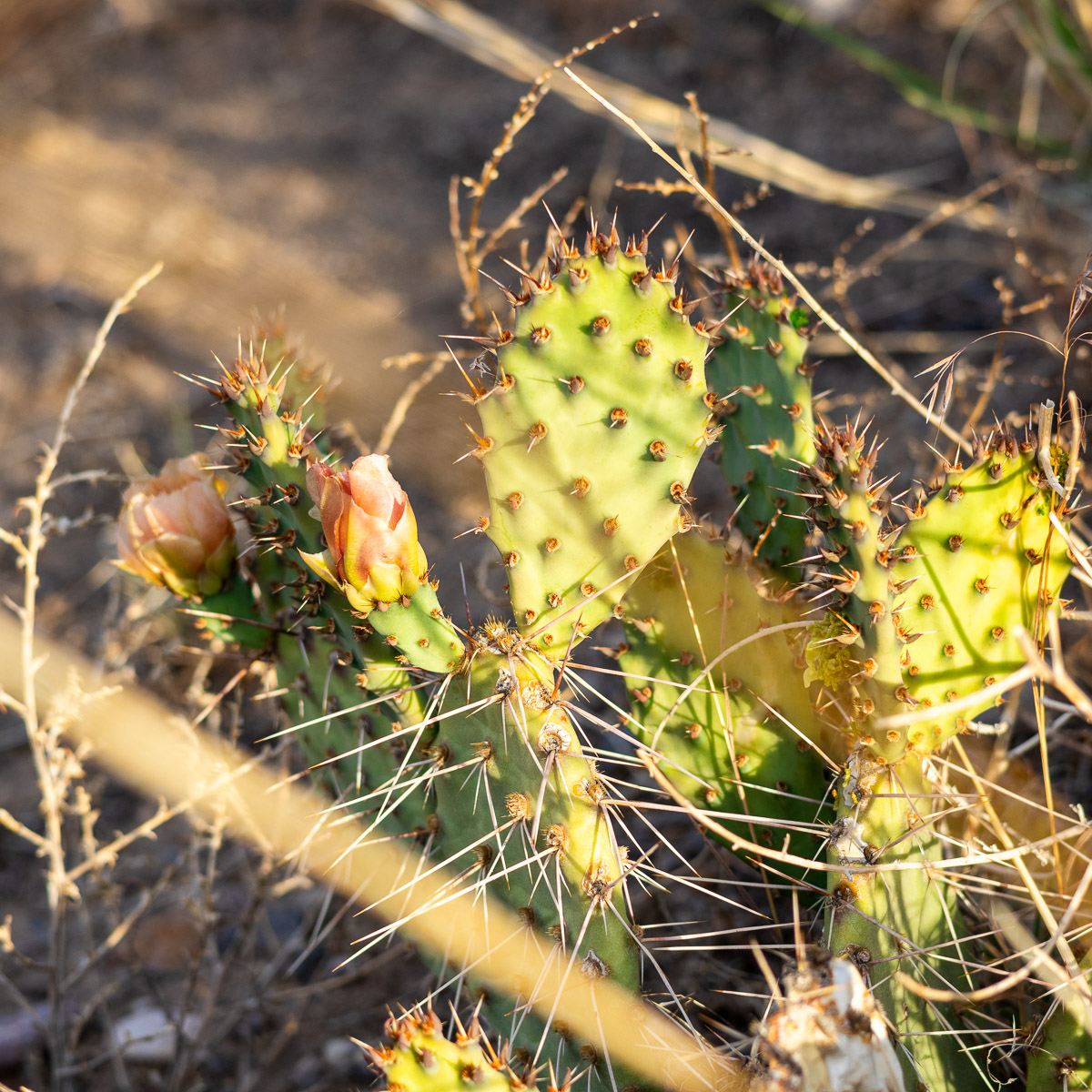
4-8 pads is usually sufficient for most dishes. I do not suggest getting more that this, or if you want to simply familiarize yourself with the process of foraging and cleaning nopales, just harvest 1 pad.
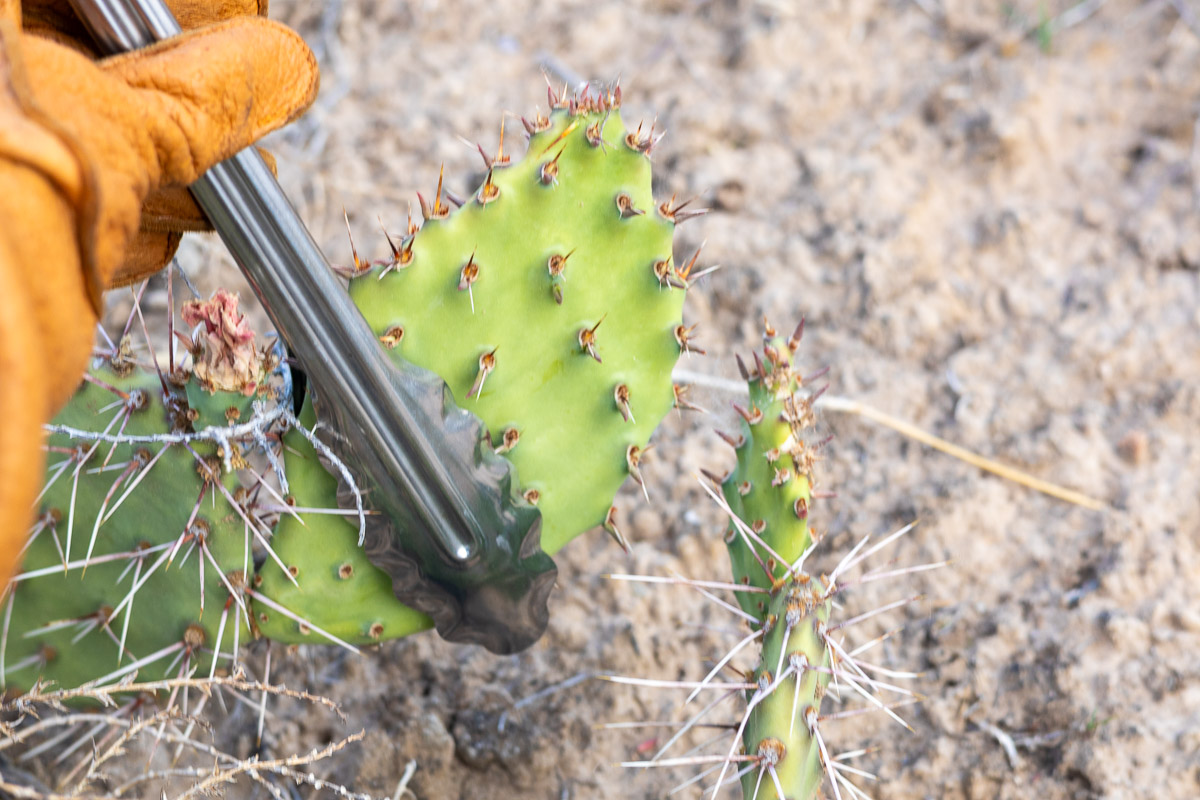
Step 1: While wearing leather gloves, grab pad with tongs and either gently twist to remove pad, or use your sharp knife and cut at the attachment.
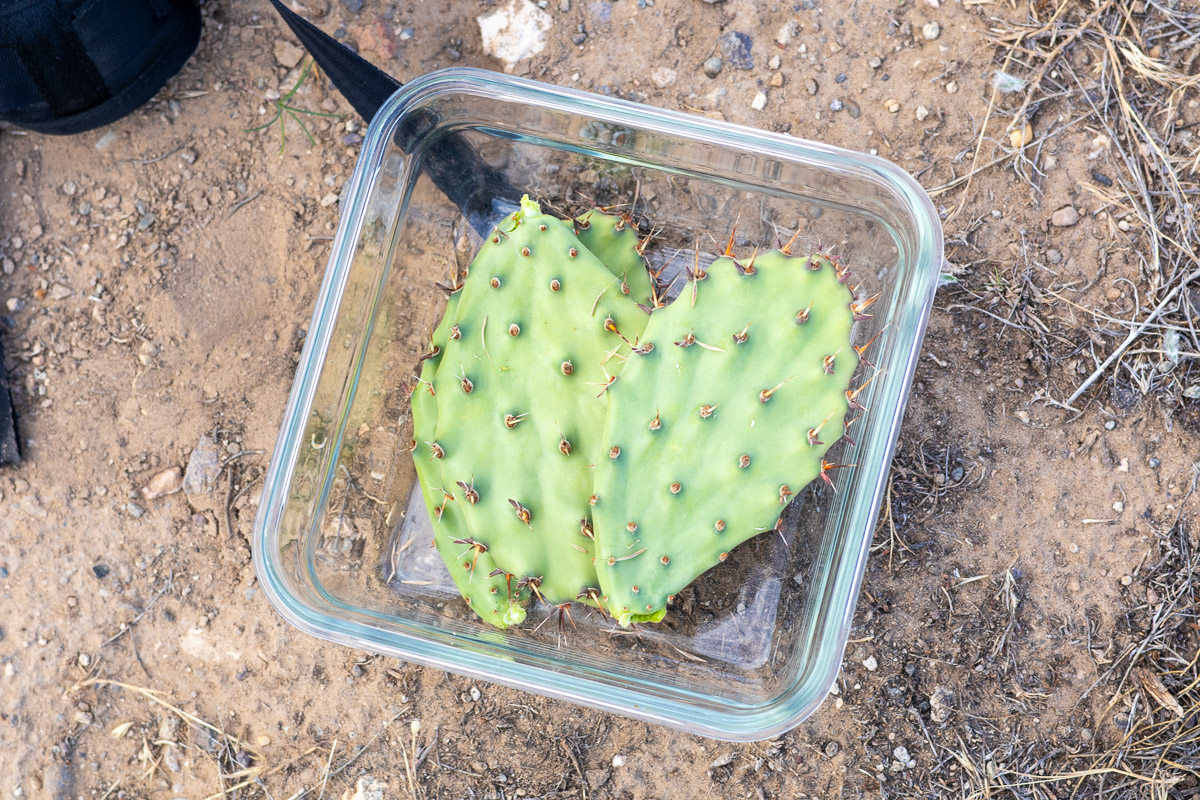
Step 2: Place in your bucket or similar container and bring home to prepare.
How to Clean Nopales Step-by-Step
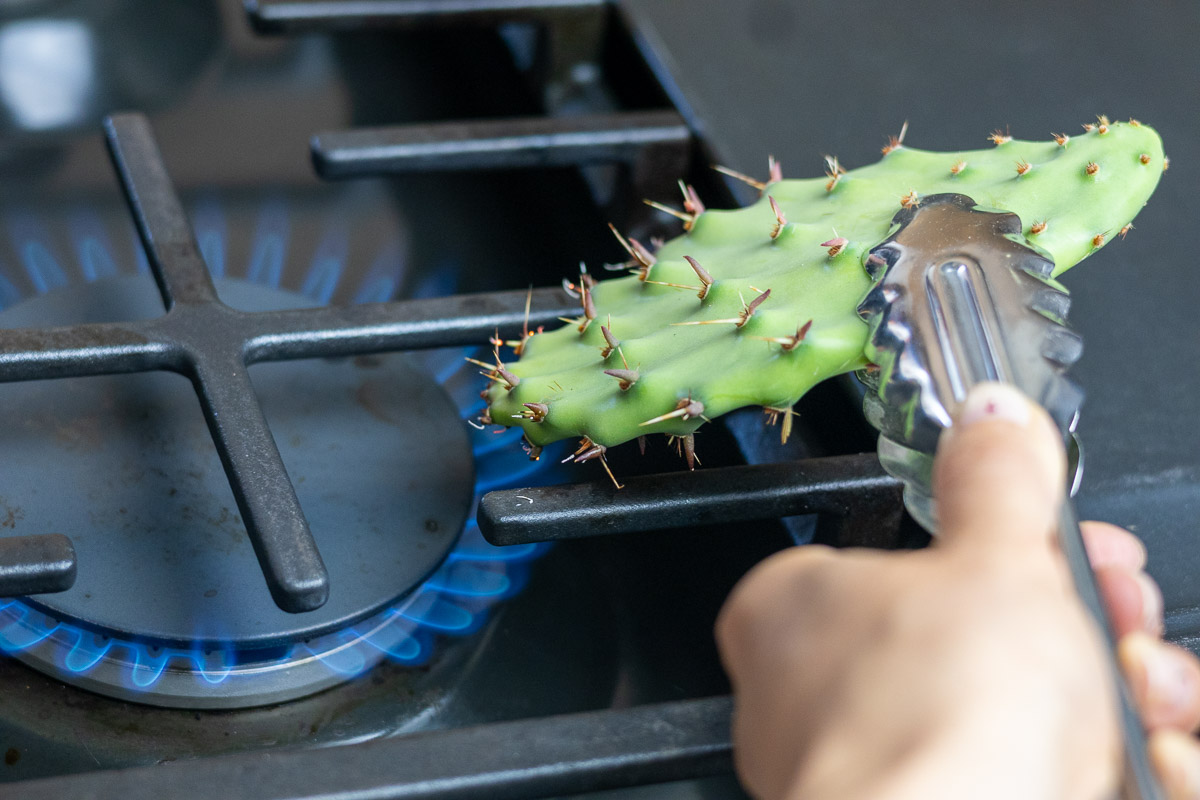
Step 1: Using tongs, hold your pad and singe with gas stove, or long lighter. This will dull the spines and remove most of the golchids. Set aside and continue with the rest of the pads.
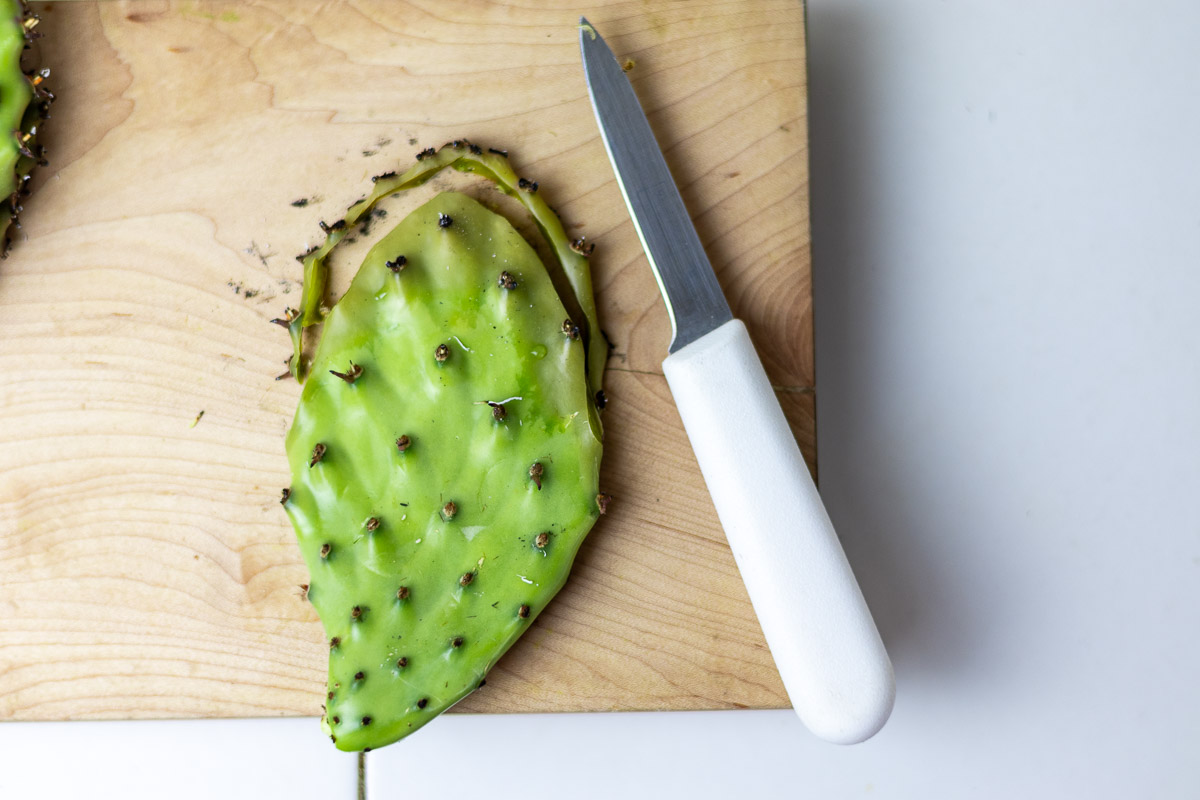
Step 2: Put on your food prep gloves (if using) and rinse pads with cold water.
On a cutting board (a wet paper towel protecting the board is a good idea), use your pairing knife and cut away about a ¼ inch of the top of the pad. Rinse again.
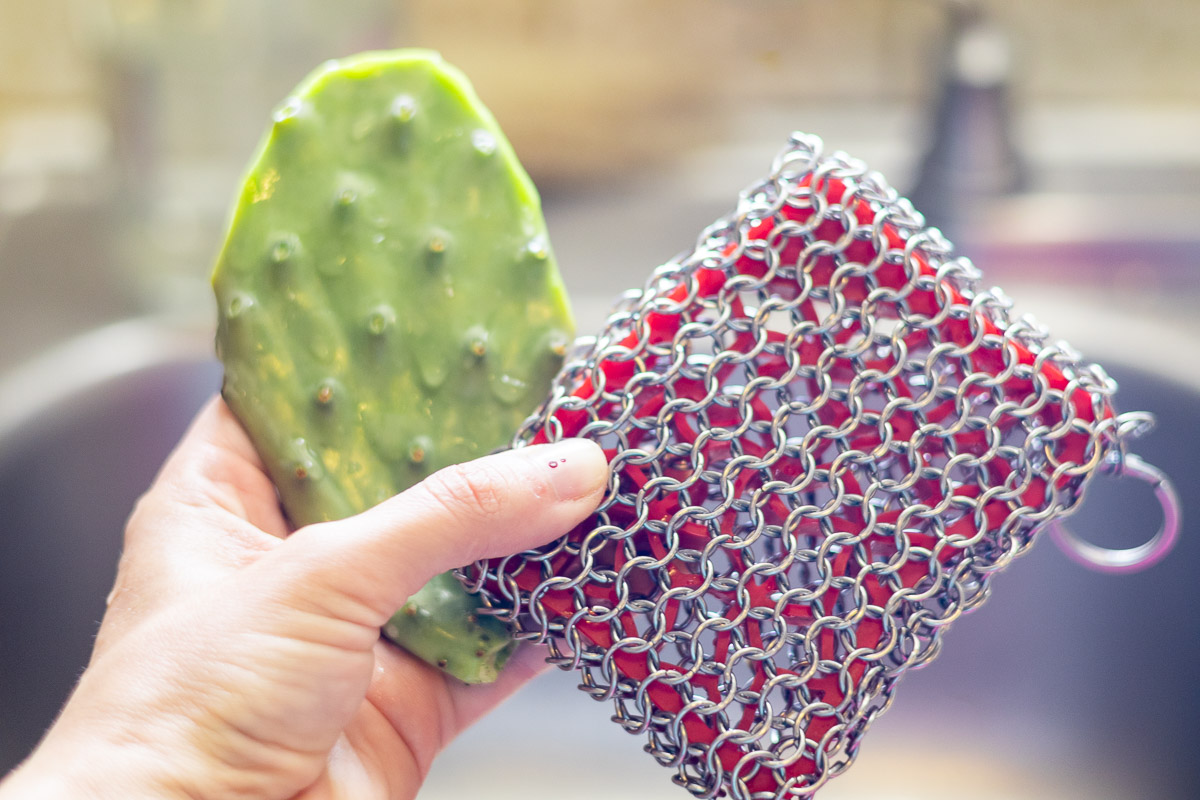
Step 3: Scrub each pad with stiff sponge (if using).
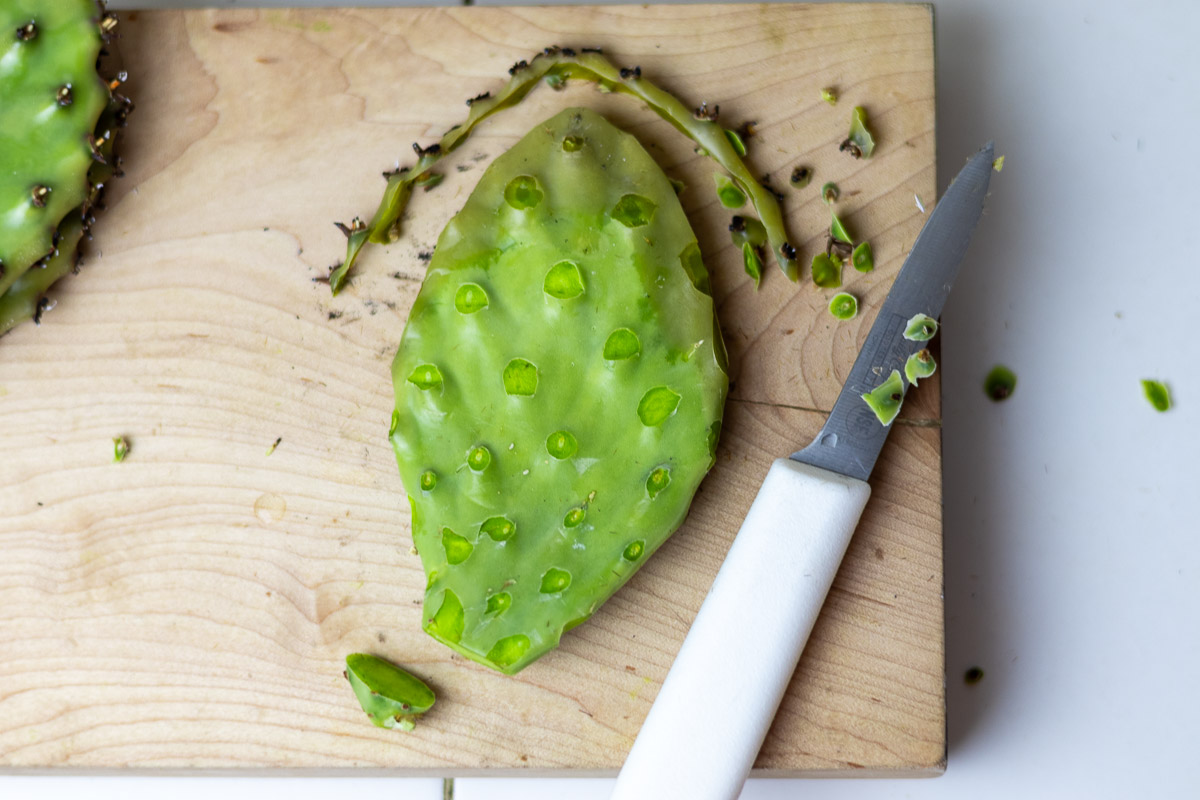
Step 4: Next, using your pairing knife, cut out each areola on both sides and bottom stem part. Rinse.
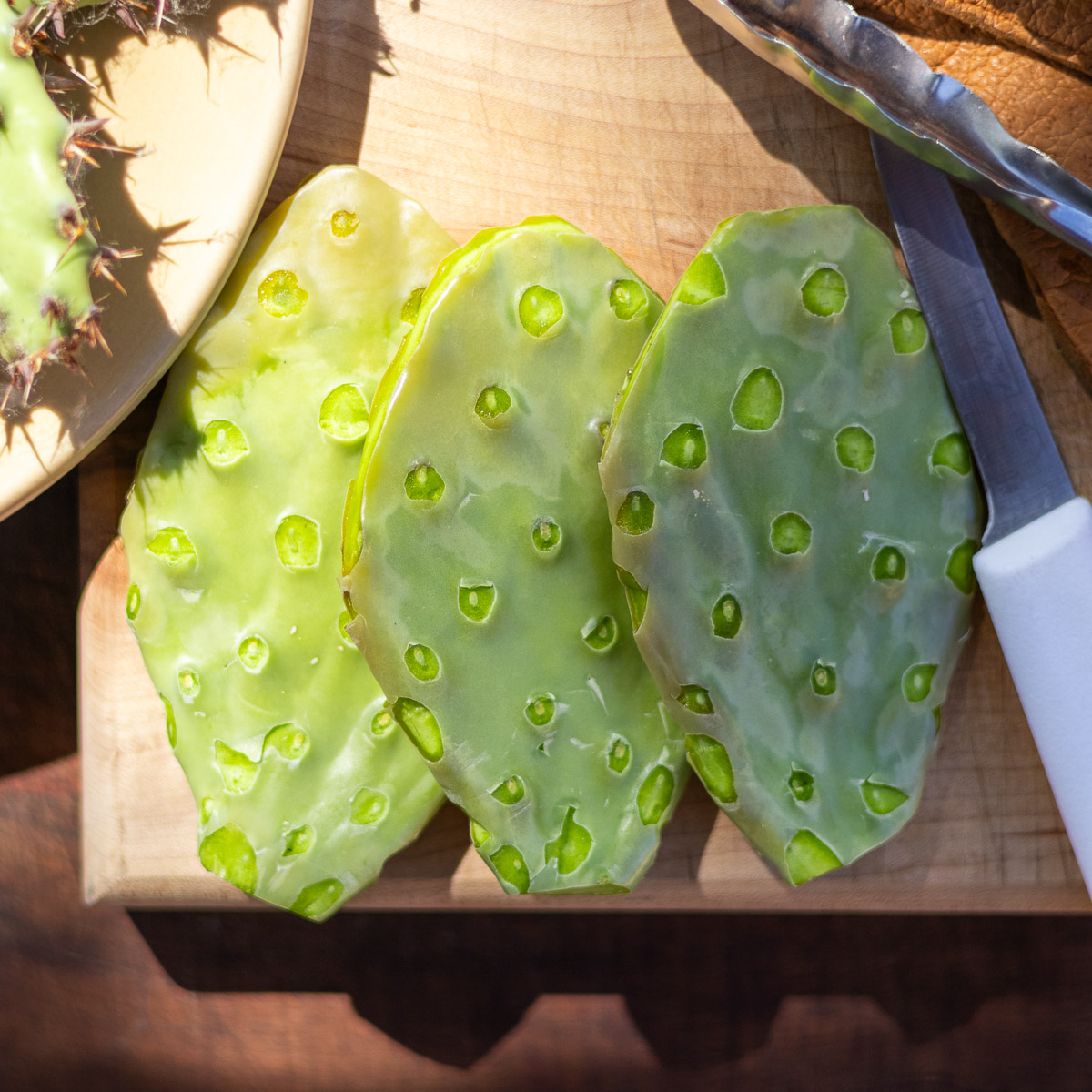
Step 5: Thoroughly inspect ensuring all spines/glochids are gone and don’t forget to look for impeded spines.
Pat dry and either cook according to your recipe or place in storage container for 3-5 days before cooking.
Forager's Tips
- Be thorough when removing glochids and spines, and take care to protect both your skin and your kitchen surfaces during the process.
- Despite your best efforts, you may still get a few glochids in your skin. Keep tweezers nearby just in case. If you’re still feeling irritation later in the day, try applying a layer of washable Elmer’s glue to the area—let it dry fully, then peel it off to remove the fine glochids. Adhesive tape can work too.
- Always harvest responsibly and legally. Check your local foraging regulations, avoid private or protected land, and be sure the plant isn’t endangered in your region.
FAQ
Yes, all species of Opuntia are edible, but some are more palatable, have fewer spines, and are easier to clean—making them more favored than others.
They have a bright flavor reminiscent of green beans, and green pepper with the texture of okra.
Yes! They high in fiber, vitamins (especially vitamin C and A), and minerals like calcium and magnesium.
Related
Looking for other recipes like this? Try these:

How to Clean Prickly Pear Cactus (Nopales) for Eating
Prickly pear cactus pads, or nopales, can be a bit intimidating to prepare. Sure, you can find them canned, but if you want to learn how to clean prickly pear cactus pads (nopales) for eating, read on for a step-by-step method that handles both the spines and glochids.
This card covers the cleaning process only. For foraging tips, see the accompanying post!
Materials
- Prickly Pear Cactus Pads (Nopales)
Tools
- Tongs
- Sharp Pocket Knife
- Gas stove or long lighter
- Paring Knife
- Stiff Sponge (optional)
- Food prep gloves (optional) - strongly recommend.
Instructions
- Using tongs, hold your pad and singe with gas stove, or long lighter. This will dull the spines and remove most of the golchids. Set aside and continue with the rest of the pads.
- Put on your food prep gloves (if using) and rinse pads with cold water.
- On a cutting board (a wet paper towel protecting the board is a good idea), use your pairing knife and cut away about a ¼ inch of the top of the pad. Rinse again.
- Scrub each pad with stiff sponge (if using).
- Next, using your pairing knife, cut out each areola on both sides. Rinse.
- Thoroughly inspect ensuring all spines/glochids are gone and don’t forget to look for impeded spines.
- Pat dry and either cook according to your recipe or place in storage container for 3-5 days before cooking.
🧤 Tried this method? I’d love to hear how it went! Leave a comment below and don’t forget to rate the card if you found it helpful!
Notes
- Be thorough when removing glochids and spines, and take care to protect both your skin and your kitchen surfaces during the process.
- Despite your best efforts, you may still get a few glochids in your skin. Keep tweezers nearby just in case. If you’re still feeling irritation later in the day, try applying a layer of washable Elmer’s glue to the area—let it dry fully, then peel it off to remove the fine glochids. Adhesive tape can work too.
Recommended Products
As an Amazon Associate and member of other affiliate programs, I earn from qualifying purchases.




Comments
No Comments