
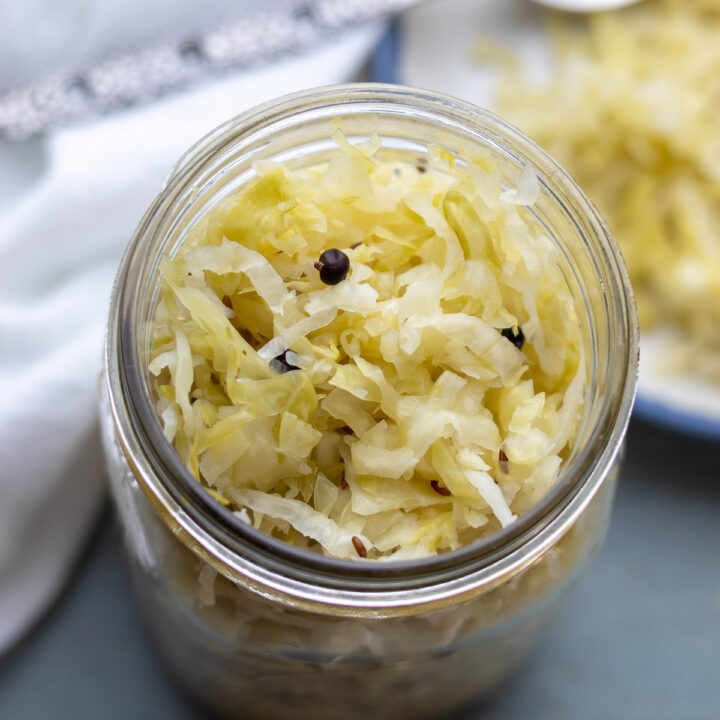
Inspired by old-world kraut recipes, this small-batch sauerkraut blends juniper and caraway into a crisp, aromatic ferment that is perfect for fall and winter meals, all easily made in a mason jar right on your countertop.
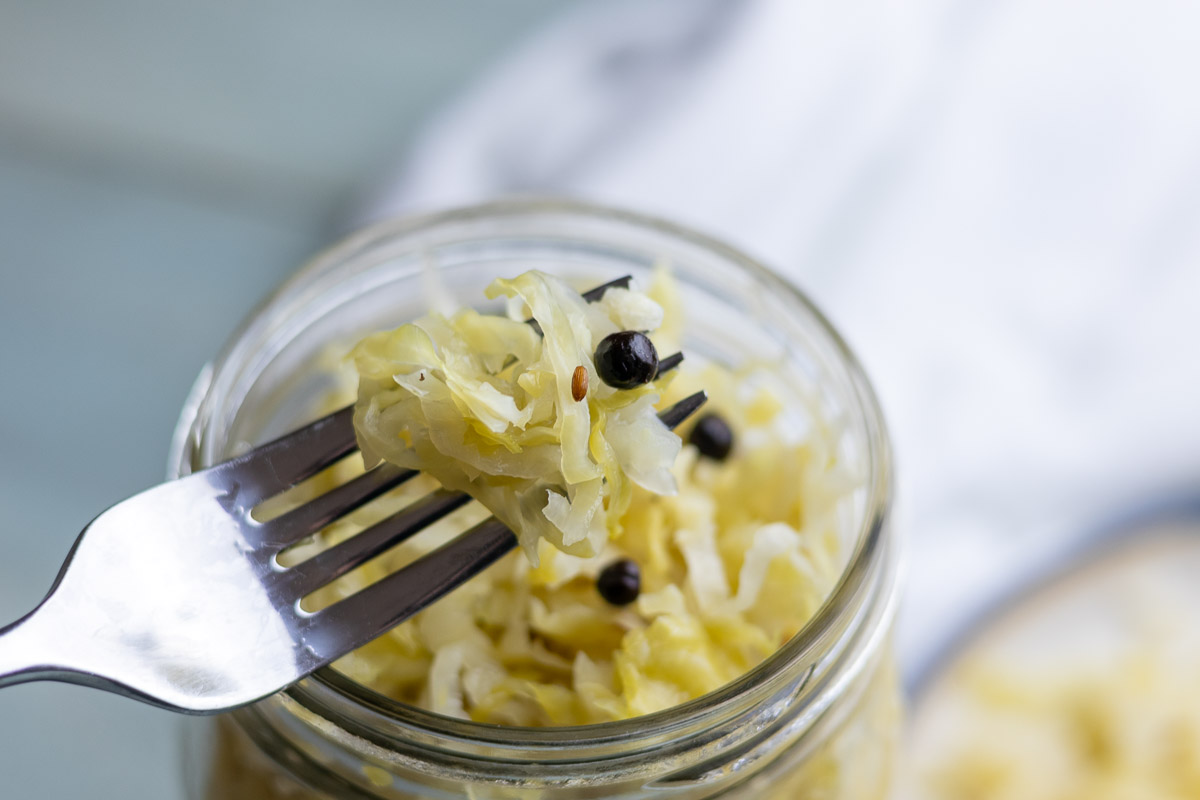
As the temperature cools and the days grow shorter, fall is the perfect time to make sauerkraut. Cabbage is at its sweetest, and fermentation conditions are just right!
This German or Bavarian-style sauerkraut combines a classic European kraut combo — juniper and caraway — for a woodsy, aromatic flavor. The name of my site may give it away, but juniper is one of my favorite culinary ingredients! If you love juniper too, you may enjoy my easy DIY compound gin tutorial.
Curious about the difference between fermentation and pickling? Check out my Fermentation vs. Pickling guide to learn how these preservation methods differ.
Jump to:
Ingredients & Tools You May Need
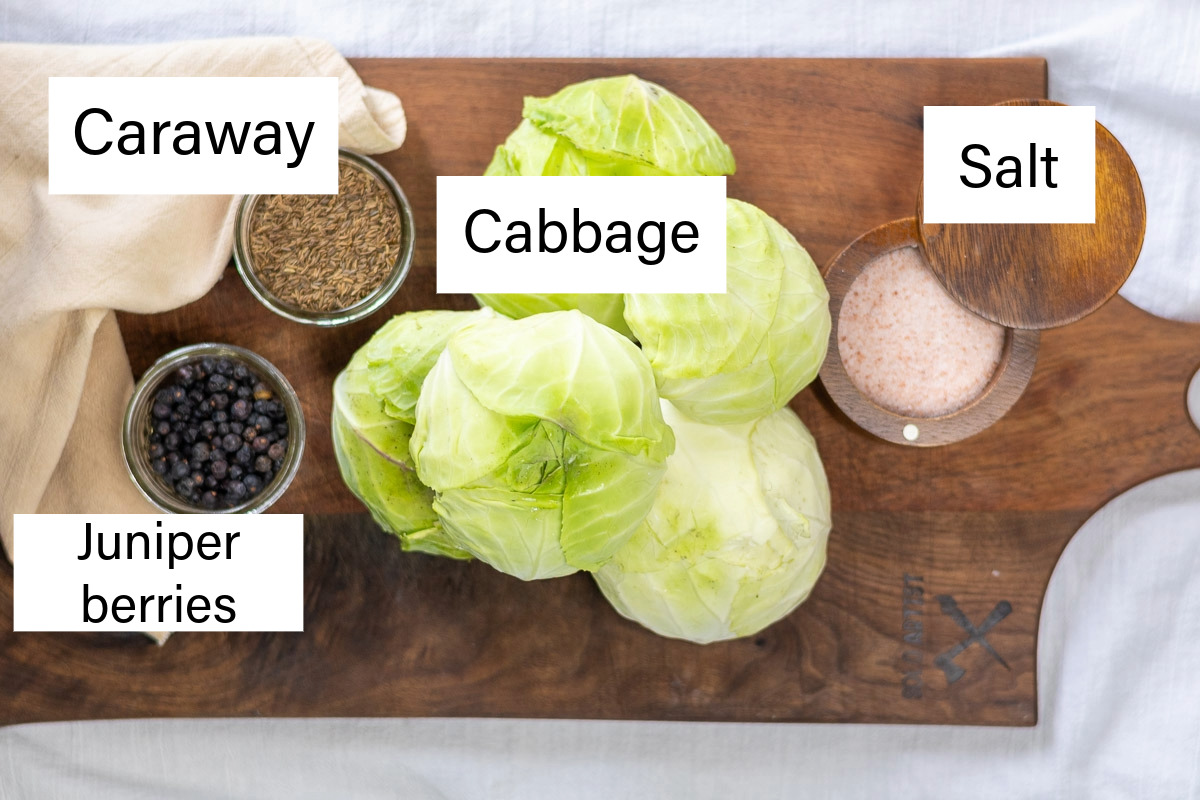
Ingredients
- Cabbage - The base of your kraut.
- Juniper berries - Add a touch of bright, piney flavor to your kraut. Forage your own or purchase dried berries. I share more about identifying and using juniper in my compound gin tutorial.
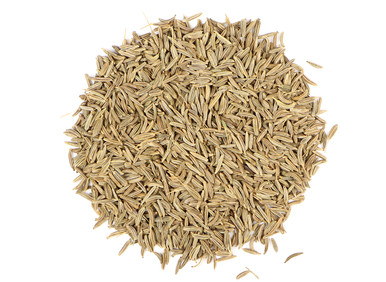
- Caraway seeds - Brings a warm, earthy spice for a classic Old-World flavor.
- Salt - Helps kickstart fermentation! Use non-iodized salt like pickling or sea salt.
Tools
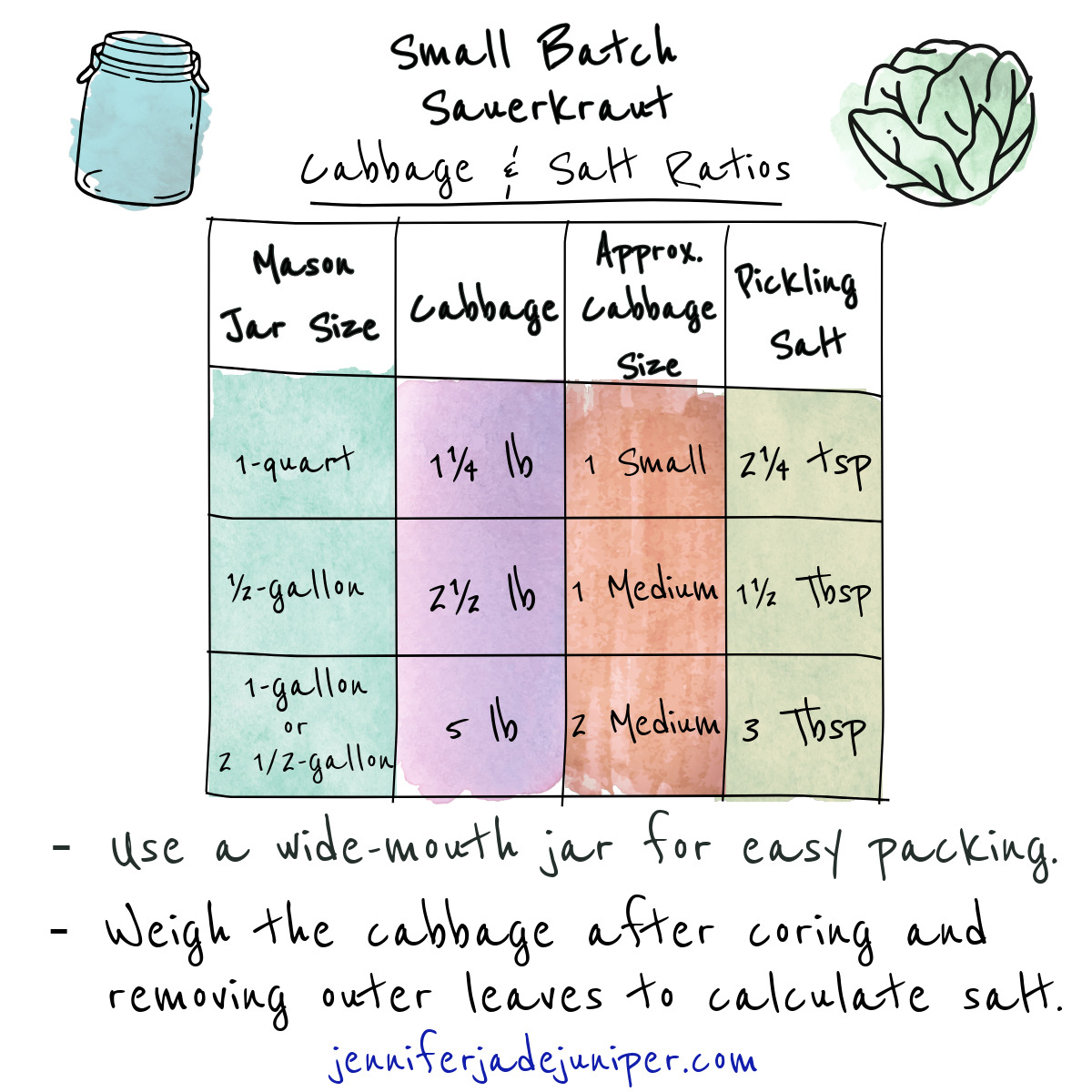
- Mason jar - A 1-quart or ½-gallon jar works perfectly for small batches. You can also use any clean glass vessel with a similar size.
- Mixing bowl - Makes it easier to massage the salt, spices, and cabbage before stuffing into your jar.
- Knife - A sharp knife is best for coring and shredding the cabbage. You can also use a food processor with a slicing blade for speed.
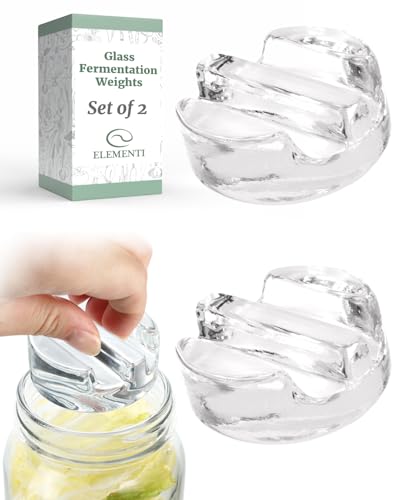
- Fermentation weight - I use a glass weight to keep everything submerged under the brine. You can find ways to make your own weight at home - check out my tips section below for ideas.
- Cabbage packer (optional) - A helpful tool for tightly packing cabbage into the jar. Your hands work just as well if you prefer.
How to Make Juniper Caraway Sauerkraut
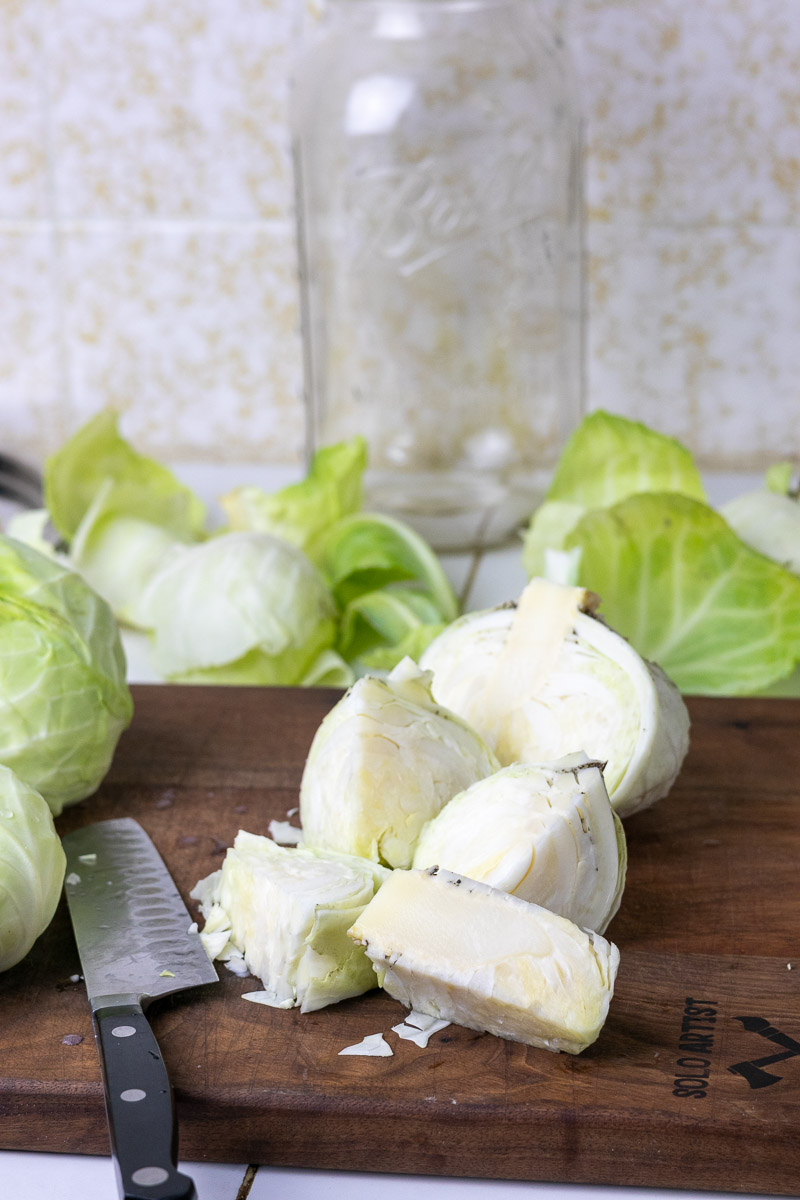
Step 1: Prep the cabbage. Remove the outer leaves and core the cabbage. Reserve 2–3 of the best outer leaves for later.
Discard the tough core or pulse it in a food processor / chop very finely to add back if you like.
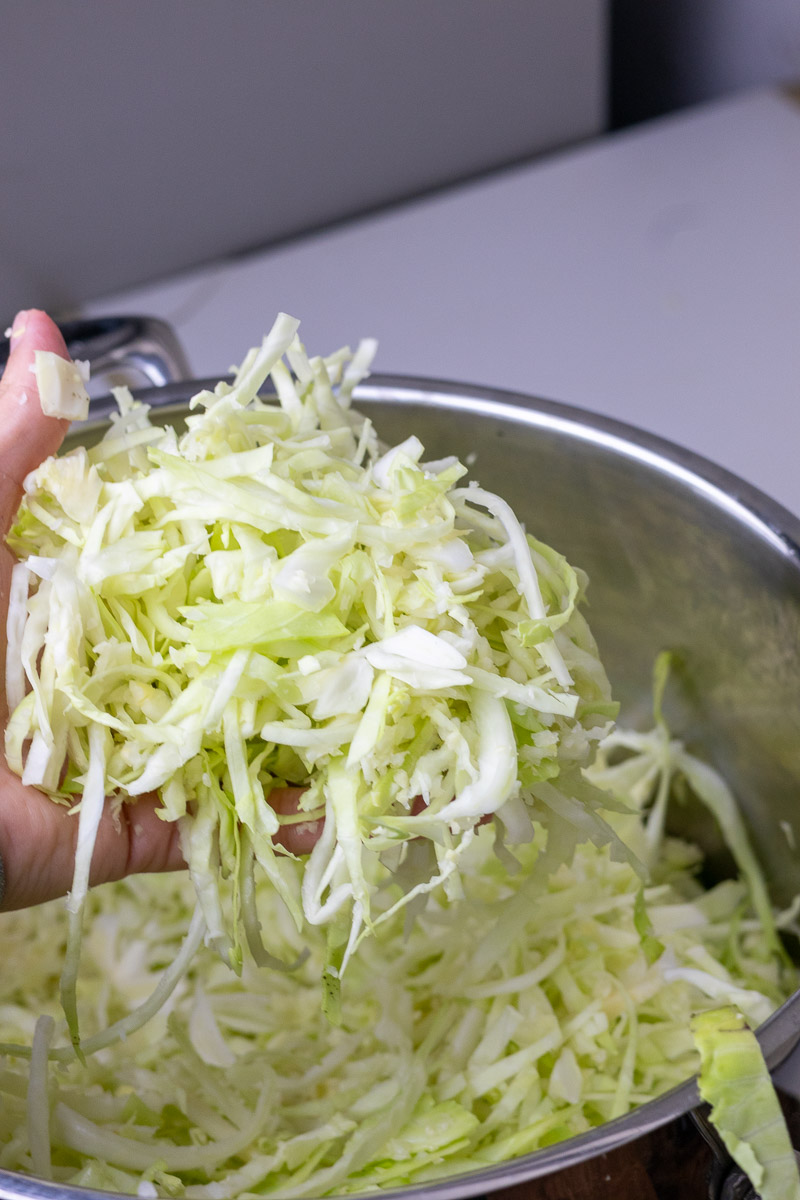
Step 2: Shred the cabbage. Slice or run through a mandoline/food processor until thin.
Place shredded cabbage in a large bowl.
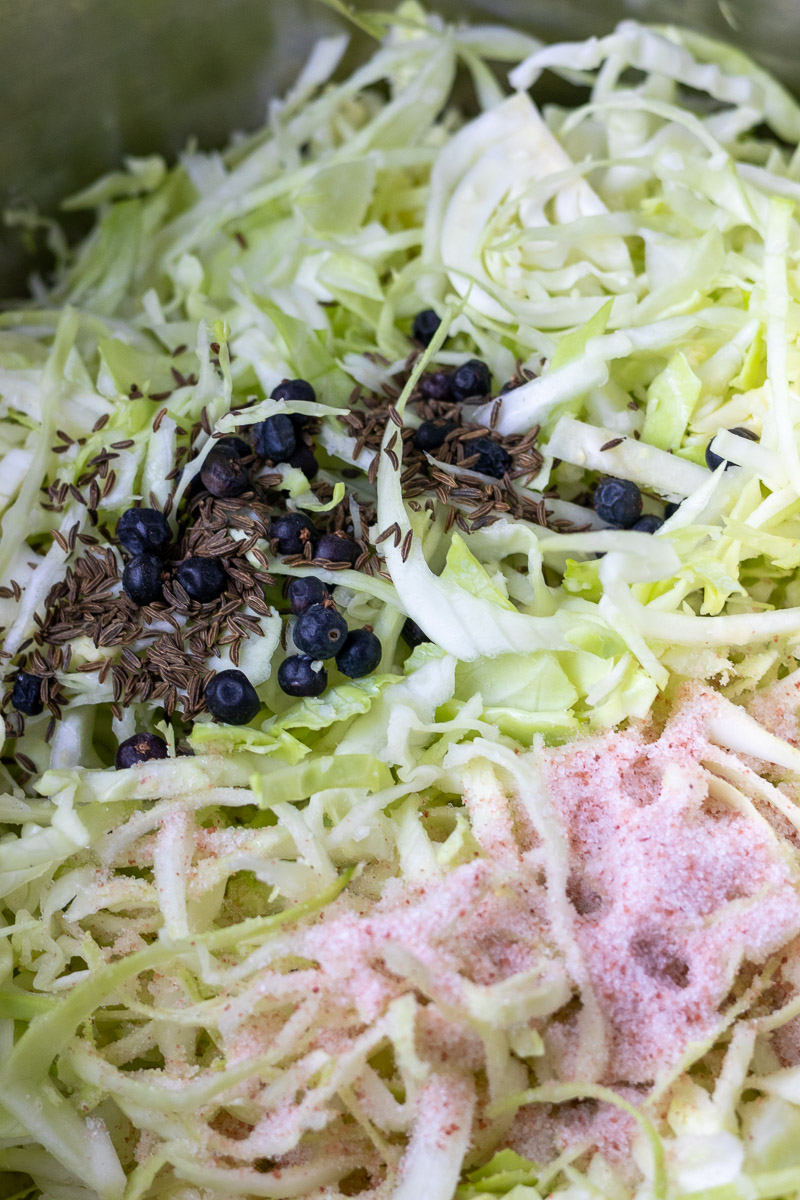
Step 3: Add spices and salt. Sprinkle in juniper, caraway, and the measured salt. Toss to distribute.
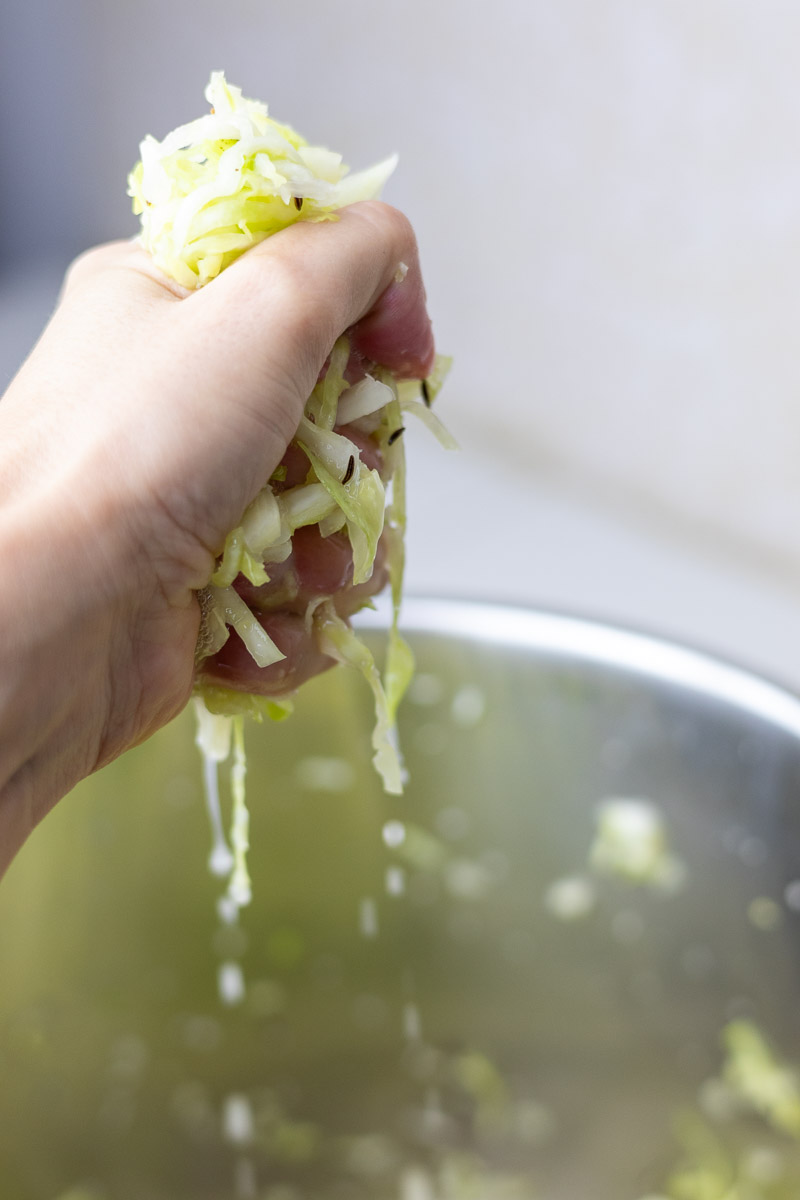
Step 4: Wait, then massage. Let sit 10–15 minutes, then massage and squeeze the cabbage until it releases a good amount of liquid.
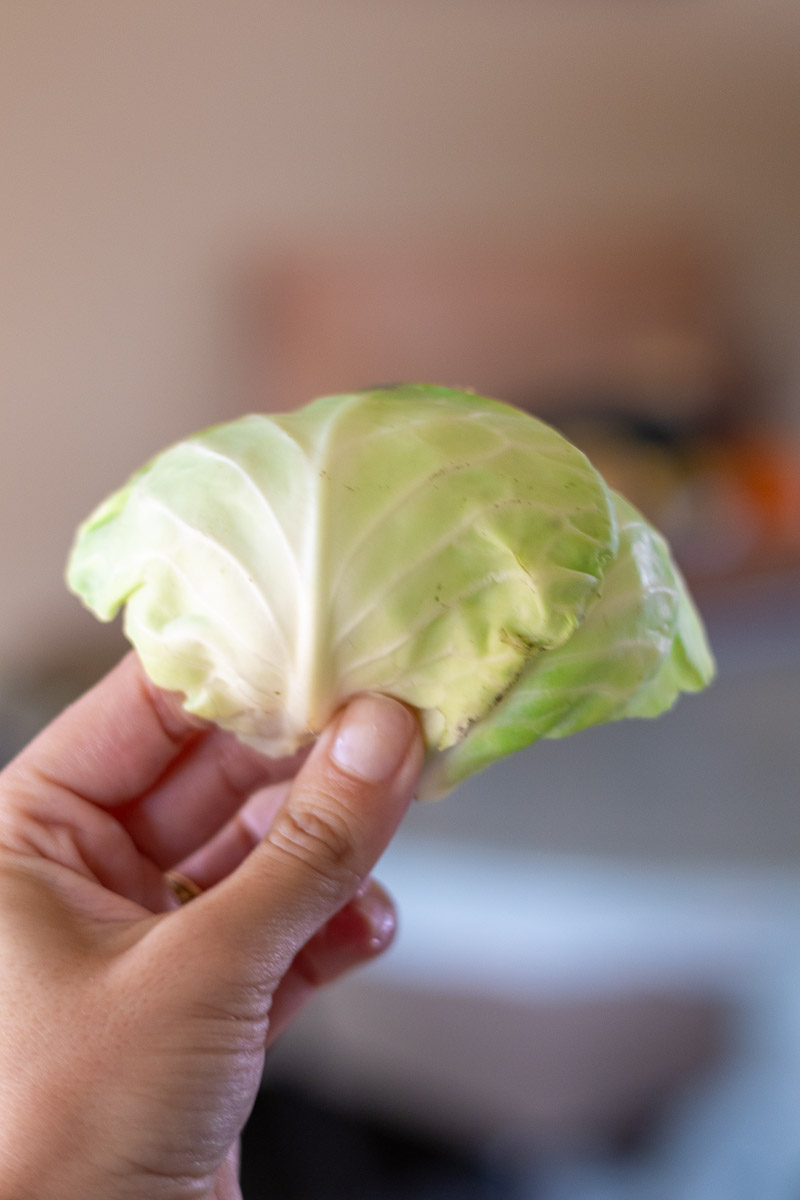
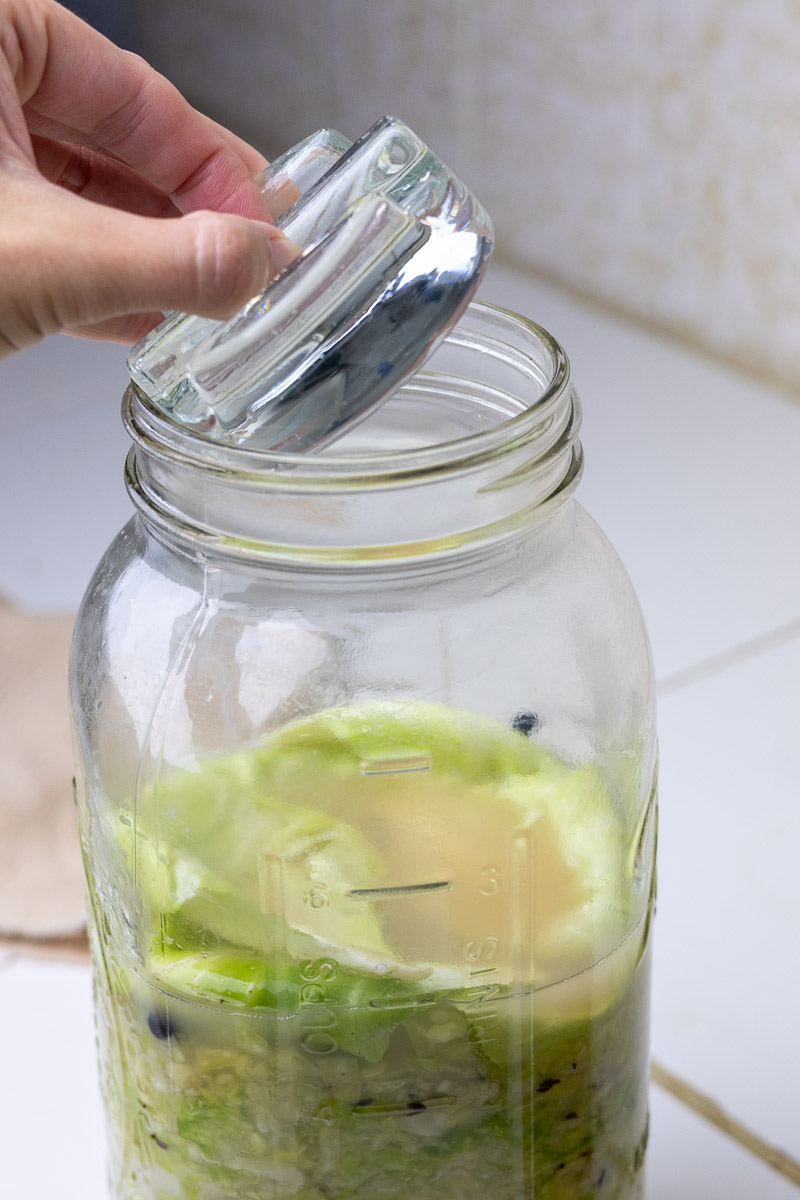
Step 5: Pack the jar, clean the rim, add whole leaves, and weight. Tightly press the cabbage into your clean jar so the brine rises. Wipe the jar rim clean, lay reserved outer leaves over the shredded cabbage to help keep pieces from floating, then place your fermentation weight.
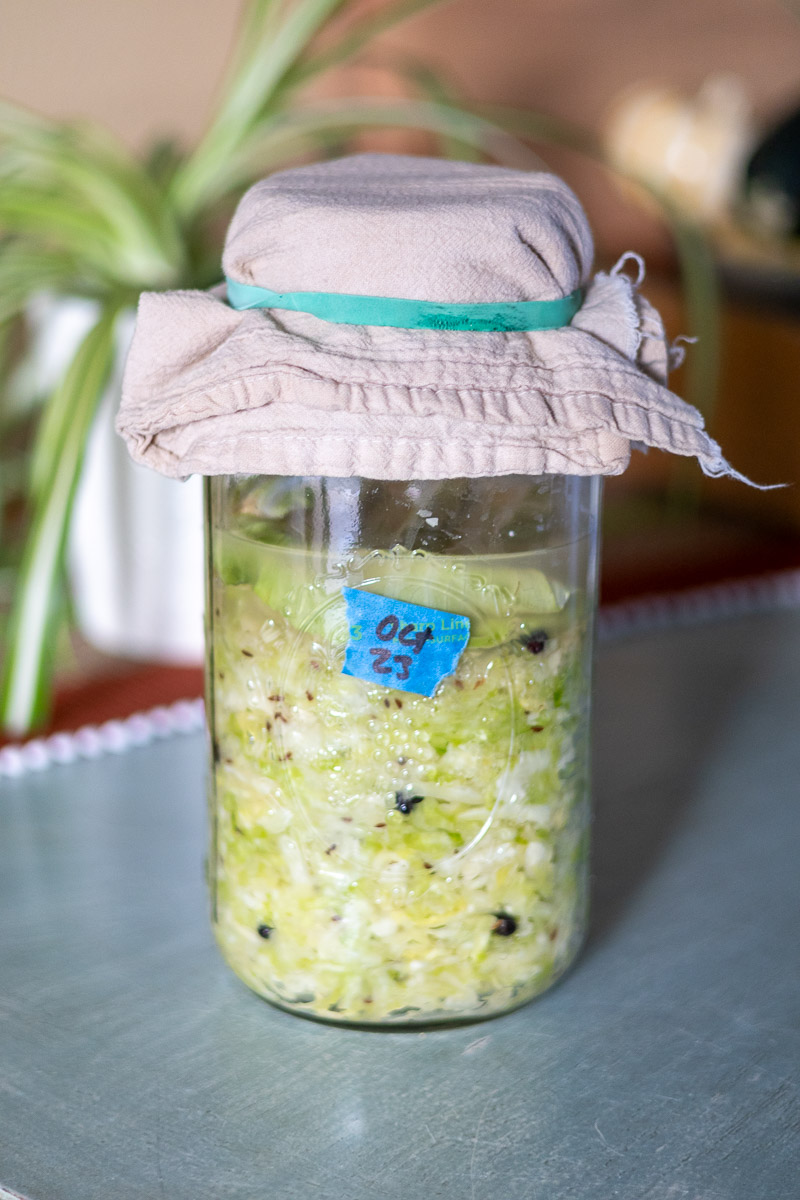
Step 6: Cover the jar loosely (cloth or lid set loosely). Label and leave on the counter.
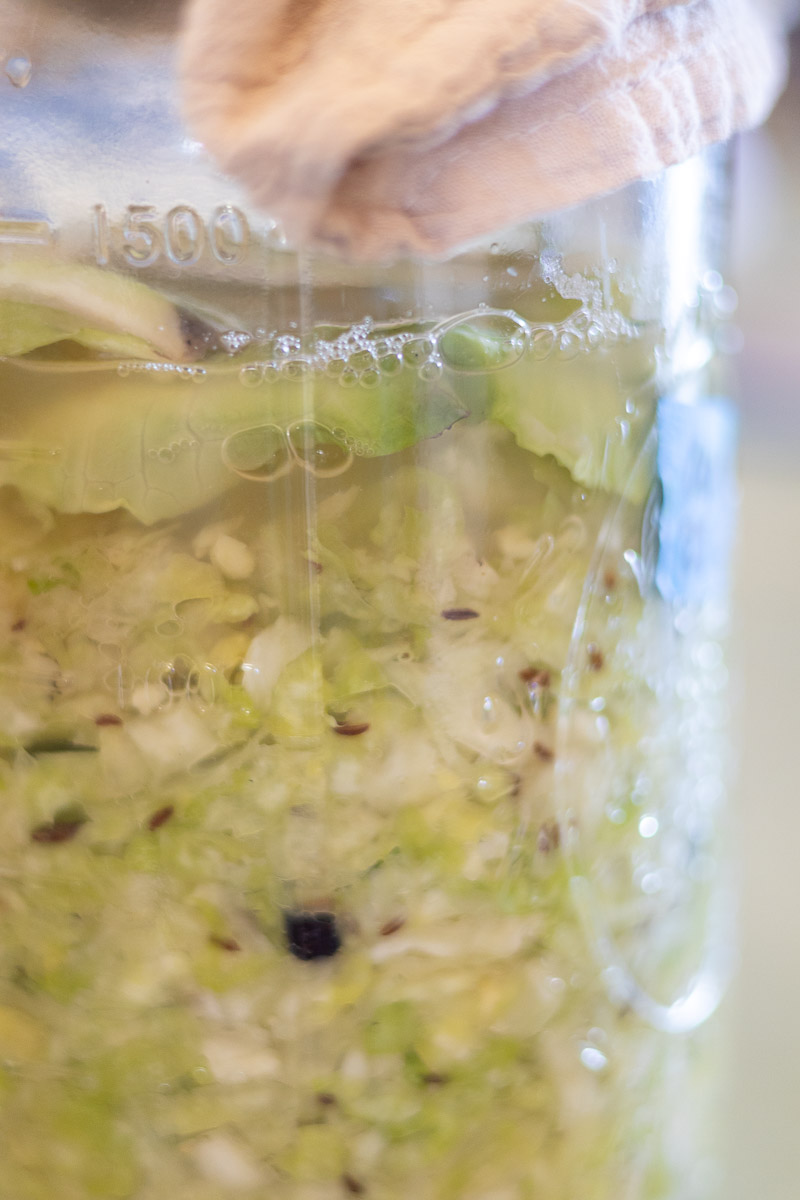
Step 7: Watch for bubbles. You should see bubbles within a day. Press down once a day to keep everything submerged.
If the brine is not covering the cabbage, make some more using the brine ratio below.
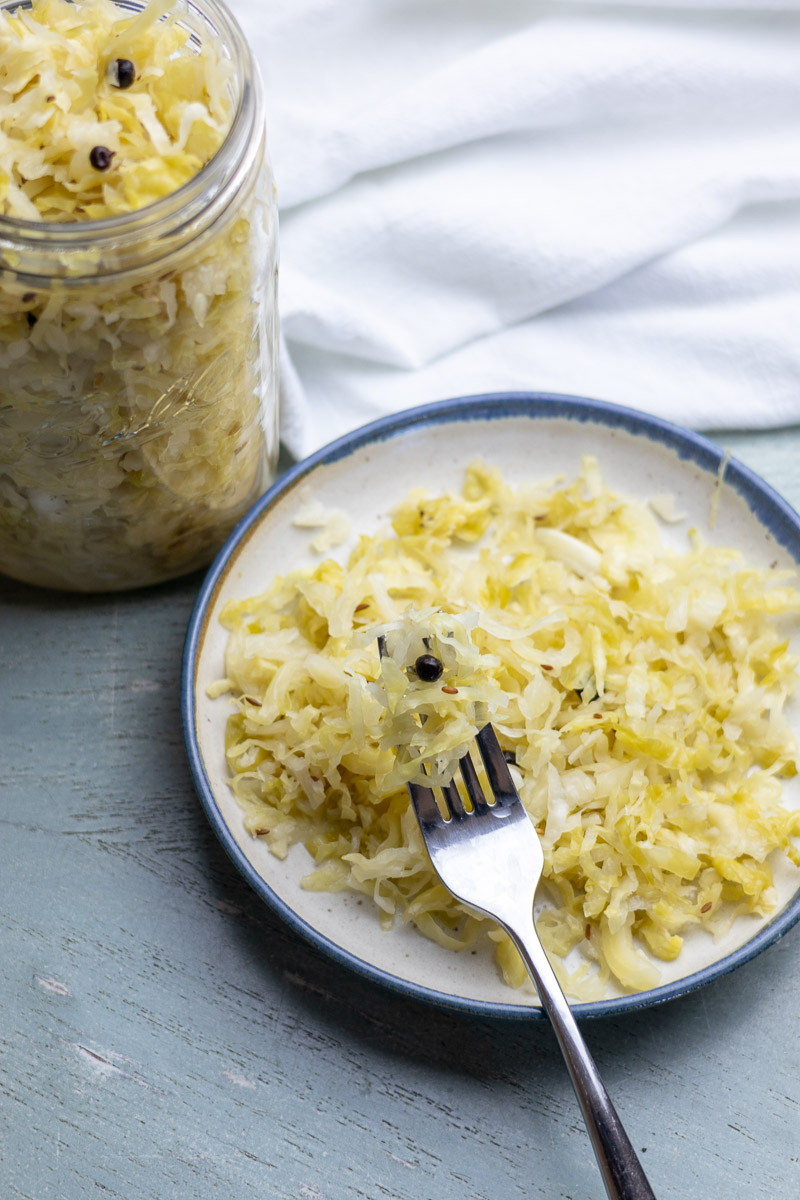
Step 8: Begin tasting at day 3. Depending on temperature, fermentation usually takes 1–4 weeks. When it’s tangy and crisp to your liking, move the jar to the fridge. Enjoy!
Sauerkraut Temperature Guide and Brine Ratio
- Temperature: 60–70°F (15–21°C) is ideal. Slightly warmer is okay; cooler may slow or stop fermentation.
- Brine: Most cabbage releases enough liquid. If not, use 2% salt brine (⅛ teaspoon salt per 1 cup water).
Tips for the Best Small Batch Juniper Caraway Kraut
- You can experiment with the amount of juniper and caraway, but I found this recipe to be a sweet spot.
- You can add juniper berries whole for little bursts of flavor, which also makes them easier to remove later if desired, or lightly crush them to release more flavor as they ferment. Fermentation will mellow the juniper bite, so don’t worry!
- I like using a jar slightly larger than the cabbage volume so there’s plenty of room for brine and bubbling.
- A chopped or grated apple adds sweetness and pairs great with this recipe!
- While a weight makes things easier, you can improvise with a smaller mason jar nested inside, or a clean zip-top bag filled with water or clean rocks.
- Always calculate your salt ratio based on the weight of the shredded cabbage (after removing the core and outer leaves).
- The core can be discarded, but I like to use it. If you chop it very finely or blend it in a food processor, you won't even know it is there after fermentation.
Storage
Once your sauerkraut has fermented to your liking, just pop a lid on the jar and place it in the fridge! It will keep for up to 6 months.
FAQ
It has the salty, tangy flavor of fermentation, uplifted with a touch of pine from the juniper and warm, earthy notes from the caraway. The combination really reminds me of rye bread.
This was my biggest question when I first made this kraut. Fermentation softens the juniper flavor whether the berries are lightly crushed or added whole, but if you’re not already a fan of juniper, you might still find the flavor strong.
Related
Looking for other recipes like this? Try these:

Small-Batch Juniper & Caraway Sauerkraut
Inspired by old-world kraut recipes, this small-batch sauerkraut blends juniper and caraway into a crisp, aromatic ferment that is perfect for fall and winter meals, all easily made in a mason jar right on your countertop.
Ingredients
- 2.5 lbs cabbage (about 1 medium head)
- ½ tablespoon juniper berries (lightly crushed or left whole)
- 1 teaspoon caraway seeds
- 1½ tablespoon non-iodized salt (or about 2% of cabbage weight)
- 1 - ½ gallon mason jar
Instructions
- Prep the cabbage: Remove outer leaves and core. Reserve 2–3 outer leaves for later. Finely chop or pulse the core if you want to add it back.
- Shred the cabbage: Slice thinly or use a food processor. Place in a large bowl.
- Add spices and salt: Sprinkle in juniper, caraway, and salt. Toss to combine.
- Wait and massage: Let sit 10–15 minutes, then massage the cabbage until it releases a good amount of liquid.
- Pack the jar: Press cabbage tightly into the jar so the brine rises. Lay reserved outer leaves on top and place a fermentation weight. Wipe the jar rim clean.
- Cover: Use a cloth or loosely set lid. Label and leave on the counter.
- Watch for bubbles: Bubbles should appear within a day. Press down daily to keep cabbage submerged. If brine is low, add extra using 2% salt-to-water ratio.
- Taste and refrigerate: Begin tasting at day 3. Fermentation usually takes 1–4 weeks. When tangy and crisp, seal and move to the fridge.
Notes
Recommended Products
As an Amazon Associate and member of other affiliate programs, I earn from qualifying purchases.




Comments
No Comments